Land Selection Tips for Cultivating Job's Tears: Wet-Grown Cultivation Method for Job's Tears
Job's tears (Coix lacryma-jobi) is not eaten every day like rice, but it is a food that many people enjoy. Why is that? First, job's tears has medicinal value; its seed kernel can be used as medicine and has the effect of clearing heat and promoting diuresis. Second, job's tears has edible value; it can be used to make porridge, has effects such as cleansing the intestines, and can also beautify and nourish the skin. Therefore, the market for job's tears is very broad, which has led many people to want to grow job's tears. Since you want to grow job's tears, of course you should first learn the cultivation techniques for job's tears in this article.
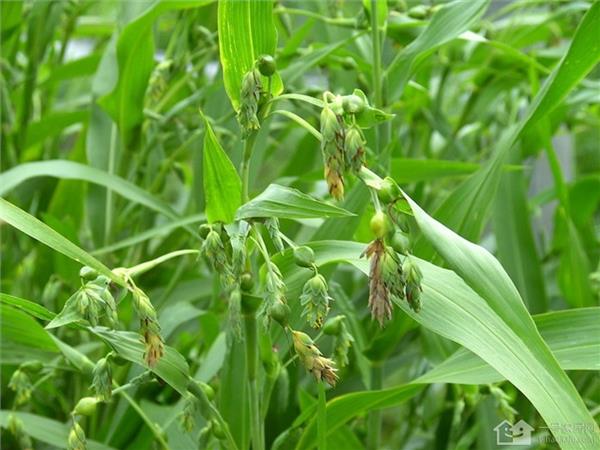
I. Land Selection
Land Preparation: Scattered plots along lakesides, river channels and irrigation canals, or paddy fields, can all be used for planting, but the highest yields come from clay loam plots with fertile soil, deep soil layers and good drainage and irrigation conditions. Mountain slopes and sand dunes without irrigation conditions are not suitable for planting. Apply about 5000 kg of barnyard manure or farmyard manure per mu, plow deeply 20-25 cm, harrow fine and level, and make flat beds 1 m wide.
II. Wet-Grown Cultivation Method: More suitable for summer sowing
(1) Raising seedlings: Make seedbeds using a method similar to dry-raised rice seedlings or wet-raised rice seedlings. In spring, broadcast the treated seeds in the seedbed, cover with fine soil 2-3 cm, and keep the seedbed moist. After emergence, strengthen water and fertilizer management to promote growth, ready for transplanting. Use 30-35 kg of seed per mu; raising seedlings on 1 mu can transplant about 15 mu.
(2) Transplanting: Choose a good plot, apply fertilizer and prepare the land ready for transplanting. When the seedlings grow to 3-5 leaves, they can be taken from the bed, planted by the soil-ball transplanting method, and watered immediately; they will establish and turn green in 7-10 days.
(3) Water management: Manage according to the principle of alternating wet, dry, water, wet and dry. During the seedling stage, water frequently to keep the soil moist, so that the plants grow early and quickly and produce many tillers. From after tillering at the seedling stage to the early jointing stage, do not water constantly; slightly dry conditions are better, as this helps prevent excessive ineffective tillering and excessive vegetative growth of stems and leaves, controls overly vigorous growth, and promotes thick basal internodes and a well-developed root system. In the late jointing stage, gradually increase soil moisture and water frequently. During the booting and heading stage and the grain-filling and maturity stage, pay great attention to frequent irrigation and keep the soil moist; in particular, the heading and flowering stage has the greatest water demand, so supply sufficient water to promote heading. Job's tears is a wetland-loving crop, so management should focus mainly on moisture, understanding its wet-growing habits; during the growing period, do this: keep it wet in the early and late stages, and dry in the middle stage. Strictly controlling water during the tillering and jointing stage and keeping the soil slightly dry is the key to increasing yield. All other cultivation techniques are the same as the dryland cultivation method.
The above is the basic cultivation technique for job's tears. Of course, in the later stage you should also pay more attention to field planting management of job's tears, such as appropriate fertilization and watering; in particular, watering must be sufficient. Moreover, after job's tears joints, it should be watered frequently to keep the soil fully moist. We know that after planting most plants, the most important thing to watch for is pest and disease prevention, and growing job's tears is the same; you should often go to the field to check the growth of the job's tears.