How to Grow Eggplant? A Few Seed-Sowing Tips to Share
I believe everyone enjoys eating eggplant. When having a barbecue, eggplant is quite popular. Cut a whole eggplant open, put some garlic and other seasonings inside, and roast it on the grill - that deliciousness is a favorite of many friends. At home too, cooking sliced meat together with eggplant tastes great. Since everyone likes eggplant so much, do you know how eggplant is grown?
I. Site Selection and Land Preparation
1. Eggplant cultivation requires selecting soil with deep, loose, fertile, and organic-rich loam, and the previous crop is best being rice. It is taboo to plant it in continuous cropping with solanaceous plants, tobacco, peanuts, etc. Sandy soil is prone to bacterial wilt and is not suitable for selection.
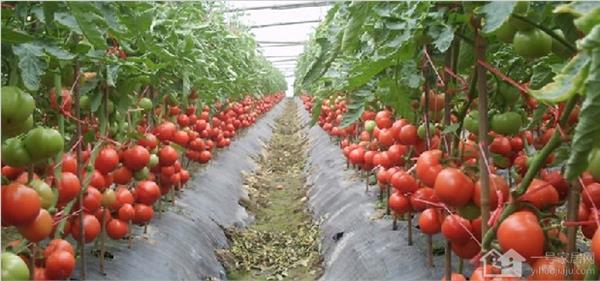
2. For planting eggplant, it is advisable to use high beds and deep furrows, with a bed width of 1.8 m (including furrows), a bed height of 40 cm, and a furrow width of 50 cm. The bed furrows should be deep to facilitate drainage, avoiding soil that is too wet, which could affect root growth or cause root rot.
3. Apply sufficient organic fertilizer. Per mu, apply 1500 kg of decomposed pig, cattle, or chicken manure, 50 kg of peanut bran, 50 kg of superphosphate, and 50 kg of lime. Composting method: Mix pig or cattle manure or chicken manure with superphosphate and peanut bran (crushed) for composting, with a composting time of more than 1 month. The well-composted organic fertilizer should be applied 5 days before planting. When applying base fertilizer, open a shallow trench in the middle of the bed and apply it over a wide surface, with a trench depth of 20 cm and a trench width of 30 cm. After application, mix the base fertilizer with the soil, then backfill with soil, and shape the bed surface into a hand-back shape. Lime is applied when the beds are formed into blocks.
II. Sowing
1. Sowing period. Eggplant is sown in autumn from late June to mid-July, with a seedling period of 30-40 days, and a seed quantity of 15-20 g per mu.
2. Seed disinfection and germination. Disinfect the seeds before sowing to prevent seed-borne bacteria. Eggplant seed coats are relatively thick, with poor air permeability, and germinate slowly. When soaking seeds, first soak in water for 10-20 minutes, then scald the seeds with hot water at 50-55°C for 20 minutes for seed disinfection, or soak the seeds in a 10% trisodium phosphate solution for 20-30 minutes, or disinfect with a 0.1-0.3% potassium permanganate solution for 20-30 minutes. Then soak in clean water for 7-8 hours. During the soaking process, rub and wash the seeds with your hands 2-3 times to wash off the sticky substance on the seed surface, then rinse clean with clean water. Scoop out the seeds, wrap them well in wet gauze, and place them at a constant temperature of 30°C or in a warm place to germinate. Generally, they will show white sprouts in 50 hours and can then be sown.
3. Sowing. Generally, there are two methods: sowing in a seedling plot or sowing in nutrient cups.
① Sowing in a seedling plot. The seedbed should be chosen from a plot whose previous crop was rice, with a bed width of 1.2 m and a length of 8-10 m as suitable. 3-4 days before sowing, disinfect the seedbed by spraying the bed surface with 50% carbendazim wettable powder at 1000 times dilution, or thiophanate-methyl wettable powder at 1000 times dilution, or 7-10 days before sowing in the seedbed, use quintozene or dexon at 500 times plus dichlorvos at 800 times mixed and sprayed on the bed surface, then cover with plastic film for a few days. Seeds should be sown sparsely and evenly to cultivate strong seedlings. Each mu of field requires 0.025 mu of seedling-raising land. Mix the seeds evenly with fine sand or crushed soil, then broadcast them onto the seedbed, then cover with 0.5 cm thick burnt soil, and cover with straw and shade netting. The bed surface should be watered sufficiently. After 5-6 days, they will germinate and emerge, and then the straw should be removed.
② Using nutrient cups for seedling cultivation. The nutrient cup specification is 10 cm × 12 cm. When sowing, first fill the nutrient cups with nutrient soil, then water them thoroughly. Sow the next day, placing 1-2 robust seeds in each hole, then cover with soil to cover the seeds, with a thickness of 0.5 cm, and spray with water every day using a watering can to ensure uniform sprouting. For autumn sowing, use shade netting to prevent rain and lower temperature. After sowing and covering with soil, cover with rice straw, and remove it when the seeds sprout. Shade netting is generally kept covered until about 15 days after sowing. After 15 days, it is best to uncover it at night and cover it again during the day. 10 days before transplanting, remove all the shade netting to harden the seedlings and adapt them to the environment.
The above is the relevant introduction in this article. I believe that after reading it, you also have a simple understanding of this. If needed, you can continue to follow No.1 Home Network to learn more information.