A Detailed Guide to Soapwort Cultivation Techniques and Cultural Knowledge
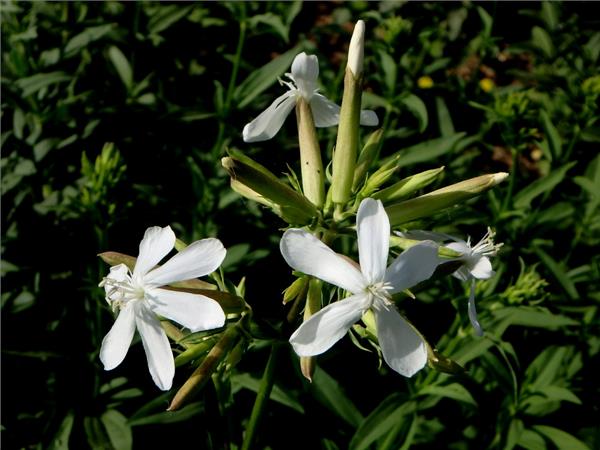
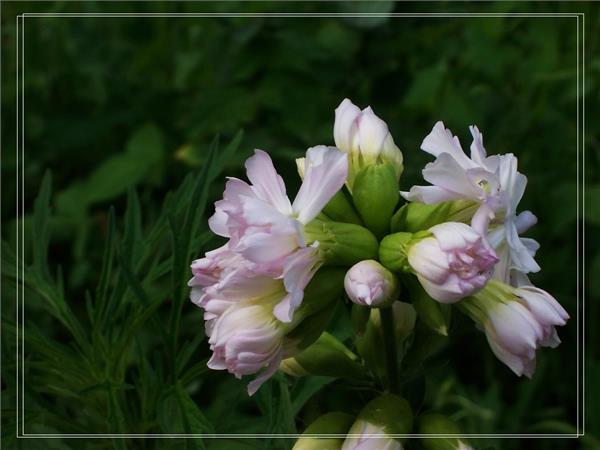
Soapwort (Saponaria officinalis) is robust by nature, cold-resistant and drought-tolerant, highly adaptable, with no strict requirements for soil and environmental conditions, and capable of self-seeding and propagating. The flowers are double, red. It belongs to the Caryophyllaceae family, genus Saponaria, with the morphological characteristics of a perennial herb. The plant height is 30-90 cm, leaves are elliptic-lanceolate, opposite. The inflorescence is a terminal cyme, petals are single or double, flowers are pale red or white, flowering period is June-August. Today, let us learn about its cultivation techniques.
Best propagation time: Soapwort is sown in March to April; division can be done in spring or autumn;
Best growing soil: Soapwort prefers loose, fertile, well-aerated sandy soil;
Growing humidity requirements: Use a spray bottle to mist water regularly to keep the soil moist;
Best growing temperature: The best growing temperature for Soapwort is 15-22°C. In winter, keep the temperature at 10-15°C; in early spring, keep the temperature at 15-20°C;
Best growing light: Soapwort prefers light but also tolerates shade, and can overwinter outdoors in North China.
Notes on growing Soapwort:
Fertilizer application:
Soapwort likes fertilizer and is not particular about the type. During the growing season, apply light fertilizer frequently to meet the plant's nutrient requirements for growth. After new shoots sprout in spring, apply decomposed organic liquid fertilizer at concentrations of 1:6, 1:8, 1:12, once a week together with watering. Generally, fertilizing stops during the flowering period. However, Soapwort's flowering period is particularly long, with fresh flowers blooming successively almost from June to September. Therefore, topdressing must be done together with watering, using the method of watering with muddy water. So-called muddy water watering actually means adding a small amount of organic liquid fertilizer to the water each time you water, so that the soil is moist and loose, with strong fertility, which is good for the plant to absorb.
Watering key points:
Soapwort is a moisture-loving flower. Throughout the growing season, the soil must be kept absolutely moist so that Soapwort can have lush branches and leaves and bright flower colors. During the spring vegetative growth period and the autumn fruit growth period, water once every 2-3 days. In summer, when temperatures are high and the weather is extremely hot, gardeners can water once every evening. If there is a summer drought, when necessary, they can also sprinkle water once before 10 a.m. with a fine-nozzle spray bottle, allowing the remaining water to moisten the potting soil again so that it has enough water to absorb. In short, no matter the season, the plant must not be allowed to wilt from lack of water, otherwise the plant will not only grow poorly but may also drop flowers and fruit.
Pruning guidelines:
After Soapwort flowers fade, the plant should be pruned promptly, leaving 1/3 of its height. After pruning, apply fertilizer 2 more times (dilute decomposed organic fertilizer), and the plant can bloom a second time in August to September. In addition, before winter, remove dead branches and fallen leaves, and apply sufficient base fertilizer and water so the plant can overwinter safely.
Propagation key points:
Soapwort is usually propagated by sowing or division.
Sowing propagation: Sowing is done in March to April. Sowing is usually done by broadcasting, with a thin covering of soil. The suitable temperature for germination is about 20°C, and germination usually occurs in 10-12 days. If the seeds are soaked and treated at 2-5°C for 1-2 weeks, the germination rate can be increased. After sowing, keep the soil moist frequently; when it dries slightly, mist with a spray bottle. If heavy rain occurs, drain promptly or cover with plastic film.
Division propagation: Division can be done in spring or autumn. It is mostly done in autumn. Before division, let the potting soil dry appropriately to reduce damage to the root system. Take the whole plant out of the pot, divide it into 2-3 plants, plant them separately in pots, then water thoroughly, place in a cool place, and after 1 week enter normal management.
Pest and disease control:
Soapwort generally rarely suffers from pests and diseases. If harmed by pests such as aphids, spray with omethoate 1000-1500 times dilution for control.
Expanded knowledge - Soapwort culture:
October 2 birthday birth lucky flower: Soapwort
Flower language: Soapwort, historically belonging to the Dianthus family, was used to dedicate to the guide of every believer, as well as to the guardian angels of the friends of saints. This is a perennial herbaceous plant wild from Central Europe to Southern Europe and Western Asia. The so-called Industrial Revolution began with the revolution in the woolen textile industry. In the early woolen textile industry, soapwort water made from soapwort was used to wash wool. In a certain sense, soapwort can be said to be the prototype of modern plants. Therefore, its flower language is - history.
If you were born today, or if you are someone blessed by this flower, you will consider your life with a long-term and comprehensive perspective, and your view of love is also very practical. However, young people always need to be like young people! So sometimes, why not create some youthful memories for yourself!
Birthstone: Opal
Interwoven with red like ruby, blue like sapphire, green like emerald..., opal possesses all the colors of various gemstones, presenting a divine sense of harmony. Shining with a charming iridescent luster is the characteristic of opal, and the more of this iridescent color it has, the better its quality.
As for the high-brightness Mexican opal, and the milky white or black Australian opal, although their appearance is very different, they are equally beloved. The more expensive one is the Australian black opal.
The above is the relevant introduction in this article. I believe after reading it you have a simple understanding of this as well. If needed, you can continue to follow No.1 Home Network to learn more information.