What are the cultivation conditions and precautions for Silver King?
Silver King, also known as: Silver King Aglaonema, Silver King Chinese Evergreen, Silver King Chinese Evergreen. It is a perennial evergreen herb with a very short stem, a plant height of 40-50 cm, densely clustered leaves, leaf length 20-25 cm, width 5-7 cm, lanceolate, dark green leaves, densely covered with silver-gray patches on the leaf surface, and grayish-green on the leaf underside. Today, let us learn about its cultivation methods.
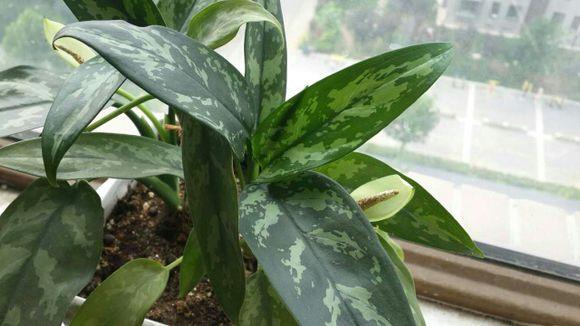
Best propagation time: As long as the temperature is 20-28°C, Silver King can be propagated by cuttings all year round;
Best growing soil: Silver King has low requirements for potting soil, and ordinary garden soil can be used for planting. It has low requirements for potting soil, and ordinary garden soil can be used for planting;
Growing humidity requirements: Silver King prefers high-humidity environmental conditions, and is both moisture-tolerant and drought-tolerant;
Best growing temperature: The optimal growing temperature for Silver King is 20-30°C;
Best growing light: Silver King prefers scattered light and is relatively shade-tolerant. It can also grow well when placed in a shaded environment all year round, and at home it can be used to decorate places with poor light.
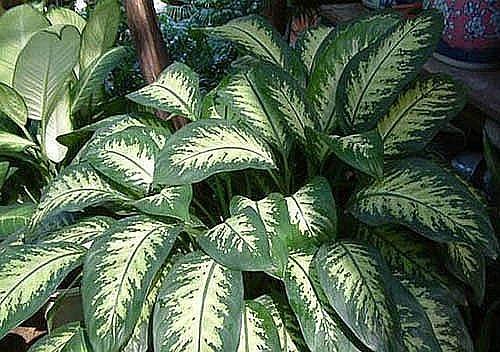
Precautions for cultivating Silver King:
Fertilizer application:
During the growing season, Silver King should be watered with liquid fertilizer once a month, not too much, otherwise the plant will not be able to absorb it and the roots will be burned, and the inability to absorb water will also cause the leaves to turn yellow and fall off.
Key watering points:
In order to keep Silver King's leaves green and not withering in winter, watering should be gradually reduced after November to enhance resistance to cold, and the room temperature should be raised as much as possible. In summer, it should be watered thoroughly and the leaves should be sprayed with water.
Pruning essentials:
After the lower leaves of Silver King turn yellow and wither, forming a bare stem, you can leave about 10 cm at the base and cut off the top (the top can be used as cutting material). Pay attention to water and fertilizer management, and new buds will sprout below the cut at the base. After the Silver Queen Aglaonema plant grows taller, the stem tends to lodge and grow flat, so it is advisable to replace it with a new plant and discard the old plant.
Key propagation points:
Silver King is mostly propagated by cuttings or division. In spring, when repotting, divide and cut from the rhizome so that each clump has roots, and then it can be potted. Cuttings are often taken in April-May from new stems with 4-5 leaves, remove 1-2 lower leaves, insert them into plain sandy soil, and they will take root in about 20 days and can be potted in 30 days. For potted plants, use a potting soil made by mixing equal amounts of leaf mold and river sand. Apply liquid fertilizer once a month during the growing season. In summer, water thoroughly and spray water on the leaves. In late autumn, gradually reduce the amount of watering. In winter, do not water until the potting soil is dry. In winter, it should be brought indoors to overwinter, and the indoor temperature must not be lower than 10°C. Repot and change the soil once every spring. Usually it can be maintained indoors, but attention should be paid to ventilation. In summer, it cannot be placed under the blazing sun.
Pest and disease control:
Common diseases of Silver King include phytophthora blight, root rot, bacterial soft rot, and bacterial leaf blight.
Phytophthora blight: It can be prevented by spraying 25% metalaxyl wettable powder 500 times solution, 50% folpet wettable powder 500-700 times solution, etc.
Root rot: It can be sprayed with thiophanate-methyl or chlorothalonil.
Bacterial soft rot: In the early stage of the disease, agricultural streptomycin, etc. can be sprayed for control. Once it occurs, the diseased plants must be removed.
Bacterial leaf blight: The control method is the same as for bacterial soft rot.
The above is the relevant introduction of this article. I believe that after reading it, you will also have a simple understanding of this. If necessary, you can continue to follow No. 1 Home Network to learn more information.