How to Grow Philodendron 'Imperial Green' to Make Your Home's Air Fresh
Growing plants at home is a hobby for many homeowners, and one plant in particular is deeply loved by everyone: Philodendron 'Imperial Green'. It is a green plant with an environmental function, and its leaves can be enjoyed for their ornamental value. It is environmentally friendly because it can absorb large amounts of carbon dioxide and also release oxygen, making the air in your home fresh. So, how should we grow Philodendron 'Imperial Green'?
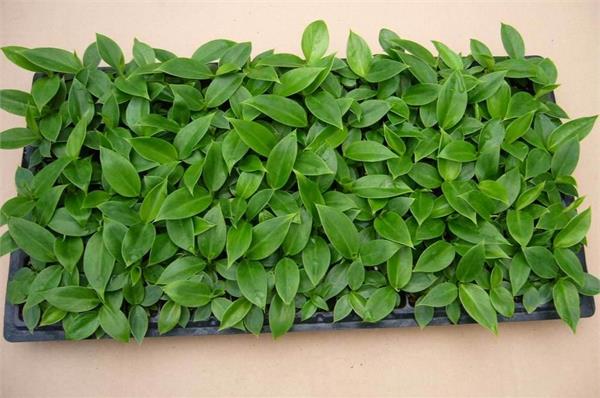
Best propagation time: Philodendron 'Imperial Green' grows vigorously in spring, summer and autumn;
Best growing soil: Philodendron 'Imperial Green' is best planted in slightly acidic soil;
Humidity requirements: The suitable humidity for Philodendron 'Imperial Green' is 50-70%. If the humidity is below 50%, the leaves tend to turn yellow and the edges dry out; you can use aerial misting to increase air humidity;
Best growing temperature: Philodendron 'Imperial Green' likes a warm environment and fears severe cold. The suitable temperature range is between 20-30°C, and in winter the temperature must not be lower than 10°C, otherwise it is prone to cold damage leading to death. It starts growing at around 13°C;
Best growing light: Philodendron 'Imperial Green' prefers bright, indirect scattered light and dislikes direct sunlight.
Notes on growing Philodendron 'Imperial Green':
Applying fertilizer:
For Philodendron 'Imperial Green', use decomposed farmyard manure as a base fertilizer, and apply additional fertilizer during growth as needed. During the vigorous growth period from April to September, apply liquid fertilizer twice a month to ensure the leaves are thick and glossy.
Key watering points:
Philodendron 'Imperial Green' grows vigorously in spring, summer and autumn and needs plenty of water and fertilizer. Watering should be thorough, and should be adjusted flexibly according to the season and temperature; in principle, keep the potting soil moist. Also pay attention to misting the leaf surface to maintain high air humidity, which helps the leaves become a deep, rich green on both sides.
Pruning essentials:
Repot Philodendron 'Imperial Green' once every spring, and remove young shoots and old leaves to keep the stem shape attractive.
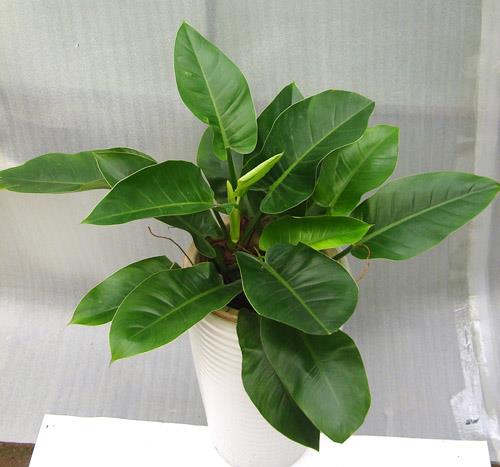
Repotting the soil:
Repot Philodendron 'Imperial Green' once every spring.
Key propagation points:
Philodendron 'Imperial Green' is mainly propagated by tissue culture, cuttings and division, and can also be grown hydroponically.
Cutting propagation: The cut end of the cutting should be below a node. The cutting temperature should be 25-30°C, and humidity should be maintained; it roots easily. Division can be done together with repotting, and the method is simple and easy.
When growing it by the water-cutting method, it is best to cut off a stem tip from the vine and insert it into water together with the aerial roots; new roots sprout in about 10-15 days. For home hydroponic growing of Philodendron 'Imperial Green', small plants should be used, and the plant surface should be misted frequently to keep the leaves fresh. Philodendron 'Imperial Green' has thick, sturdy stems; taking advantage of this trait, it can be grown upright for an even better ornamental effect. Give it an appropriate source of scattered light.
For division, first prune the plant heavily; once young plants sprout from the stem nodes, they can be cut off and potted directly. For cuttings, cut the stem nodes into small sections of 2 to 3 nodes each and insert them directly into coarse sand, keeping them moist; they root about 20 days after insertion. You can also insert the cut stem tip into a water bottle, changing the water once every two or three days, and after 2 to 3 weeks when new roots grow, plant it into a flowerpot. During the vigorous growth period from April to September, apply liquid fertilizer twice a month, or spray liquid fertilizer on the leaves, to ensure the leaves are thick and glossy, and provide plenty of water to keep the potting soil moist.
In winter growth is slow, so fertilization should be stopped and watering reduced. Direct sunlight in summer and autumn will cause brown spots and yellow leaves, so outdoors in summer and autumn 50% of the light should be shaded out; when kept indoors in winter it needs plenty of sunlight. Philodendron 'Imperial Green' is a vine plant; if grown as a large potted plant, it needs repeated pinching to keep the plant shape compact, increase the plant's own support capacity, or set up a support and tie and shape it.
Pest and disease control:
Root rot
Long-term overly wet substrate, watering after the substrate has dried out completely, excessively high substrate EC value, and root damage can all lead to root rot.
Anthracnose
Excessive humidity and leaf damage both easily lead to anthracnose. During production, the affected leaves can be cut off, then alternating treatments of chlorothalonil and thiophanate-methyl at 800 times dilution can be used for control.
Damage from tobacco cutworm
Control it with 1000 times dilution of Emiette.
Tips for growing Philodendron 'Imperial Green':
1. For the potting mix, it is best to use leaf mold or peat soil mixed evenly with a small amount of river sand and perlite, with bone meal or cake fertilizer as a base fertilizer.
2. During the growing period, apply organic liquid fertilizer 1-2 times a month.
3. During the growing period, keep the potting soil moist; in summer, also spray water on the leaf surface and the ground around the pot to increase humidity and lower temperature; in winter, control water and stop fertilizing, keeping the potting soil slightly moist.
4. It is best placed in a bright indoor spot for care, but it should not be kept in a dark place for a long time, as this easily causes leggy branches and leaves.
The above is the relevant introduction in this article. I believe that after reading it you now have a simple understanding of this. If you need more, you can continue to follow No. 1 Home Network to learn more information.