How to grow Mimosa pudica? Detailed explanation of cultivation methods and characteristics
Mimosa pudica, also known as sensitive plant, hehu cao, and zhixiu cao, is a plant that many people have seen. As soon as you gently touch it, its leaves fold together, which is very cute and has attracted a lot of attention. Some friends want to grow Mimosa pudica at home, but they do not know much about it, so they want to ask how to cultivate Mimosa pudica and what characteristics it has.
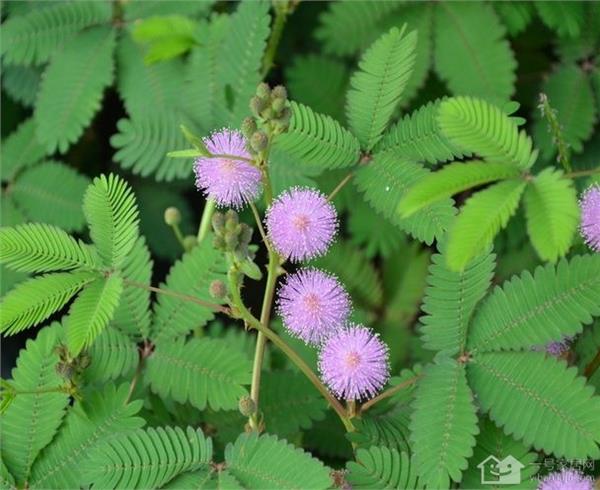
Characteristics of Mimosa pudica
What characteristics does Mimosa pudica have? Plants differ from animals in that they have no nervous system and no muscles, and they do not perceive external stimuli. However, Mimosa pudica differs from ordinary plants. When it is touched by the outside world, its leaf stalks droop and its leaflets close. People interpret this movement as "shyness," so it is called Mimosa pudica, zhixiu cao, and pa chou cao.
If the leaves of Mimosa pudica are touched, they immediately close up. The greater the force of the touch, the faster they close, and the entire leaf will droop, looking weak and listless. The whole movement is completed within a few seconds. This special ability of Mimosa pudica has a certain historical origin. Its original home is in Brazil in tropical South America, where there are often strong winds and heavy rain. Whenever the first drop of rain hits the leaf, it immediately closes its leaves and droops its leaf stalks to avoid the damage caused by storms. This is a kind of adaptation to changes in external environmental conditions. What characteristics does Mimosa pudica have? In addition, the movement of Mimosa pudica can also be regarded as a way of self-defense. As soon as an animal touches it, it closes its leaves, and the animal no longer dares to eat it.
Medicinal value of Mimosa pudica
Whole plant (Mimosa pudica): sweet, astringent, cool. Calms the heart and soothes the spirit, clears heat and removes toxins. Used for vomiting and diarrhea, insomnia, childhood malnutrition, red and swollen eyes with pain, deep abscesses, and shingles. Root (Mimosa pudica root): astringent, slightly bitter. Toxic. Relieves cough and transforms phlegm, drains dampness and unblocks collaterals, harmonizes the stomach, and reduces food stagnation. Used for cough with phlegm and wheezing, rheumatic joint pain, and poor digestion in children.
Weather-predicting characteristics of Mimosa pudica
Mimosa pudica is a wonderful plant that can forecast changes between sunny and rainy weather. If you touch it with your hand and its leaves close very quickly but open very slowly, this indicates that the weather will turn sunny; if when you touch Mimosa pudica its leaves contract slowly and droop slowly, or even close slightly and then reopen, this indicates that the weather will turn from sunny to overcast or that it is about to rain.
Ornamental characteristics of Mimosa pudica
Mimosa pudica is now mostly grown as an ornamental plant in homes. The plant has a loose form, and its feathery leaves are slender and elegant. Its leaves close as soon as they are touched. Mimosa pudica has many delicate and lovely flowers, charming and touching, giving people an impression of frail elegance. It can be planted in the ground at the corner of a courtyard wall, or grown in pots on a windowsill or desk. When giving it as a flower gift, gently cover the pot with pink gauze and tie it with a pink ribbon bow. If you can add pink mohair pom-poms as decoration, it will be even more interesting.
Cultivation methods for Mimosa pudica
Mimosa pudica is robust in habit and grows rapidly. During the growing season, it can be placed on a balcony or in a yard, and it requires deep, fertile, moist soil.
In winter, it should be moved indoors to a windowsill, and it can overwinter safely at an indoor temperature of about 10°C. Under conditions of ample sunlight, the root system grows very quickly and needs watering every day.
In summer when it is hot and dry, it should be watered once in the morning and once in the evening. If it lacks water, the leaves will droop and even turn yellow, and they will no longer close when touched. During the seedling stage, apply a topdressing once every half month.
If you do not want the plant to grow too large, reduce the amount of fertilizer. The leaflets of Mimosa pudica are very small and arranged in a feather-like pattern. If you brush them with your hand and the leaflets are stimulated, they will close. If the vibration is strong, the stimulus can spread to the entire leaf, and the main leaf stalk will also droop, and it may even spread to neighboring leaves and cause their leaf stalks to droop.
The above is the relevant introduction in this article. I believe that after reading it, you now have a simple understanding of it. If needed, you can continue to follow No. 1 Home Network to learn more information.