How to handle hyacinth after the flowers fade in water culture? Analysis of the causes of root rot
Planting beautiful hyacinths in bottles and jars filled with water is both a refined and romantic thing to do, but every time the hyacinth finishes blooming, it never blooms again the following year. Why is that? How should hyacinths be handled after they bloom? Let's take a look together.
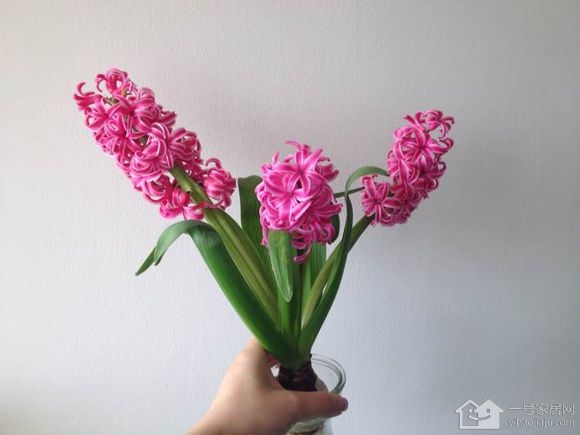
How to handle hyacinth after the flowers fade in water culture:
1. Continue water culture: After the flowers fade, continue growing the water-cultured hyacinth in water until early June, when the temperature gradually rises and the leaves turn yellow and dry up, entering the summer dormancy period.
2. Cut off the leaves: Cut off all the yellowed, dried leaves of the hyacinth during its summer dormancy period, and also cut off all the roots.
3. Refrigerate the hyacinth: Leave the bulb to dry in a cool, ventilated place for 1 to 2 days (never in the sun). Once thoroughly dried, wrap the bulb in newspaper, put it in a jar, and place it in the refrigerator's crisper compartment (not the freezer).
4. Temperature requirements: During the summer, the temperature must not exceed 10 degrees, otherwise the bulb will easily rot.
5. Replanting: When November comes and the temperature gradually turns cooler as deep autumn arrives, take out the hyacinth bulb that has been stored all summer, place it on the mouth of a suitable container, add water to about 1CM below the base of the bulb, then place it in a completely dark and cool place at 5°C to encourage rooting. After about 25 days, roots will begin to sprout. Once the roots grow to 2CM, you can follow normal hyacinth care methods until it blooms. Generally, with this cycle, a hyacinth can be grown for about 3 years; by the 4th year, the original bulb will basically no longer bloom.
How to handle hyacinth after the flowers fade in soil culture:
1. Keep the bulb: After the flowers fade in soil-cultured hyacinths, cut off all the leaves, flower stems, etc., and keep the bulb. Then bury the bulb in sandy soil and wait for the summer dormancy period to arrive.
2. Replanting: Around July 20, dig it out, put it in the refrigerator's crisper compartment, keep it at 4°C for low-temperature sprouting. After the growing point sprouts, continue burying it in sandy soil, water once every 15 days, and wait until December to pot it. The management is quite simple, with no special techniques needed.
[How to handle hyacinth bulbs]
1. Cut the flower stem, water normally. The hyacinth's flower stem can be cut at half its height to prevent cutting too low and causing rot downward. Do not let it get rained on; place it in a warm spot, 15-20 degrees is ideal. At this temperature, the longer the green leaves are maintained, the better, and the bulb will recover and grow larger. Water normally in the early stage, and supplement with a phosphorus-potassium fertilizer once a week. (Potassium dihydrogen phosphate)
2. Reduce watering until stopping completely. From late April, gradually reduce watering and stop fertilizing. Water until late May when the leaves turn yellow, then stop watering. In between, you can apply several rounds of carbendazim solution, which can effectively prevent bulb rot. Stopping water is a gradual process; one principle is to keep the leaves green for as long as possible, so timely watering is very important. In the early stage after the flowers fade, the plant's bulb expands rapidly and actually needs more water. At this time, water thoroughly, but do not let water accumulate. Also fertilize appropriately, the best being potassium dihydrogen phosphate, a 0.2% solution once every 10 days. Water should be cut off after May: first extend the watering intervals, then after it dries out somewhat, water a small amount, and by June stop watering. (At this time it is best not to let it get rained on.) Dig up the bulb 10 days after stopping watering.
3. Storing hyacinth bulbs: After digging up the bulb, the roots have actually already aged and can just be removed by hand, and the yellow leaves can be picked off along the way. First let it dry for a dozen or so days, then soak it in a 0.1% carbendazim solution for 40 minutes, take it out, let it dry, bag it and hang it up. Be careful not to damage the outer skin layer, and check it once a week. After digging up the bulb in June, for normal storage a temperature of just 20-25 degrees is fine. My temperature in summer is often above 30 degrees, and it's no big deal. Regarding cold storage: the purpose of cold storage is only to force flowers for the Spring Festival, and you cannot refrigerate it immediately after harvest. At the very least, keep it at room temperature until after August (from digging up the bulb to cold storage, it must go through two months of room-temperature storage) before starting the 5-degree treatment. Actually, cold storage is not absolutely necessary. If planted at the end of September, the October temperature will probably quickly drop below 5 degrees, and placing it outdoors for natural vernalization is fine. For potted ones, do not let them experience overly low temperatures to avoid damaging the roots from freezing. Bring it indoors in early December, and it will bloom in about 60 days, perfectly in time for spring.
[Causes of root rot in water-cultured hyacinths]
1. The water level in water culture is too high. The optimal water level should be, in the early stage of water culture, just reaching the root disc; after the roots grow out, the water level should be lower than the root disc.
2. Water quality deteriorates, causing root rot. Regarding the water issue for water-cultured hyacinths, there are currently two common approaches: one is to change the water regularly to keep it clean, and the other is to only add water without changing it. Both have pros and cons. Changing the water easily damages the roots, while adding water without changing it may cause the water quality to deteriorate.
How to handle hyacinth after it blooms
3. Using too much nutrient solution. Actually, water-cultured hyacinths do not need nutrient solution.
4. The water culture bottle has no air vents. Water culture is different from soil culture; water culture must give the roots space to breathe. So besides keeping the water level lower, you must also pay attention to maintaining proper air circulation so the roots can breathe.
[How to water hyacinths in spring]
Although the temperature rises little by little in spring, it is still not as scorching as summer, and with high evaporation, plants need more water. So at this time you should water a bit less, and water must not accumulate. Hyacinths fear water accumulation the most, and it can easily cause the bulb to rot. As the temperature rises, increase the water amount little by little, but do not add too much at once. In short, do not water if not dry; when you water, water thoroughly. Before and during blooming, the water requirement is the greatest. At this time you should increase the water amount somewhat, and by then summer is also approaching, so the weather should be fairly hot.
The above is the relevant introduction in this article. I believe after reading it you now have a simple understanding of this. If needed, you can continue to follow No.1 Home Network to learn more information.