The flower language of Datura and whether Datura is suitable for growing indoors
Is Kalanchoe blossfeldiana toxic? People who grow Kalanchoe blossfeldiana indoors all worry about this question, because every plant has some degree of toxicity, so is Kalanchoe blossfeldiana actually toxic? Below, the editor will give you a detailed answer, so you can understand the characteristics and growing methods of Kalanchoe blossfeldiana more comprehensively.
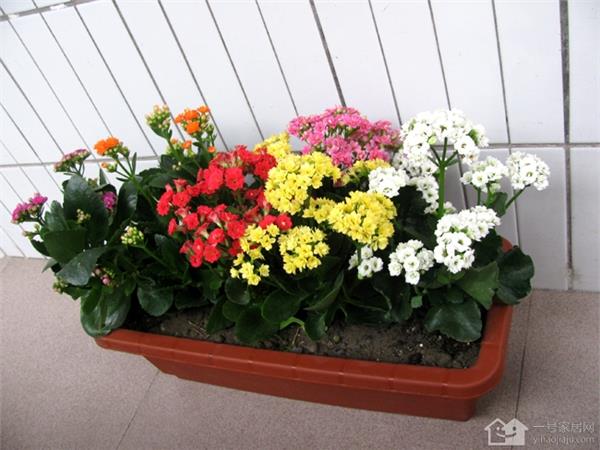
Is Kalanchoe blossfeldiana toxic?
Kalanchoe blossfeldiana likes plenty of sunlight, and when grown at home it should be placed in a spot with direct sunlight all year round. In the hot summer of the north, the light intensity is high and can easily turn the leaves yellow, so around midday it is best to provide appropriate shade, or place it in a semi-shaded spot indoors, but pay attention to ventilation and cooling. When growing Kalanchoe blossfeldiana, if the light is insufficient for a long time, not only will the branches become thin and long and the leaves thin and small, affecting the beauty of the plant's shape, but the number of flowers will also decrease, the flower color will be less vivid, and it can even cause large numbers of leaves to drop, losing its ornamental value.
The most suitable temperature for the growth of Kalanchoe blossfeldiana is 20-25°C. Above 30°C or below 10°C, it will clearly stop growing and enter a dormant or semi-dormant state. In winter, if the temperature is below 10°C, it should be moved into a greenhouse to overwinter. If conditions allow, the indoor temperature can be kept at 16-20°C during the day and 10-15°C at night, so that Kalanchoe blossfeldiana can bloom at New Year's Day and Spring Festival.
In winter, the room temperature should not be lower than 12°C; 15-18°C during the day and above 10°C at night are best. If the temperature drops to 6-8°C, the leaves will turn red and the flowering period will be delayed.
Photosynthesis plays an important role in improving the home environment, and as a green flowering plant, photosynthesis is naturally part of Kalanchoe blossfeldiana's nature. Moreover, the photosynthesis of Kalanchoe blossfeldiana is different from that of most plants. Most plants only absorb oxygen and release carbon dioxide at night, so at night plants have a negative effect on the home environment. However, Kalanchoe blossfeldiana is a CAM plant; its stomata close during the day and only open at night to release oxygen while absorbing carbon dioxide. Therefore, Kalanchoe blossfeldiana has a very good air-purifying effect, especially at night, and can make the air in a closed room fresh.
In addition, Kalanchoe blossfeldiana has a compact plant shape, crystal-clear and translucent leaves, dense and brightly colored flowers, and a long flowering period, and its flowering period coincides with Christmas, New Year's Day and Spring Festival, so its ornamental effect is excellent. Therefore, growing Kalanchoe blossfeldiana indoors can make the home environment full of life, especially in the bleak winter, when it is used to decorate halls and living rooms, it shows even more the feeling of spring. Moreover, because of its own festive meaning, Kalanchoe blossfeldiana can also add a festive atmosphere to winter holidays, making it a lovable indoor potted plant.
Generally, toxic plants also refer to poisoning after being eaten; usually, if you do not eat them, there is no problem. In addition, some aromatic plants placed indoors can cause us discomfort, but this is not the same as being toxic. Kalanchoe blossfeldiana absorbs carbon dioxide, releases oxygen, and has a strong air-purifying effect.
Kalanchoe blossfeldiana is not toxic, and it can also absorb harmful gases and purify the air. Kalanchoe blossfeldiana is a CAM plant; its stomata close during the day and only open at night to release oxygen while absorbing carbon dioxide. Therefore, Kalanchoe blossfeldiana has a very good air-purifying effect, especially at night, and can make the air in a closed room fresh.
Therefore, Kalanchoe blossfeldiana is not only non-toxic, but also has a very good effect in purifying indoor air and beautifying the home environment. We can buy and grow it with confidence.
After the Beginning of Autumn, from late August to early September, Kalanchoe blossfeldiana can gradually be exposed to sunlight, and from October onward it should be exposed to more sunlight to promote its transition from vegetative growth to reproductive growth. When the minimum temperature drops to about 10°C, move it indoors and place it in front of a south-facing or west-facing windowsill so it can get more sunlight, keeping it at 10°C at night and 15°C to 18°C during the day, and it can bloom in December.
The above is the related introduction in this article. I believe that after reading it, you will have a simple understanding of this as well. If needed, you can continue to follow No. 1 Home Network to learn more information.