Can cacti protect against radiation? A detailed explanation with examples
Perhaps people simply like cacti to begin with, and besides, cacti are said to have a radiation-protection function. Let us take a look below at an explanation with examples of whether cacti protect against radiation.

Do cacti protect against radiation? An explanation with examples
Experts believe that cacti have no radiation-protection effect whatsoever. Many people think cacti can protect against radiation because cacti live in deserts, where the environment is arid and "solar radiation" is very strong. They then reason that a plant able to survive such strong ultraviolet rays must surely have a radiation-protection function, and so they place a tall hat of radiation protection on the cactus.
In fact, this claim has no scientific basis at all, and only people with no real knowledge would take it as true. Anyone who has studied plant physiology knows that plants can only absorb red light, far-red light (infrared), violet light and ultraviolet light from solar radiation, and this is what guarantees their photosynthesis. But computer radiation, besides containing light radiation such as infrared and ultraviolet, also contains a large amount of low-energy X-rays, non-ionizing radiation (low-frequency and high-frequency radiation), electrostatic fields, electromagnetic radiation and electromagnetic waves. These rays and electromagnetic waves cannot be absorbed by a tiny cactus; instead, the cactus will be scorched by them.
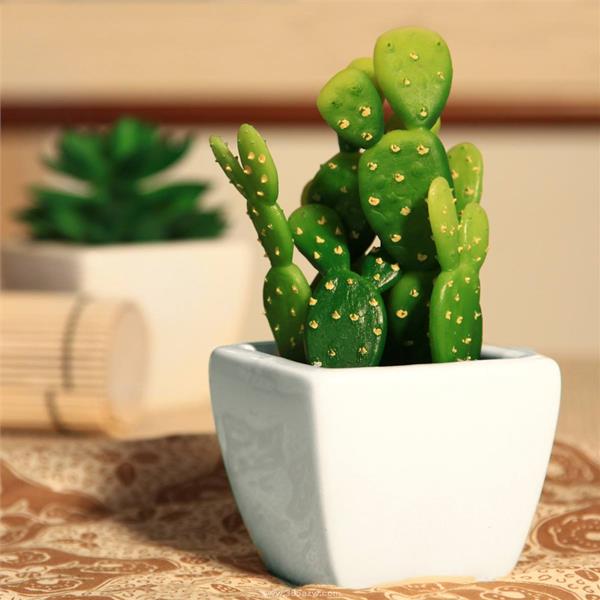
But why does everyone like to place a pot of cactus by the computer desk? First, because it is widely spread online; second, because some unscrupulous merchants, in order to give their small potted plants a good market, loudly tout the anti-radiation function of cacti, making this originally false claim even more deeply rooted in people's minds. Third, placing a green plant by the computer desk also has the effect of being easy on the eyes and making the environment a bit nicer.
Sometimes people seem very cruel: for the sake of their own eye comfort and their own convenience, they do not hesitate to kill these green plants. In fact, placing plants such as cacti and aloe vera next to a computer is equivalent to slowly killing them. If you look carefully, you will find that many plants develop rotten cores, wilt and die. This not only fails to provide any radiation-protection function, but also kills another small living being, further adding to the sin of computer radiation. Therefore, people of the new era should respect scientific facts and stop letting computer radiation kill more plants.
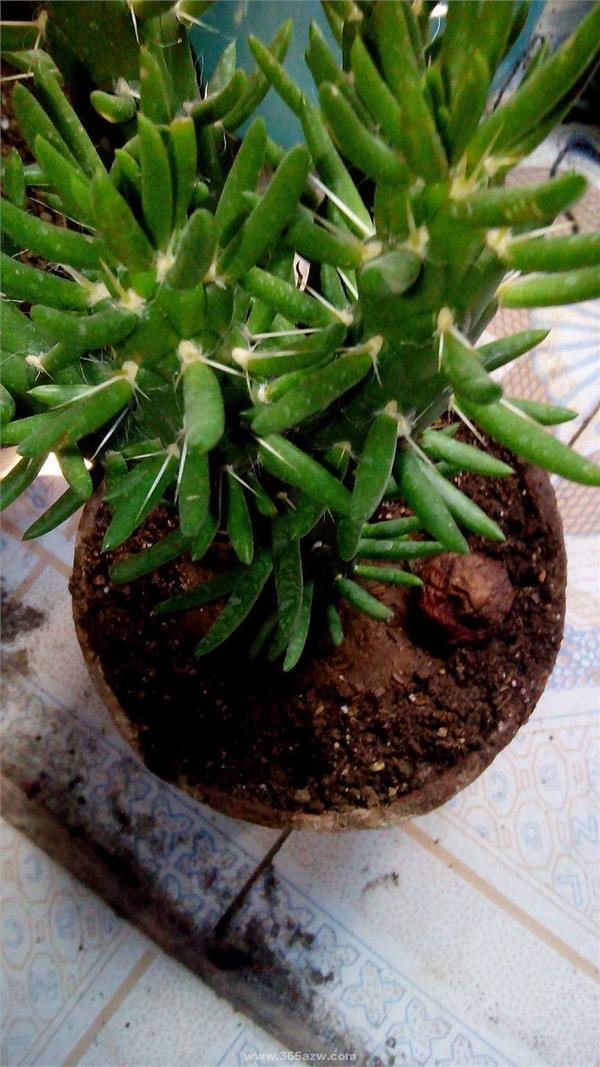
In fact, computer radiation is not that frightening. According to research by relevant experts, the radiation from electrical appliances and computers in our daily lives does not exceed the range we can withstand, so there is no need to worry too much. As long as you do not operate a computer for too long and move around and exercise often, it will not cause harm. Of course, pregnant women should still take certain measures, since computer radiation does have a certain effect on the fetus.
One claim is that the cactus can survive in desert areas with severe ultraviolet radiation and therefore possesses the trait of absorbing ultraviolet radiation, but when it comes to the radiation released by electronic products such as computers and mobile phones, it is powerless.
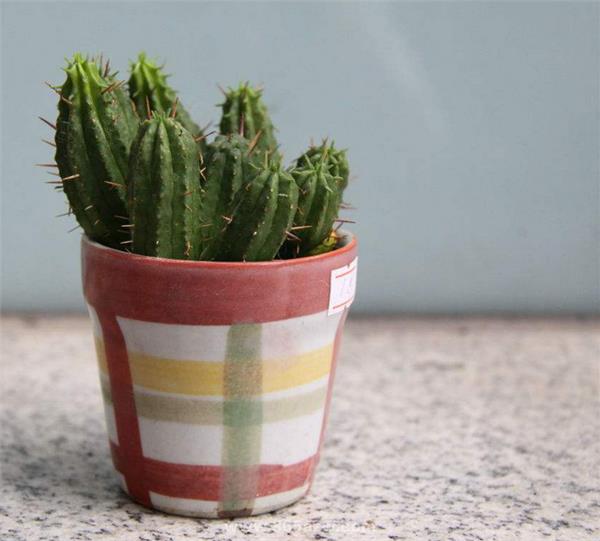
When a person faces a computer screen, the radiation waves travel in straight lines and do not turn. Even if a cactus really could protect against radiation, placing it beside the computer would not block it for you. From a biological perspective, green plants all have a certain ability to absorb radiation. But there is no basis for saying that cacti protect against radiation; it is mostly everyone's psychological effect.
As long as you sit in front of a computer, radiation is unavoidable. To reduce the harm radiation does to the human body, relying only on a pot of cactus is not enough.
However, it can be certain that the cactus is a natural oxygen bar. Most plants carry out photosynthesis during the day, absorbing carbon dioxide and releasing oxygen; at night they carry out respiration, absorbing oxygen and releasing carbon dioxide. Some plants are the opposite. For example, the cactus releases carbon dioxide during the day and absorbs carbon dioxide and releases oxygen at night. In this way, having a cactus in the room at night can supplement oxygen and help with sleep. Do not underestimate the cactus, either; it is also an expert at absorbing dust! Placing a cactus indoors, especially a hydroponic cactus (because a hydroponic cactus is cleaner and more environmentally friendly), can help purify the air.