How do you grow a kalanchoe (Kalanchoe blossfeldiana) so that it produces the most beautiful flowers?
The methods for growing kalanchoe are very simple; with just a few steps, you can cultivate the most beautiful and best-looking kalanchoe. Moreover, if you keep a kalanchoe at home, it can effectively purify the air and keep the home environment fresh and natural at all times. Let us take a look together below.
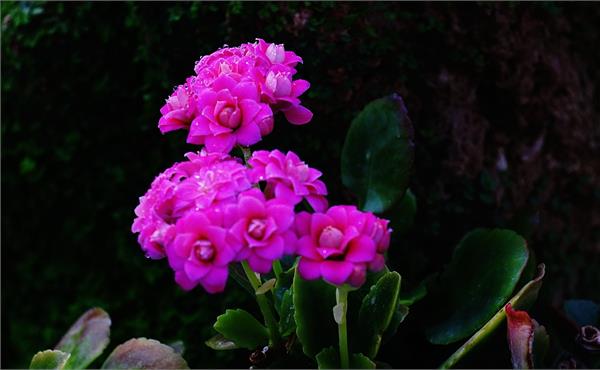
Kalanchoe growing methods and the points to note
Kalanchoe must not be grown in heavy, sticky soil, otherwise it will lead to poor growth, root rot and leaf drop, and in severe cases cause the plant to die. The potting soil should be mixed with 4 parts leaf mold, 4 parts garden soil, 2 parts river sand, plus a small amount of bone meal. This kind of growing medium is loose and fertile, has good drainage, and shows a slightly acidic reaction, which is favorable for root development.
During the peak growing season, apply a dilute compound liquid fertilizer once every 15 to 20 days to promote robust growth and abundant flowering. After flower buds form in November, apply 1 to 2 additional applications of 0.2% potassium dihydrogen phosphate or 0.5% superphosphate, which will result in more flowers, brighter colors and a longer flowering period.
Like other succulent flowers, kalanchoe contains a relatively large amount of water in its tissues and has a strong drought tolerance, so it does not need a lot of watering. During the growing period, simply water thoroughly once every 2 to 3 days and keep the potting soil slightly moist. When temperatures are low in winter, watering must be controlled even more. If watered too much, if drainage is poor, or if the potting soil is too wet, it easily leads to root rot.
Although kalanchoe is fairly drought tolerant, it must not lack water during the growing season; normally it can be watered once every 2 to 3 days. During the vegetative growth stage, the soil must be kept moist, with timely and appropriate watering. In summer, when kalanchoe is in an environment of high heat, strong sunlight, high evaporation and dry air, it can be watered once every evening. In cold winter, kalanchoe enters its dormant period, so watering should be controlled, or even withheld for a short time.
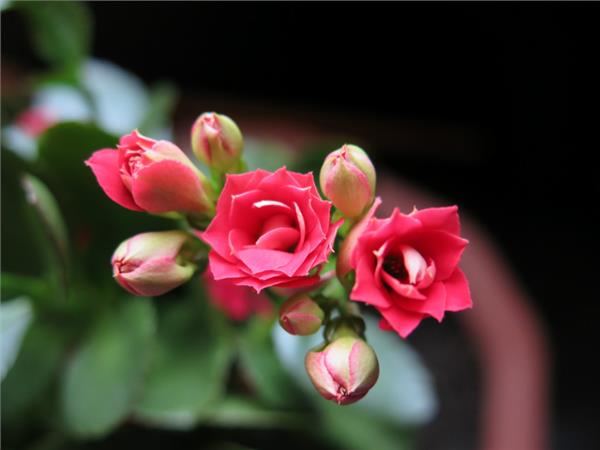
Kalanchoe growing methods: 1. Growing temperature. The most suitable temperature for kalanchoe growth is 15°C to 25°C. Above 30°C growth slows and the plant enters a semi-dormant state; below 10°C growth stops; below 8°C the leaves turn red and flowering is delayed; below 0°C it is easily frozen to death. Therefore, to grow kalanchoe well, you must create a small environment that is warm in winter and cool in summer. At midday in midsummer, avoid strong direct sunlight and place it in a semi-shaded spot with plenty of scattered light, such as under a large tree, under the eaves or on a north-facing balcony. Pay special attention to ventilation and cooling; you may sprinkle water on the nearby ground, but do not sprinkle it on the plant itself.
Kalanchoe growing methods: 2. Plenty of sunlight. Kalanchoe likes a sunny environment. Apart from slight shading at midday in midsummer, it should be placed in a sunny spot the rest of the time, and it needs at least 4 hours of direct light each day to grow robustly. On a building balcony, turn the flowerpot 180 degrees every half month so that it receives light evenly, avoiding a lopsided crown that reduces its ornamental value. Although it can also grow in semi-shade, the stems are thin, the leaves are sparse, and there are few flowers with pale color, far less luxuriant than in a sunny spot. If it is too shady, it not only easily loses its leaves and produces no flowers, but even a plant that has already bloomed, when placed in shade, will have its flower color fade and then the flowers will drop and wither.
Kalanchoe growing methods: 3. Suitable moisture. Kalanchoe is a succulent plant, containing a relatively large amount of water in its tissues, so it is fairly drought tolerant and afraid of waterlogging; under the dry-air conditions of a high-rise building, it grows well. In spring and autumn, water thoroughly once after the potting soil has dried, about every 3 days, and just keep it slightly moist. In summer, water less; once every 5 to 7 days is best. For kalanchoe placed outdoors, avoid rain soaking during the rainy season, as too much water easily causes root rot and leaf drop or even death; by controlling water appropriately so that the potting soil alternates between dry and moist, the branches will be lush and the flowers abundant. After bringing it indoors in winter, it is best to water at noon with water close to room temperature, about once a week.
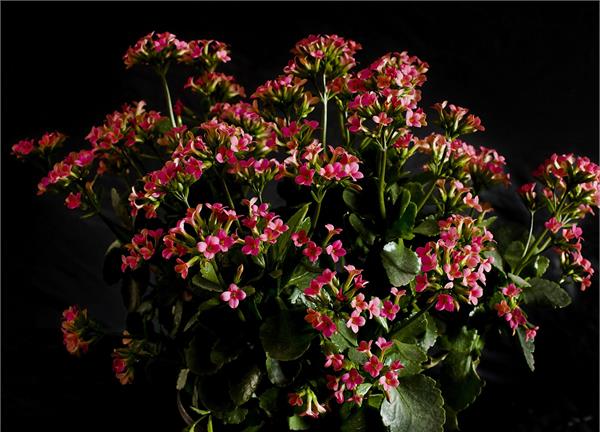
Kalanchoe also has a beautiful legend. It is said that long ago there was a mountain called "Wanxiang Mountain", covered with kalanchoe. At the peak was a Dragon King Pool. To prevent the kalanchoe from being stolen, the Jade Emperor poured a layer of black water over the pool, so that the creatures below the black water pool could not see the sky all day long.
Later, the second prince of the Silver Dragon King and the third princess of the Black Water Dragon King devised a clever plan that not only moved the Jade Emperor to show mercy so that the creatures below the black water pool could bathe in the sunshine, but also scattered the seeds of kalanchoe across the human world, allowing humans to enjoy longevity, and saved the sable. What a beautiful legend. If kalanchoe were assigned bad feng shui, would that not go against common sense?
Furthermore, kalanchoe is small and exquisite, compact in form, with emerald-green leaves and dense flowers. It is an ideal potted flower for winter, able to beautify the home and let people live in an elegant environment, with a harmonious mood, so that when they do things they often feel especially effortless.
In this way, the "feng shui" of the home and human activity are well harmonized. People follow nature, "the unity of heaven and humanity", achieving a state of harmony between yin and yang, between heaven and humanity, and between body and mind. Therefore, for the owner living within, it can further calm the mind, harmonize the spirit, and preserve youth and a good physical state forever. So there is still a basis for the good feng shui of kalanchoe.
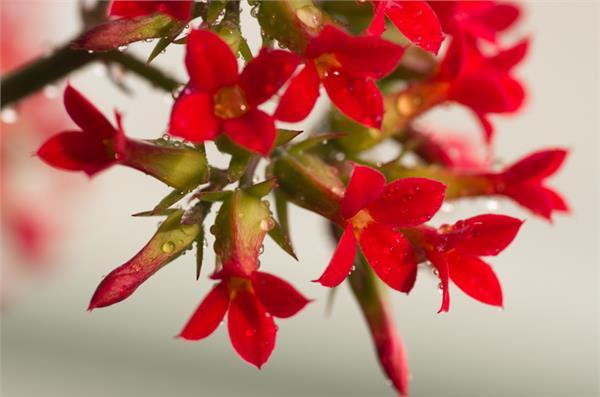
Kalanchoe likes a sunny environment. Apart from slight shading at midday in midsummer, it should be placed in a sunny spot the rest of the time, and it needs at least 4 hours of direct light each day to grow robustly. On a building balcony, turn the flowerpot 180 degrees every half month so that it receives light evenly, avoiding a lopsided crown that reduces its ornamental value.
The above is the relevant introduction in this article. I believe that after reading it you also have a simple understanding of this. If needed, you can continue to follow No. 1 Home Network to learn more information.