How to plant green bamboo? Detailed explanation of propagation environment requirements
Green bamboo is another name for bamboo. Green bamboo is slender and upright, evergreen in all four seasons, and is a very common plant in our lives that everyone loves very much. Since ancient times, green bamboo has had the reputation of being one of the Four Gentlemen along with plum, orchid, bamboo and chrysanthemum. So how do you plant green bamboo?
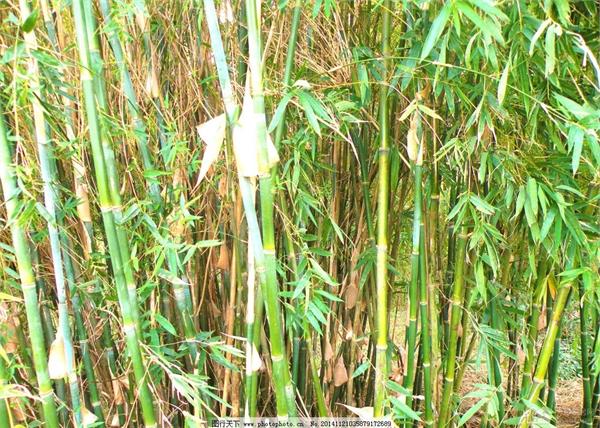
Green bamboo propagation environment requirements
Any asexual propagation method used for green bamboo is a mutation, which leads to flowering. When planting bamboo, choose a sheltered, sunny and humid environment. Green bamboo grows fast and has a large growth volume, so it has high water and fertilizer requirements and needs sufficient water and moisture, but it also needs good drainage. It requires deep, fertile, slightly acidic soil rich in organic matter and mineral elements.
Green bamboo planting methods
Division, burying branches, moving rhizomes and sowing are mostly used for propagation. Bamboo rhizomes have very strong sprouting ability and clumping habit. Before germination in early spring, cut the bamboo rhizomes and plant them separately together with the culms; new bamboo can grow by that summer. Seeds from bamboo after flowering can also be sown.[1]
1. Burying rhizome seedlings
The method is: dig out strong rhizomes, keep the rhizome roots and rhizome buds, retain more native soil, cut the bamboo rhizomes into 50-60 cm rhizome sections, lay them flat on the seedbed, cover with 5-8 cm of soil, and keep the seedbed moist. The best time for burying rhizomes is one month before bamboo shoots emerge in early spring. After burying the rhizomes, pay attention to watering in dry weather and drainage in rainy weather. After seedlings emerge, apply nitrogen fertilizer in good time, such as urea, ammonium sulfate and decomposed human manure and urine, and also weed in time. As long as management is proper, after one year each rhizome can grow 2-3 bamboo seedlings for afforestation the following spring.
2. Burying culm seedlings
The method is: choose robust 2-year-old bamboo culms, dig them up with the base or cut them without the base, keep one branch node on the branches at each node of the culm, cut off and remove the tip of the culm, and every 1-2 nodes, cut or saw a notch in the middle of the node. Soak the culm in clean water, and after the bamboo cavity is filled with water, seal the cut with clay. Open level ditches in the seedbed, place the culm flat (with the cut facing upward), then cover with 5-10 cm of soil and keep the seedbed moist. After about 1 month, the buds at the culm nodes germinate and emerge one after another. After half a year to one year, the culm can be dug up and cut into individual bamboo seedlings for afforestation. The best time for burying culm seedlings is about 1 month before bamboo germination.
3. Burying node seedlings
The method is: saw the bamboo culm into sections node by node or every two nodes, then transplant and bury them in the seedbed and cover with soil and keep moist. The management requirements are the same as for burying culm seedlings.
The above is the relevant introduction in this article. I believe that after reading it you also have a simple understanding of this. If needed, you can continue to follow No.1 Home Network to learn more information.