How to grow succulents? Master these care essentials
The adorable fleshy plants have become the new favorite of plant lovers. Succulents, which seem easy to care for, sometimes "throw a tantrum" too, but once you grasp a few key care points, you can handle them with ease~
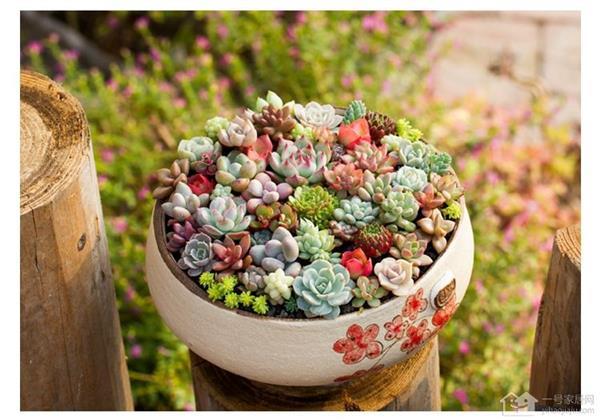
Watering
Most succulents come from arid regions, so their water requirements are not that high. The biggest concern is root rot caused by overwatering. During the growing season (such as spring, flowering, etc.), water more, while during the dormant period (such as winter, after flowering, after fruit drop, etc.), water less. Always stick to the principle of watering thoroughly only after the soil has dried out. In summer, do not water under the scorching sun; in winter, it is best to choose a warm midday. In addition, do not spray water directly onto the plants, as it not only affects their appearance but may also cause harm to the plants~
Light
Most succulents like sunlight, but they still cannot withstand the scorching summer sun~ The fleshy ones like ample but soft light. In summer and autumn, appropriately reduce the light duration, while in winter and spring, appropriately increase it. Light has a great influence on succulents turning red. For example, with Sedum rubrotinctum 'Aurora' and Crassula pubescens subsp. radicans, if the light is insufficient, the fleshy ones will fade~
Soil
The fleshy ones like loose, breathable soil with good drainage, so large-particle akadama and hyuga pumice are better, and mixing in some rice husk charcoal is even better. The above soil mix is suitable for beginners to use; even if care is not thorough, they can still get enough nutrients and water.
Fertilizing
Spring is the season of vigorous growth for the fleshy ones, so some fertilizer can be applied to promote their growth. Newly planted plants that have just been put into the soil do not need fertilizing. For most succulents, fertilizing once every half a year is enough. The faster the growth rate, the relatively larger the amount of fertilizer needed. Properly supplementing with nitrogen fertilizer is beneficial to the growth of the fleshy ones, but remember not to be greedy for too much; too much chemical fertilizer will kill the fleshy ones~
There are many types of succulents, and their habits differ slightly, so it is best to learn a little about them before buying and planting. For beginners making combined bonsai, it is best to choose plants that are easy to survive and have not too different habits to combine together~
The above is the relevant introduction of this article. I believe that after reading it, you also have a simple understanding of this. If needed, you can continue to follow No.1 Home Network to learn more information.