What varieties of Pachyphytum oviferum are there? Grow them this way to make them even more beautiful
Pachyphytum oviferum, also known as thick-leaved plant, white beauty, etc. It belongs to the Crassulaceae family and the Pachyphytum genus, and is a perennial succulent herbaceous plant. It is native to San Luis Potosi (tropical) in central Mexico. It likes sunlight and is drought-tolerant; it is suited to loose, well-draining sandy loam. It grows well under climate conditions with warm winters and cool summers, and does not tolerate hot and humid summer weather. Below is a detailed introduction to how to grow Pachyphytum oviferum; the most important thing in growing succulents is careful care.
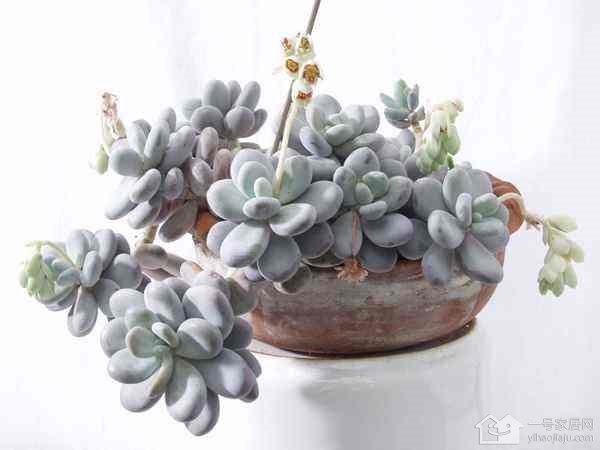
I. How to grow Pachyphytum oviferum
Temperature: Pachyphytum oviferum by nature prefers a warm, dry, and ventilated environment. In summer, it requires a cool temperature environment to be maintained, and in winter it requires a warm environment to be maintained. Only after these conditions are met can Pachyphytum oviferum grow well.
Soil: Pachyphytum oviferum does not have high soil requirements, but as long as the soil's looseness and drainage are ensured, it is fine. For the soil, peat, perlite, and coal cinder can be mixed at 1:1:1, and river sand can be spread on the surface to ensure breathability.
Light: Pachyphytum oviferum likes sunlight, so it should be given appropriate light. However, in summer, Pachyphytum oviferum should not receive direct sunlight, and can be placed in a ventilated and shady place to receive appropriate indirect light. In winter, place Pachyphytum oviferum on a balcony.
Watering: Pachyphytum oviferum does not have very high water requirements. In summer, it can be watered about 3-4 times a month. In winter, when the temperature is lower, watering can be appropriately reduced. In early spring, watering can be gradually resumed, otherwise it is easy to cause root rot.
II. Types of Pachyphytum oviferum
At present, the common types of Pachyphytum oviferum include Pachyphytum viride, Sedum dasyphyllum, Sedum dasyphyllum 'Major', Sedum dasyphyllum 'Minor', and other varieties.
Pachyphytum viride: Pachyphytum viride is a succulent plant in the Crassulaceae family and Pachyphytum genus, native to San Luis Potosi in central Mexico. The plant's leaves are arranged in a ring, spoon-shaped, with leaf tips, the leaf margins are rounded, the leaves are thick, the leaves are smooth with a slight amount of white powder, and the leaves range from grass green to dark green. With sufficient sunlight, the leaves are closely arranged and the margins and leaf tips turn red; with weak light, the leaf color becomes light green, the leaves become narrow and long, and the spacing between leaves will elongate due to etiolation.
Sedum dasyphyllum: Sedum dasyphyllum is a small succulent plant or fleshy plant in the Crassulaceae family and Sedum genus. Its native habitat is in the arid regions of West Asia and North Africa. Sedum dasyphyllum is a perennial succulent plant, with a plant height of 5-10 cm, stems with many branches, leaves enlarged and alternate, obovate, 2 cm long, green, and the leaves are fleshy and dark green. The dark green fleshy leaves, like jade, are very bright and beautiful under sunlight. It blooms in spring, with pale pinkish-white flowers.
III. Price of Pachyphytum oviferum
Because Pachyphytum oviferum is a small succulent plant, its price is not expensive, generally around ten-plus yuan. Of course, Pachyphytum oviferum with good varieties and high ornamental value may be a bit more expensive, but compared with other ornamental plants, the price of Pachyphytum oviferum is still quite affordable.
The above is the relevant introduction in this article. I believe that after reading it, you also have a simple understanding of this. If needed, you can continue to follow No.1 Home Network to learn more information.