Detailed Guide to Growing and Caring for Epiphyllum hybridum
Epiphyllum hybridum is a perennial evergreen plant, and the base of old stems often becomes woody / the leaf-like stems are lanceolate. Let us now look at the growing methods and precautions for Epiphyllum hybridum.
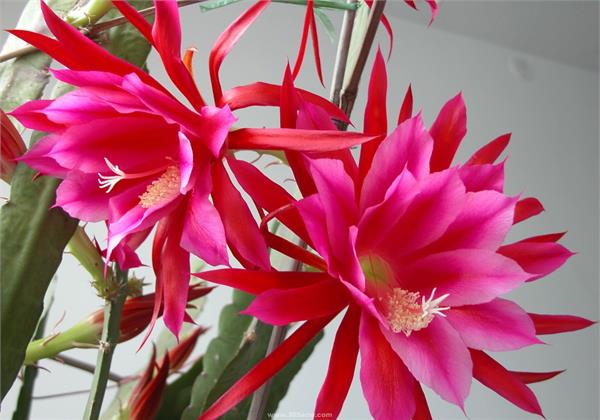
What Are the Growing Methods and Precautions for Epiphyllum hybridum
Growing Methods for Epiphyllum hybridum
1. Soil: Epiphyllum hybridum does not have very high soil requirements; loose, fertile, well-drained sandy loam is sufficient.
2. Watering: During the growth and development period of Epiphyllum hybridum, watering should follow the principle of watering when dry and letting it dry between waterings. Never allow water to accumulate in the pot, otherwise root rot easily occurs. When flower buds have appeared but have not yet opened, watering must not be excessive, otherwise flower and bud drop is easily caused. In the dry and windy spring and the hot summer, it is necessary to frequently spray the modified stems with clean water and sprinkle water on the ground around the flower pot to maintain relatively high air humidity, which is beneficial to growth and flowering.
3. Sunlight: Epiphyllum hybridum prefers a warm and humid environment, but avoids direct sunlight. In summer, when the weather is hot and the sunlight is strong, it should be placed under a shade shed to avoid direct sunlight, and water should often be sprayed around the pot to increase air humidity. In winter, when the weather is cold, Epiphyllum hybridum is not cold-tolerant, so after being brought indoors it should be placed in a spot with ample sunlight.
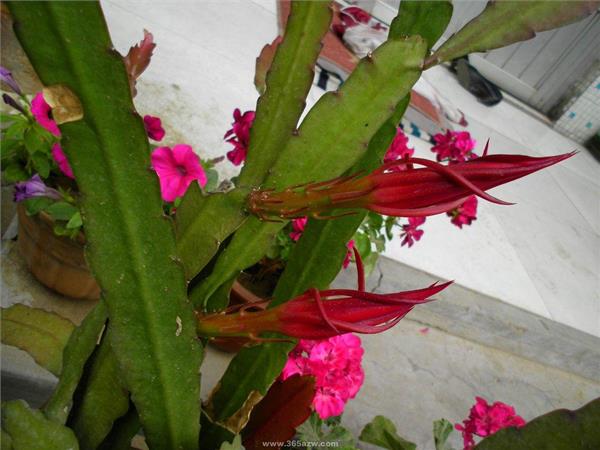
4. Temperature: Epiphyllum hybridum is not cold-tolerant. In northern regions, it should be brought indoors around the Cold Dew solar term, and after being brought indoors, placed in a spot with ample sunlight. From November to March of the following year, the temperature should be maintained at 10-15°C; if the temperature is too high, the modified stems easily grow excessively, affecting the symmetry of the plant shape. From March to June, the temperature should be maintained at 13-18°C; if the temperature is too low, it affects bud formation. Growing methods and precautions for Epiphyllum hybridum. Growing methods and precautions for Epiphyllum hybridum.
5. Pruning: Because the modified stems of Epiphyllum hybridum are soft, thin bamboo poles are needed as supports. It is best to tie them into an oval trellis, evenly and neatly distribute the modified stems on the trellis and tie them, which can both prevent breakage and facilitate ventilation and light penetration, making the plant shape symmetrical and attractive.
6. Fertilizing: Epiphyllum hybridum likes fertilizer. During the growing season, apply 1 time of fully decomposed dilute cake fertilizer water every 15-20 days. After the Spring Festival, change to applying liquid fertilizer 1 time every 10 days, and promptly remove excess lateral buds and branch buds sprouting from the base to reduce nutrient consumption and keep the plant shape neat and attractive. During the bud stage, apply 1-2 additional applications of quick-acting phosphorus fertilizer to promote larger flowers and more vivid colors.
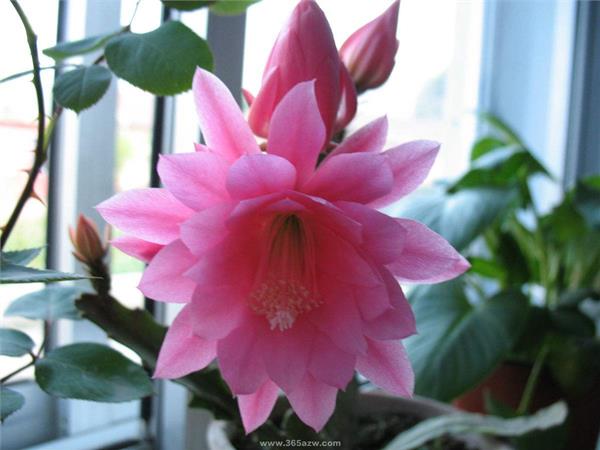
Precautions for Growing Epiphyllum hybridum
Maintain Ventilation
As mentioned earlier, Epiphyllum hybridum grows in tropical regions of the Americas, in relatively desert-like places, which means this flower is very drought-tolerant. If grown elsewhere, this kind of environment must still be maintained, and ventilation is very important. Generally speaking, if there is ventilation, it will not be especially humid, but it should still be remembered that Epiphyllum hybridum cannot be watered too much. If it is the rainy season, drainage also needs attention, so that the soil in which Epiphyllum hybridum grows becomes loose.
Pay Attention to Keeping Warm
Flowers that grow in tropical regions inevitably have a relatively high tolerance for high temperatures. That is right, Epiphyllum hybridum indeed very much likes a warm environment, and the temperature range it can adapt to is not wide, and it is very intolerant of cold. When growing Epiphyllum hybridum, attention must be paid to keeping it warm. In warm summer, it can be placed outdoors, but when the weather turns cold, be sure to remember to move the flower indoors. If the temperature is very low, it is best to have heating to keep it warm.
Fertilizing and Drainage
To grow flowers well, fertilizing is also one of the key points. Even with the best growing environment, how can a flower without nutrients bloom well? Of course, fertilizing is not done arbitrarily. First, you need to know what nutrients Epiphyllum hybridum needs, when it needs nutrients, and what kind of soil it likes: neutral, acidic, or alkaline? After fertilizing, attention should also be paid to drainage. As mentioned earlier, Epiphyllum hybridum cannot retain too much water.
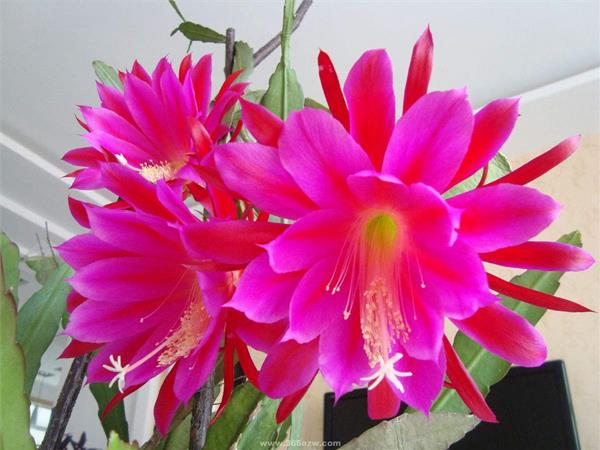
Pest and Disease Control
Plant growth also includes times when plants get sick or get insects. If a potted flower is growing well, with lush branches and leaves and sufficient nutrients, it would be a great pity if it gets pests or diseases. How should pests and diseases be controlled? Spraying pesticide is a very effective method. Be careful not to casually use any pesticide to spray; be sure to pay attention to the properties of the pesticide and the dosage when spraying. What if there are still insects after spraying? Then just catch the insects by hand. In any case, catching insects on potted flowers is not very heavy work.
Dust Cleaning
Many people, when growing flowers, stop caring once they see them bloom. In fact, cleaning the flowers is also very important, mainly cleaning the branches and leaves, of course. Everyone knows that green plants have the effect of purifying the air. How do they purify the air? Basically, it is through the branches and leaves. Over time, dust will collect on the branches and leaves, affecting their respiration, so the dust should be cleaned regularly.
In fact, cleaning the flowers is also very important, mainly cleaning the branches and leaves, of course. Everyone knows that green plants have the effect of purifying the air. How do they purify the air? Basically, it is through the branches and leaves. Over time, dust will collect on the branches and leaves, affecting their respiration, so the dust should be cleaned regularly.