Introduction to the Division Propagation and Management Key Points of Haworthia fasciata
It prefers warm and semi-shaded conditions, and requires cool temperatures in winter, ideally not exceeding 12°C indoors. Below, let us take a look at the introduction to the division propagation and management key points of Haworthia fasciata.
Introduction to the Division Propagation and Management Key Points of Haworthia fasciata
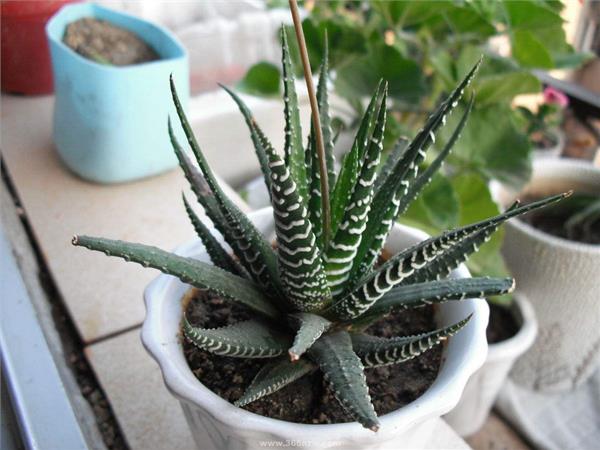
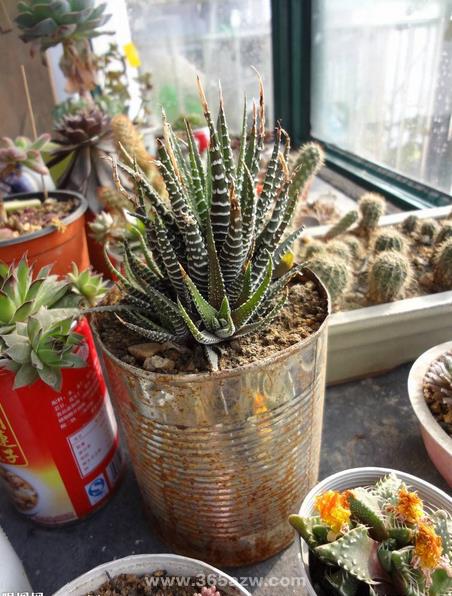
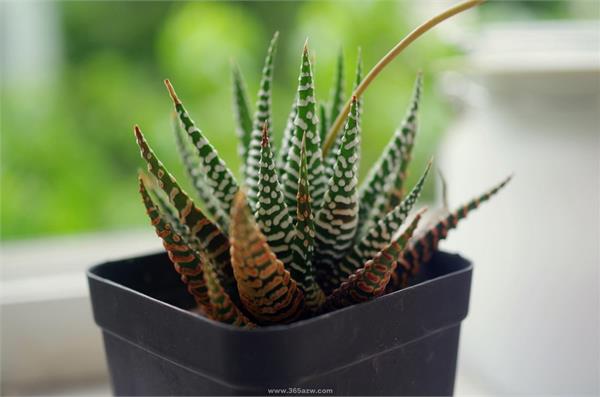
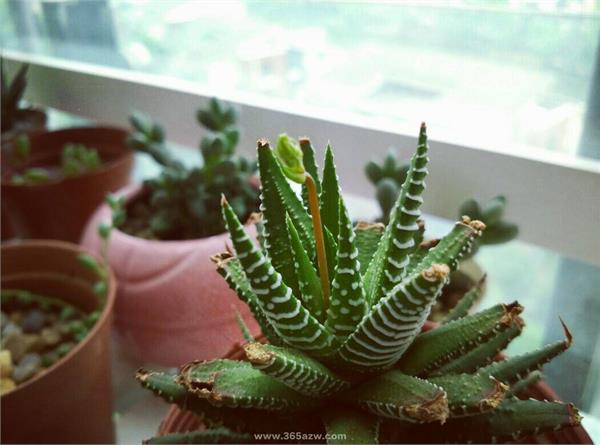
Perennial succulent herbaceous plant. The fleshy leaves are arranged in a rosette, with a plant spread of 5-7 cm. The leaves are 3-4 cm long and 1.3 cm wide, triangular-lanceolate, acuminate, slightly upright, with the upper part curving inward; the leaf surface is flat and the leaf back is convex, forming a keel shape, green in color, with relatively large white wart-like protrusions arranged in horizontal stripes.
Division Propagation
Division time: It is best carried out in early spring (February and March) after the soil has thawed.
Division method: Take the mother plant out of the flower pot, shake off excess potting soil, separate the tangled root system as much as possible, and cut it apart with a sharp knife into two or more plants. Each divided plant must carry a considerable amount of roots, and its leaves should be properly pruned to help it survive.
Potting and disinfection: Soak the divided small plants in a 1500-fold solution of chlorothalonil for five minutes, then take them out and let them dry before potting. Alternatively, immediately after potting, drench the roots with chlorothalonil.
Management after division: After the divided plants are potted, drench the roots or water thoroughly once. Because its root system is greatly damaged and its water absorption capacity is very weak, it takes about 3-4 weeks to recover and sprout new roots. Therefore, within 3-4 weeks after division, watering should be controlled to avoid root rot. However, the transpiration of its leaves is not affected. In order to maintain the water balance of the leaves, it is necessary to mist the leaf surface 1-3 times a day (mist more when the temperature is high, and mist less or not at all when the temperature is low). Do not apply fertilizer during this period either. After division, also pay attention to excessive sunlight; it is best to place it in a shade shed for care.
Management Key Points
Humidity: It likes a relatively dry air environment. If rainy and cloudy days last too long, it is susceptible to infection by pathogens. It is afraid of rain, and the leaves should be kept dry at night. The optimal relative air humidity is 40-60%.
Temperature: The optimal growth temperature is 15°C-32°C. It is afraid of high temperatures and stuffiness, and enters dormancy when the summer heat exceeds 33°C. It avoids cold and frost, and the overwintering temperature needs to be kept above 10°C. It also enters dormancy when the winter temperature drops below 7°C. If the ambient temperature approaches 4°C, it will die from frost injury.
In summer:
1. Strengthen air convection so that the heat inside its body can be released;
2. Place it in a semi-shaded area, or provide it with 50% shade;
3. Mist it appropriately, 2-3 times a day.
In winter:
1. Move it indoors to a place with bright light for care;
2. Outdoors, it can be wrapped with plastic film to overwinter, but the film must be opened every two days at noon when the temperature is relatively high to let it breathe;
Light: When placed in a semi-shaded area in summer for care, or given 50% shade, the leaf color will be more beautiful. In spring and autumn, because the temperature is not very high, it should be given direct sunlight to help it carry out photosynthesis and accumulate nutrients. In winter, place it indoors in a place with bright light for care. If it is normally kept indoors, place it near southeast-facing doors and windows so it can receive light, and every one month or one and a half months, move it outdoors for two months of care; otherwise the leaves will grow thin and yellow, and the new branches or petioles will be slender with elongated internodes, in a state of etiolation.
Fertilizer and water management: It has a very strong drought tolerance and can grow even under arid environmental conditions, but this does not mean it should not be watered or fertilized. Its root system is afraid of waterlogging. If water accumulates in the flower pot, or if it is watered and fertilized too frequently, root rot is likely to occur. The principle for fertilizing and watering it is "alternate dry and wet; when dry, dry thoroughly; do not water if not dry; when watering, water thoroughly." When fertilizing and watering, avoid getting the plant wet:
Spring and autumn: These two seasons are its peak growth periods. Fertilizer and water management follows the cycle of "Hua Bao" - clear water - "Hua Bao" - clear water, with intervals of approximately: 2-4 days for outdoor care; shorter intervals during sunny days or high temperatures, and longer intervals or no watering during rainy days or low temperatures; 3-6 days for indoor care; shorter intervals during sunny days or high temperatures, and longer intervals or no watering during rainy days or low temperatures.
Summer: During the high-temperature period in summer, it often enters dormancy and has little demand for fertilizer and water; fertilizer and water may even need to be restricted. Fertilizer and water management follows the cycle of "Hua Bao" - clear water - clear water - "Hua Bao" - clear water - clear water, with intervals of approximately: 3-5 days for outdoor care; shorter intervals during sunny days or high temperatures, and longer intervals or no watering during rainy days or low temperatures; 4-7 days for indoor care; shorter intervals during sunny days or high temperatures, and longer intervals or no watering during rainy days or low temperatures. Watering should be scheduled as much as possible in the morning or evening when the temperature is lower. The plant should also be misted frequently.
Winter: During the winter dormancy period, the main task is to control fertilizer and water. Fertilizer and water management follows the cycle of "Hua Bao" - clear water - clear water - "Hua Bao" - clear water - clear water, with intervals of approximately 7-10 days; shorter intervals during sunny days or high temperatures, and longer intervals or no watering during rainy days or low temperatures. Watering should be scheduled as much as possible at noon on sunny days when the temperature is relatively high.
Tissue Culture Rapid Propagation
1. Material: Young buds from the stem base of Haworthia fasciata (plant cells are totipotent, meaning that any plant cell has the ability to form that plant body. In other words, any highly differentiated cell has the ability to return to the original undifferentiated state and can differentiate into other forms of highly differentiated cells. This "totipotency" is the theoretical basis of plant tissue culture. Based on this characteristic of plant cells, any highly differentiated cell of the plant body can be cultured arbitrarily, and young buds are highly differentiated parts, so they are selected).
2. Culture conditions: MS is used as the basic medium. (Composition: KNO3: 1650 NH4NO3: 1900 MgSO4.7H2O: 370 KH2PO4: 170 CaCl2.2H2O: 440 MnSO4.4H2O: 22.3 ZnSO4.7H2O: 8.6 H3BO3: 6.2 NaMoO4.2H2O: 0.25 CuSO4.5H2O: 0.025 Na2.EDTA: 37.3 FeSO4.7H2O: 27.8 inositol: 100 nicotinic acid: 0.5 glycine: 2 thiamine hydrochloride: 0.1 pyridoxine hydrochloride: 0.5 KI: 0.83 CoCl2.6H2O: 0.025 sucrose)
Cut axillary buds bearing 4-5 young leaves from the stem base of a potted mother Haworthia fasciata plant. Rinse under running water for 5 min, soak in 0.2% benzalkonium bromide for 30 min, and rinse under running water for 10 min (this method saves relatively more water and has a very low contamination rate). Place the material on a clean bench and disinfect with 0.1% HgCl2 for 8 min, rinse with sterile water 10 times, and blot dry with sterile filter paper. Use a scalpel to cut out the bud portion, and cut the removed young leaves into 0.5 cm small pieces. Inoculate into the medium for culture.
3. Bud culture: The buds of Haworthia fasciata rapidly swell and grow on the medium. After about 20 d, cut the elongated buds into 3-4 parts and inoculate them into another medium. After another week, a cluster of young buds sprouts at the base of each bud (about 5-10).
4. Callus and bud induction: After the young leaf segments are cultured in the medium for about 2 weeks, a layer of colorless transparent callus is produced on the wound surface. After 20 days of culture, this callus does not proliferate but instead grows 2-3 small buds from it. After the buds are cut off and transferred to another medium, they form a cluster of small plantlets.
5. Root induction and its transformation: Place the young leaf segments into D and culture for one month; many white spherical roots form at the wound and continuously increase. Transfer these roots into the medium and culture for about one week; the root system turns green and callus grows out. After transferring to another medium for two weeks, spherical embryos are produced, and some embryos begin to grow young leaves.
6. Subculture proliferation and rapid propagation: By repeatedly separating and micro-cutting the obtained in vitro propagation line of this plant, geometric-level proliferation can be achieved. This process is what is called rapid micropropagation or rapid propagation (Rapidpropagation). Rapid plant propagation is usually carried out after the in vitro propagation line has been established. Sometimes callus can also be rapidly proliferated, in which case liquid suspension culture is usually used.
Roughly divide the small plantlet clusters or spherical embryos obtained above and inoculate them into another medium for mass proliferation, doubling on average every two weeks. Using one bud as an explant, after two months more than 20 bottles of subcultured plants have already been obtained (about 30 plants per bottle).
7. Strengthening seedlings and rooting: Inoculate large plantlets into medium E, strengthen lighting to 10 h/d, and roots will form after one week; after about another week of culture, they can be transplanted. (When the overall morphology of a certain plant is established by applying tissue culture technology, that is, when seedlings with stems, roots, and leaves are obtained, they must undergo a certain hardening process so that they gradually go from a sterile environment to a non-sterile environment, and from an artificial culture environment to a natural environment. Customarily, the "transitional treatment method" is used, that is, gradually changing the environment; for example, seedlings taken out of bottles should use sterilized soil, maintain moisture and warmth, and at the same time certain seedling-strengthening treatments should also be done, such as increasing light and supplementing nutrient solution. After a series of treatments, a "clone seedling" produced by tissue culture successfully survives.)
8. Transplanting: Before taking out of the bottle, open the bottle mouth and harden the seedlings for two days. Wash the culture medium off the rooted seedlings and transplant them into a sterile substrate of vermiculite + perlite, maintain humidity, and the survival rate is higher than 90%.
The interval is approximately 7-10 days; shorter intervals during sunny days or high temperatures, and longer intervals or no watering during rainy days or low temperatures. Watering should be scheduled as much as possible at noon on sunny days when the temperature is relatively high.Tissue Culture Rapid Propagation
1. Material: Young buds from the stem base of Haworthia fasciata (plant cells are totipotent, meaning that any plant cell has the ability to form that plant body. In other words, any highly differentiated cell has the ability to return to the original undifferentiated state and can differentiate into other forms of highly differentiated cells. This "totipotency" is the theoretical basis of plant tissue culture. Based on this characteristic of plant cells, any highly differentiated cell of the plant body can be cultured arbitrarily, and young buds are highly differentiated parts, so they are selected).
2. Culture conditions: MS is used as the basic medium. (Composition: KNO3: 1650 NH4NO3: 1900 MgSO4.7H2O: 370 KH2PO4: 170 CaCl2.2H2O: 440 MnSO4.4H2O: 22.3 ZnSO4.7H2O: 8.6 H3BO3: 6.2 NaMoO4.2H2O: 0.25 CuSO4.5H2O: 0.025 Na2.EDTA: 37.3 FeSO4.7H2O: 27.8 inositol: 100 nicotinic acid: 0.5 glycine: 2 thiamine hydrochloride: 0.1 pyridoxine hydrochloride: 0.5 KI: 0.83 CoCl2.6H2O: 0.025 sucrose)
Cut axillary buds bearing 4-5 young leaves from the stem base of a potted mother Haworthia fasciata plant. Rinse under running water for 5 min, soak in 0.2% benzalkonium bromide for 30 min, and rinse under running water for 10 min (this method saves relatively more water and has a very low contamination rate). Place the material on a clean bench and disinfect with 0.1% HgCl2 for 8 min, rinse with sterile water 10 times, and blot dry with sterile filter paper. Use a scalpel to cut out the bud portion, and cut the removed young leaves into 0.5 cm small pieces. Inoculate into the medium for culture.
3. Bud culture: The buds of Haworthia fasciata rapidly swell and grow on the medium. After about 20 d, cut the elongated buds into 3-4 parts and inoculate them into another medium. After another week, a cluster of young buds sprouts at the base of each bud (about 5-10).
4. Callus and bud induction: After the young leaf segments are cultured in the medium for about 2 weeks, a layer of colorless transparent callus is produced on the wound surface. After 20 days of culture, this callus does not proliferate but instead grows 2-3 small buds from it. After the buds are cut off and transferred to another medium, they form a cluster of small plantlets.
5. Root induction and its transformation: Place the young leaf segments into D and culture for one month; many white spherical roots form at the wound and continuously increase. Transfer these roots into the medium and culture for about one week; the root system turns green and callus grows out. After transferring to another medium for two weeks, spherical embryos are produced, and some embryos begin to grow young leaves.
6. Subculture proliferation and rapid propagation: By repeatedly separating and micro-cutting the obtained in vitro propagation line of this plant, geometric-level proliferation can be achieved. This process is what is called rapid micropropagation or rapid propagation (Rapidpropagation). Rapid plant propagation is usually carried out after the in vitro propagation line has been established. Sometimes callus can also be rapidly proliferated, in which case liquid suspension culture is usually used.
Roughly divide the small plantlet clusters or spherical embryos obtained above and inoculate them into another medium for mass proliferation, doubling on average every two weeks. Using one bud as an explant, after two months more than 20 bottles of subcultured plants have already been obtained (about 30 plants per bottle).
7. Strengthening seedlings and rooting: Inoculate large plantlets into medium E, strengthen lighting to 10 h/d, and roots will form after one week; after about another week of culture, they can be transplanted. (When the overall morphology of a certain plant is established by applying tissue culture technology, that is, when seedlings with stems, roots, and leaves are obtained, they must undergo a certain hardening process so that they gradually go from a sterile environment to a non-sterile environment, and from an artificial culture environment to a natural environment. Customarily, the "transitional treatment method" is used, that is, gradually changing the environment; for example, seedlings taken out of bottles should use sterilized soil, maintain moisture and warmth, and at the same time certain seedling-strengthening treatments should also be done, such as increasing light and supplementing nutrient solution. After a series of treatments, a "clone seedling" produced by tissue culture successfully survives.)
8. Transplanting: Before taking out of the bottle, open the bottle mouth and harden the seedlings for two days. Wash the culture medium off the rooted seedlings and transplant them into a sterile substrate of vermiculite + perlite, maintain humidity, and the survival rate is higher than 90%.