Basic Information and Cultivation Methods of Ground Cucumber Explained
Many friends nowadays choose to start businesses in their hometowns. The biggest advantage of rural areas is the abundance of land, which is suitable for growing crops. So today we want to introduce the cultivation of ground cucumber; ground cucumber is actually a cucumber that does not need trellising.
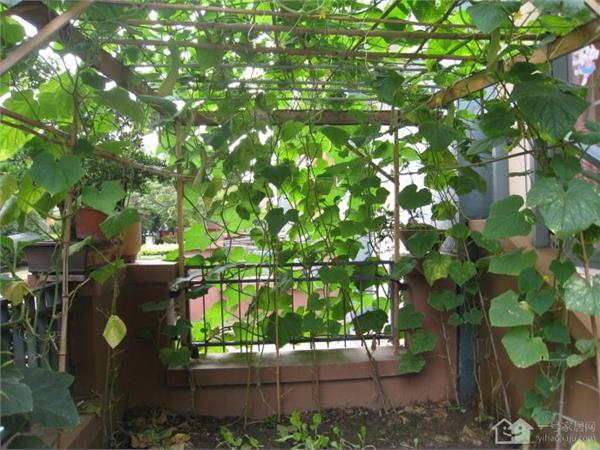
I. Basic Information on Ground Cucumber
Ground cucumber is a perennial herb with a long, deep main root. The stem is about 20 cm tall, ascending or decumbent. The leaves are triangular-cordate or nearly round-cordate, 1-6 cm long and 1-4 cm wide, with a sharp-pointed or rounded apex, a cordate base, and serrate margins; the teeth have glands at their tips; both surfaces have brown dots and are hairless; the stipules are linear-lanceolate. The margins are pectinate; the stem base usually has persistent stipules; leaves are basal.
The petioles of the leaves are relatively long, and the petioles of the stem leaves gradually shorten toward the top. The pedicels emerge from the root or branch from the stem, 6-10 cm long; the flowers are pale purple, about 2 cm in diameter; the calyx has 5 green lanceolate sepals, with a semiorbicular appendage at the base; the corolla has 5 narrow, long petals with brown dots, and the lower petal has a spur, long-saccate and slightly curved; there are 5 stamens; the ovary is superior, and the stigma is pointed, slightly curved, and undivided. The capsule is hairless. The flowering period is April.
II. Ground Cucumber Cultivation Techniques
The trellis-free cucumber, commonly known as "ground roller" cucumber, does not need trellising or pruning. It is early-maturing and resistant to cold and disease. It has shorter internodes and many branches, naturally stops growing at the top after setting fruit, and has high yield. It is suitable for open-field or plastic-film-mulched cultivation in early spring. The key cultivation points are as follows:
1. Variety Selection
Choose the xx "ground roller" cucumber, which has a long cultivation history, relatively mature techniques, and good adaptability to the xx climate and soil.
2. Sowing and Seedling Raising
Sprouting: Mix carbendazim with warm water at 1:800, soak the seeds for 5-8 hours, then remove them, wash them, air-dry them, wrap them in a wet cloth, and sprout them at 30°C, keeping the seeds moist; sow once the shells crack.
Sowing: In a greenhouse or plastic tunnel, use sterilized substrate for plug seedling production. Choose 50-cell seedling trays, sow 2-3 seeds per cell, water thoroughly after sowing, and then cover with plastic film. For open-field cultivation, use heated flues, plastic-film middle covering, arched-shed covering, and straw-curtain insulation at night to raise temperature for seedling production.
3. Seedbed Management
The daytime temperature should be controlled at 25-28°C and the nighttime temperature at 12-15°C to prevent excessive growth caused by high temperatures. Regularly observe the dryness and moisture of the seedbed, and water as little as possible to avoid excessive temperature and humidity causing seedling diseases. In the later stage, strengthen ventilation and hardening on sunny days to cultivate strong, healthy seedlings.
4. Seedling Lifting and Transplanting
Cucumbers have a high fertilizer demand and require heavy application of base fertilizer. Apply 3000 kg of decomposed organic fertilizer, 150-200 kg of bio-organic fertilizer, 20 kg of phosphate fertilizer, and 15 kg of potassium fertilizer per mu. When the seedlings have two leaves and one heart, they can be transplanted to the field. Water the seedbed thoroughly the night before transplanting to make seedling lifting and transplanting easier. Adopt furrow preparation and bed shaping, plastic-film mulching, double-row double-plant planting, and low-arch double-film mulching cultivation.
The ridge bed is 60 cm wide and 20 cm high, with double rows and double plants in a "T-shaped" planting arrangement, with a plant spacing of 35-40 cm and a row spacing of 40 cm. After planting, water with settling water; the bed spacing is 140 cm with a middle drainage ditch 30 cm wide and 20 cm deep.
5. Field Management
According to growth conditions, pinch off growing tips and top the plants to control apical dominance, and at the same time promptly remove old leaves, yellow leaves, and tendrils from the lower part of the plants to reduce nutrient consumption, promote concentrated nutrient distribution, and benefit female flower formation and fruit enlargement. Apply thin fertilizer frequently, and water timely once the fruiting stage begins. During the peak fruiting period, when temperatures rise and water demand is high, water every 2-3 days to promote rapid enlargement of young cucumbers.
According to the principles of removing weeds while they are small, preventing disease early, and relying mainly on prevention with treatment as a supplement, promptly clear field weeds to prevent the breeding of pests and diseases. Use as little or no pesticide as possible, and combine physical control with biological control to ensure the quality and safety of agricultural products.
6. Timely Harvesting
Generally, the suitable harvest time is when the cucumber is 15-20 cm long, the skin color is bright, the fruit is straight, and the fruit stalk still has a flower. The root cucumber should be harvested early, especially the root cucumber of weak plants; for vigorous plants whose upper fruits have not set, delay harvesting the root cucumber to keep the fruit and suppress the vine, preventing excessive growth. Once the peak fruiting stage begins, harvest early in a timely manner, and replenish water and fertilizer promptly to ensure a bumper harvest.
The above is the relevant introduction in this article. I believe that after reading it, you now have a simple understanding of this. If needed, you can continue to follow No. 1 Home Network to learn more information.