Agarwood Planting Methods and Tips for Telling Real from Fake
Agarwood is a tree that can be used to make incense. If the heartwood of an agarwood tree is cut open, it receives external stimulation and produces a large amount of resin, and this resin has a rich fragrance. Agarwood is relatively dense and can sink to the bottom of water, so many people, when telling real agarwood from fake, simply put the agarwood into water: if it sinks, it is real; if it floats, it is fake. So do you know the planting methods for agarwood? How do you tell real agarwood from fake?
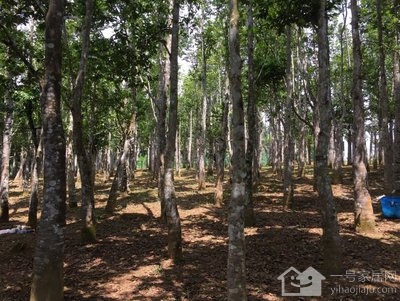
I. Agarwood Planting Methods
1. The planting season for agarwood is March and April, so choose good saplings during these two months for cultivation.
2. The planting density needs to be determined according to the conditions of soil and water. If the water and fertilizer conditions are relatively good, then a planting density of 2M*3M is suitable, and an average of 100 agarwood trees can be planted per mu. If the land is not very fertile and rainfall is also on the low side, then planting should be done at a spacing of 2M*2.5M, and an average of 120 agarwood trees can be planted per mu.
3. Before planting, dig holes according to the row spacing of the plants. The holes need to be 50*50 cm in size. After digging, place the saplings in and fill with soil. Then begin fertilizing and watering, and water thoroughly. After that, watering once a day is enough; if it is a rainy day, you can water less.
4. After planting, regular loosening of the soil and hoeing of weeds are needed. The first three years of planting agarwood require relatively more attention, and care must be taken to protect the saplings. In winter, keep them warm; in summer, weed and prune branches. Fertilize appropriately to prevent the agarwood from failing to grow tall and large.
II. Identification Methods
1. Natural agarwood has relatively clear wood grain, and the more high-end it is, the finer and denser the grain. If it is artificially made agarwood, wood grain is almost invisible.
2. Agarwood's pores are very clear. Natural wood all has pores; if you cannot see pores, it is not real.
3. If agarwood is real, then it will absolutely not fade or lose oil. If the agarwood you bought shows fading or oil loss, then it is definitely not natural and must be artificially forged. Artificially forged agarwood also has a very faint fragrance, with almost no scent to be smelled. You can tell real from fake by the smell.
Agarwood is a very precious wood, and it is also a material used for burning and fumigation. Agarwood can be used to extract fragrance, and can be added to wine for drinking. In Buddhism, agarwood is a wood that can ward off evil, so it is made into prayer beads and Buddhist sculptures. Agarwood has a calming effect, so many people with insomnia wear an agarwood sachet. From the roots to the leaves, agarwood can all be used as medicine, and it is a precious medicinal material, so the price of agarwood is relatively expensive.
The above is the relevant introduction in this article. I believe that after reading it, you also have a simple understanding of this. If needed, you can continue to follow No. 1 Home Network to learn more information.