Does Mimosa pudica bloom? Let us introduce you to its characteristics
The ZZ plant (Zamioculcas zamiifolia) is one of the most popular plants. Below, by learning about the ZZ plant, we can better apply this knowledge in daily life. So next, let us take a look at ZZ plant propagation methods.
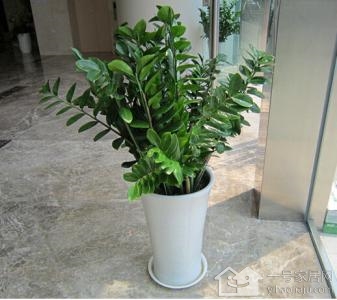
Introduction to the ZZ plant:
The ZZ plant originates from the tropical (savanna) climate zone of eastern Africa, where rainfall is relatively low. It likes warm, hot and slightly dry, semi-shaded environments with small annual average temperature fluctuations. It is relatively drought-tolerant, but afraid of cold, and avoids strong direct sunlight. It fears heavy, sticky soil and water accumulation in the pot. If the pot soil has poor permeability, it can easily cause its tubers to rot. It requires loose, fertile, well-drained soil rich in organic matter, acidic to slightly acidic. It has strong sprouting ability; after cutting off the thick compound leaves, new leaves quickly sprout from the top of its tubers.
Is the ZZ plant toxic?
The ZZ plant is not toxic. The ZZ plant belongs to the Araceae family of foliage plants. Species in this genus all have unique leaf shapes and colors, and are excellent indoor ornamental plants. Araceae foliage plants are fleshy, herbaceous, and their stems and leaves contain a milky sap with a special calcium oxalate component, which is severely irritating to the skin and stomach. Special care must be taken during cutting propagation.
Some reports claim that the ZZ plant is an extremely toxic plant, even more potent than Gelsemium elegans. If its leaf sap touches sensitive skin, the facial features and teeth will swell; wild plants, birds and beasts, and butterflies and crawling insects all stay away from it; at the same time, plants growing around it will also wither and die. This shows how severe its toxicity is. Therefore, if other edible herbs are found growing in the same pot, they must never be used medicinally or eaten, otherwise death will occur without explanation. People who have such plants at home must absolutely handle them carefully, and must not add the soil of the ZZ plant to other edible herbs, because its toxin is in the soil, otherwise endless trouble will result.
Su Mingzhi, an instructor in the environmental studies program at Tainan Community University, believes this statement is too alarmist. He stated that the ZZ plant itself contains plant alkaloids. Although some people with more sensitive constitutions may experience skin and mucous membrane irritation after contact, the precondition is that the plant must be damaged and the sap touched for this phenomenon to occur.
The ZZ plant is a rather popular large indoor bonsai plant, especially when placed in larger living rooms, studies, and sitting rooms. It has an elegant, simple style and a southern tropical flavor. It is a world-famous new-generation indoor foliage plant with a beautiful, neat plant shape. Although it belongs to the Araceae family, not all Araceae plants are toxic, and families growing ZZ plants do not need to worry too much.
ZZ plant propagation methods:
1. Propagation routes. Cutting, division, and tissue culture are all possible. If propagation relies on separating small plantlets with small bulbs produced on the mother tuber, a large plant can produce only 2 to 5 plantlets per year, so the propagation coefficient is relatively low and the speed is slow. The multiplication coefficient of tissue culture is not high, and it also cannot achieve the purpose of rapid propagation. Leaf cuttings easily form roots. Each mature compound leaf has 15 to 25 leaflets. If used for propagation, the propagation rate can be greatly increased. Therefore, in production, leaf cutting propagation is the main method.
2. Leaf cutting propagation method. Select healthy, dark green, plump mature compound leaves as cutting material. If a section of the leaf axis can be included as the cuttings, it is easier to form new, larger tubers, and the effect is even better. Soak the cuttings overnight in 250 mg/L indoleacetic acid or naphthaleneacetic acid, or coat the leaf stalk or leaf base with clay. The substrate can be ordinary fine sand, or a substrate made by mixing peat soil, perlite, and sand in a 3:1:1 ratio, and then cuttings can be inserted directly into peat and other substrates. When cutting, place the leaves flat or insert them upright. After insertion, spray thoroughly with water, place in a shaded area, maintain an environmental temperature of 25 to 27°C, and according to the degree of dryness or moisture of the substrate, spray water on the leaf surface 1 to 2 times a day, keeping the substrate slightly moist. It must not be overly moist, otherwise it will cause the cuttings to rot and lead to cutting failure. After 50 to 60 days, the leaf stalk or the base of the leaf stalk begins to swell, and then thick new roots grow out from the side. After roots emerge, a root mass quickly forms.
3. Transplanting. When the cuttings have formed more than 5 roots, take them out of the cutting bed and cultivate them in a substrate pot. When the cuttings have formed a certain root system, the middle of the root gradually swells to form a spherical small tuber. The tuber gradually enlarges. Some relatively tender cutting leaves may die after being potted due to high temperature or poor water management, but the tubers can survive. Old mature leaves and cuttings with the entire leaf stalk can maintain greenness and vitality. A small number of tubers will sprout that same year, growing thick new shoots and developing.
The above is the relevant introduction in this article. I believe that after reading it, you now have a simple understanding of this as well. If needed, you can continue to follow No.1 Home Network to learn more information.