Is Hyacinth Poisonous? Analysis and Introduction to the Toxicity of Hyacinth
During planting, make sure the soil is completely dry before watering again, so that the bulb does not rot from too much moisture. Below, let us take a look together at whether hyacinth is poisonous and an introduction to its toxicity analysis.
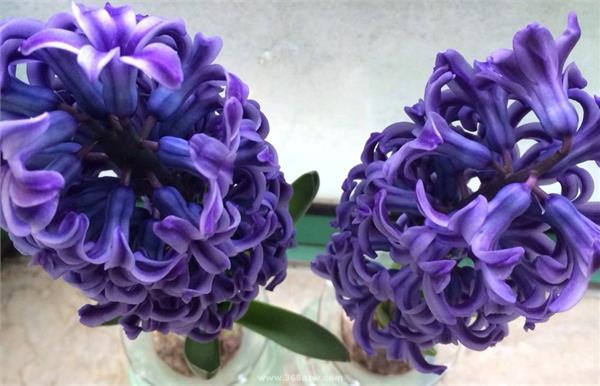
Is Hyacinth Poisonous and an Introduction to Its Toxicity Analysis
Toxicity Analysis of Hyacinth
1. Hyacinth pollen easily causes skin allergies. Friends with an allergic constitution should be a little careful - do not put your nose close to the flowers to smell them, and skin allergies will not occur. Still, as long as you pay a little attention in daily life, there is no danger,
2. The scent of hyacinth is rather strong: it is advisable not to grow it in the bedroom, because the fragrance of hyacinth flowers may cause insomnia. Although the fragrance of hyacinth flowers is not toxic, placing them in a room is not very good for the human body, because the floral scent of plants is generally made up of aromatic chemical substances such as ketones or phenols. In small amounts taken into the body, the circulatory system can metabolise them and expel them from the body, but if taken in over the long term, it will increase the burden on the internal organs, which is not good for the human body.
3. The hyacinth bulb is toxic: if swallowed by mistake, it can cause symptoms such as dizziness, stomach cramps and diarrhoea, and in severe cases can lead to paralysis and can be fatal. Therefore, it is essential to strictly prevent small children or animals from eating it by mistake.
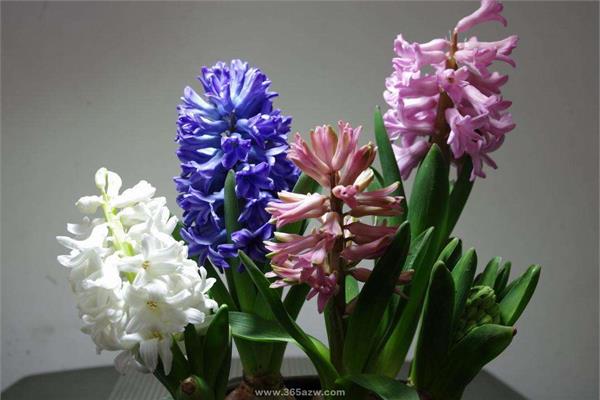
Many people like hyacinths, not only because of their gorgeous appearance, but even more because of their captivating floral fragrance. The hyacinth originates from the eastern coast of the Mediterranean in Southern Europe and the region of the Anatolian Peninsula, and is the most fragrant of all the flowering plants discovered so far. The fragrance of the hyacinth is fresh and elegant, not heavily perfumed, and is very refreshing! But the beautiful hyacinth is also poisonous - did you know that?
The hyacinth bulb is toxic. If swallowed by mistake, it can cause symptoms such as dizziness, stomach cramps and diarrhoea, so it is essential to strictly prevent small children or animals from eating it by mistake. In addition, it is advisable not to grow it in the bedroom, because the fragrance of hyacinth flowers may cause insomnia. Although the fragrance of hyacinth flowers is not toxic, placing them in a room is not very good for the human body, because the floral scent of plants is generally made up of aromatic chemical substances such as ketones or phenols. In small amounts taken into the body, the circulatory system can metabolise them and expel them from the body, but if taken in over the long term, it will increase the burden on the internal organs, which is not good for the human body. Still, as long as you pay a little attention in daily life, there is no danger, so there is no need to keep hyacinths at a distance either.
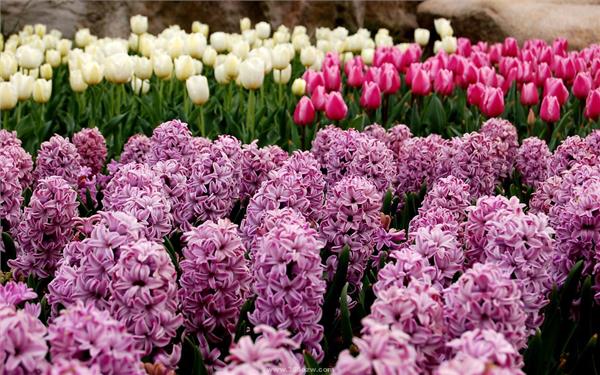
Can you grow hyacinths at home if there is a pregnant woman in the family?
No, you cannot grow them.
Hyacinth flowers are rich in colour and captivating. Especially when Chinese New Year arrives, red, blue, white, purple, yellow and pink hyacinths, with wave after wave of fragrance, fill the air with a festive and joyful atmosphere, making them the top choice for potted plants to beautify the home. But when there is a pregnant woman in the family, it is best not to grow hyacinths.
Although hyacinths are beautiful to look at, they are indeed poisonous, so they cannot be placed in the bedroom; they should be placed in a place with good air circulation. In addition, hyacinth pollen easily causes skin allergies, so you should avoid putting your nose close to the flowers to smell them. If placed on the living room table, there is no need to worry too much. Moreover, the hyacinth bulb is also toxic; if swallowed by mistake, it can cause symptoms such as dizziness, stomach cramps and diarrhoea, and in severe cases can lead to paralysis and can be fatal. So it is best not to grow hyacinths in the home of a pregnant woman.
Many flowers have the effect of purifying the air and promoting health, but if certain flowers are grown in the home, they can instead become a source of illness, or a "killer" that causes old illnesses to recur or existing illnesses to worsen. Therefore, it is advisable, before growing flowers, to understand the nature of the flowers, to prevent your health from going wrong as soon as you start growing them. If you really want to grow hyacinths, note that hyacinths are mildly toxic, cannot be placed in the bedroom, and should be placed in a place with good air circulation.
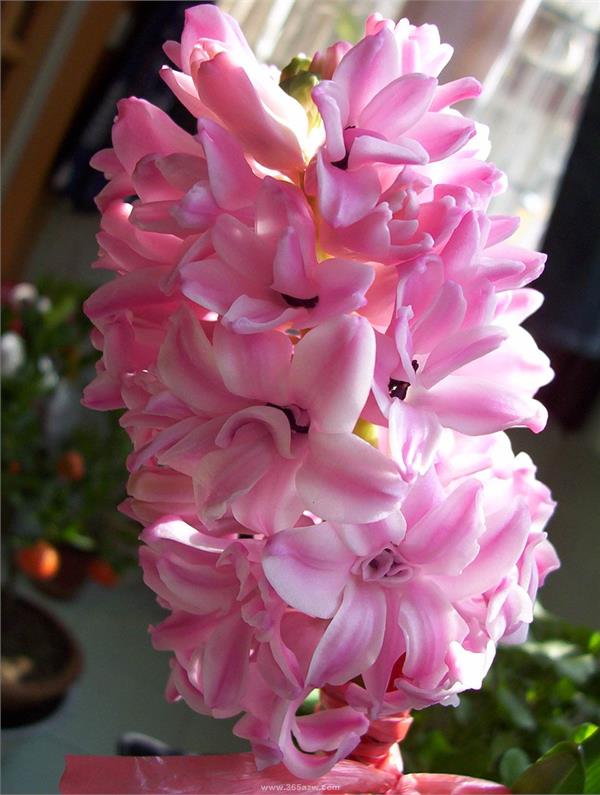
Can you grow hyacinths at home if there is a baby in the family?
No, you cannot grow them.
The hyacinth is a very popular bulb plant at present, with a diversity of flower colours, and some varieties have a rich fragrance. When there is a baby in the family, you cannot grow hyacinths, for the following reasons:
1. Experts remind us: the hyacinth bulb is toxic; if swallowed by mistake, it can cause symptoms such as dizziness, stomach cramps and diarrhoea, so it is essential to strictly prevent small children or animals from eating it by mistake.
2. Hyacinth flowers give off a rich fragrance. If grown in the living room there is no problem, but in the bedroom it is advisable not to place them, or to place varieties with a relatively light fragrance, because the bedroom is not suitable for placing too many plants, nor for flowers and plants with a rich scent.
3. The fragrance of hyacinth is rich, and the scent it gives off may cause allergic symptoms in the baby.
4. Hyacinths also secrete certain carcinogenic substances; based on health considerations, growing hyacinths is not recommended.
Hyacinths are poisonous and richly fragrant - for the sake of the baby, it is better not to grow hyacinths for the time being!
nor for flowers and plants with a rich scent.3. The fragrance of hyacinth is rich, and the scent it gives off may cause allergic symptoms in the baby.
4. Hyacinths also secrete certain carcinogenic substances; based on health considerations, growing hyacinths is not recommended.
Hyacinths are poisonous and richly fragrant - for the sake of the baby, it is better not to grow hyacinths for the time being!