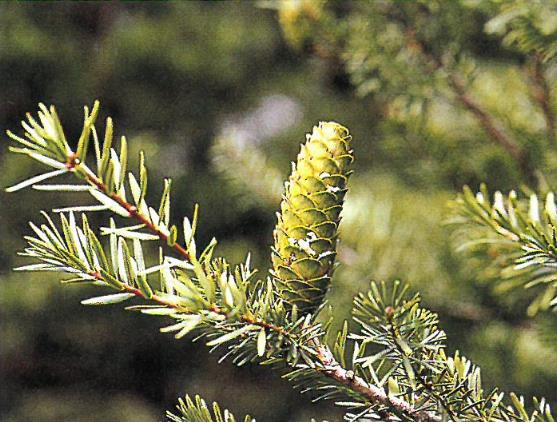
Taiwan cowtail pine no longer listed as a rare plant, can now be legally grown as a new gardening star
A new choice for garden tree species: On the 26th, the Council of Agriculture officially announced the repeal of the designation of Taiwan cowtail pine as a "natural monument - precious and rare plant"! Apart from plants within nature reserves or those protected under legal announcement, Taiwan cowtail pines cultivated through horticulture can be freely bought, sold and planted, no longer subject to the strict restrictions of the Cultural Heritage Preservation Act.
Taiwan cowtail pine became famous for a time because of a news story. The Wei family of Ting Hsin planted a large number of Taiwan cowtail pines at their ancestral home and were discovered and reported by members of the public. Because Taiwan cowtail pine was designated as a natural monument under the “Cultural Heritage Preservation Act” at the time, picking or felling was prohibited, so the holders were later sentenced, with the sentence commuted to a fine.
However, now that the ban has been lifted, gardening enthusiasts who love the sturdy form of the Taiwan cowtail pine can legally grow it. Xia Rongsheng, head of the Conservation Division of the Forestry Bureau under the Council of Agriculture, said Taiwan cowtail pine is a very good landscape tree species, and the horticultural world has long had Taiwan cowtail pine, but "we were worried it would be taken from the wild, so we never lifted the restriction." Now, however, the germination technology for Taiwan cowtail pine has been very successful, and subsequent promotion of cultivation will not be a problem. As long as wild habitats are protected and conservation of wild populations is done well, "using artificially cultivated Taiwan cowtail pine for other horticultural landscape purposes is no problem."
In recent years, academia has effectively broken through the bottleneck in Taiwan cowtail pine cultivation technology, not only raising the germination rate but also allowing mass propagation of seedlings. Xia Rongsheng said scholars and experts also believe that opening up the planting of Taiwan cowtail pine can increase the number of plants, enhance ex situ conservation, and at the same time reduce the pressure of poaching on wild populations.
Wild Taiwan cowtail pines currently have 3 protected areas: "Pinglin Taiwan Cowtail Pine Nature Reserve," "Dawushan Nature Reserve," and "Taitung Dawu Taiwan Cowtail Pine Nature Reserve." The number of Taiwan cowtail pines in the 3 protected areas is about 1,000.
In its early years, because of its narrow distribution range, small numbers, extremely low seed germination rate, and the difficulty of growing seedlings, Taiwan cowtail pine had a very small population and needed special protection. Therefore, in year 77, Taiwan cowtail pine was officially designated as a precious and rare plant under the “Cultural Heritage Preservation Act”; individuals were prohibited from picking, felling, digging or otherwise harming it, and the collection and exchange of specimens such as branches, leaves, flowers and fruits were also strictly controlled.
After the repeal of the designation for Taiwan cowtail pine, there are still 4 species listed as precious and rare plants under the “Cultural Heritage Preservation Act”: Taiwan catkin yew (Amentotaxus formosana), Nanhu willowherb (Epilobium nankotaizanense), Taiwan beech (Fagus hayatae) and Qingshui juniper (Juniperus morrisonicola). The Forestry Bureau is currently not considering whether these rare plants can have their designations repealed as well.