Detailed Explanation of Bowl Lotus Planting Methods and Environmental Requirements
The planting method for bowl lotus seeds is different from that of ordinary flowers, because bowl lotus seeds are relatively hard and need to be shell-cracked. Now let's take a look at the specific bowl lotus planting methods!
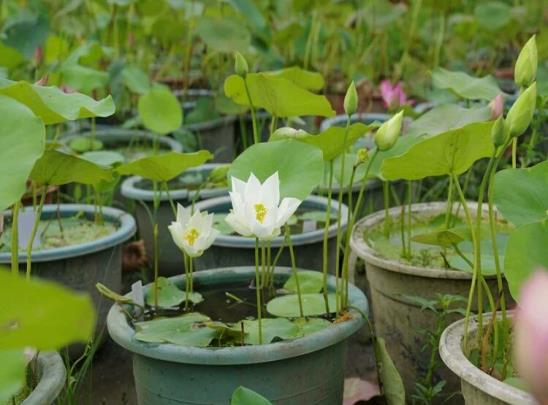
How do you plant bowl lotus correctly?
Bowl lotus planting method 1. Sowing time: Lotus seeds have no dormancy period, and as long as the water temperature can be kept above 16°C, they can be sown in all four seasons. Under suitable temperature and light conditions, lotus seeds take 50 to 60 days from sowing to flowering in spring, and 60 to 80 days in autumn;
Bowl lotus planting method 2. Seed treatment: The outer shell of lotus seeds is hard and dense, so before soaking the seeds, artificial cracking must be done. One end of the lotus seed has a small pointed tip, and the other end has a small concave dot. Rub the end with the small concave dot on rough cement ground until it breaks, or use pliers to crack a small opening. Be careful not to damage the seed embryo, and do not remove the shell.
Bowl lotus planting method 3. Seed soaking and germination promotion: Soak the cracked seeds in warm water at about 20 to 40°C. If the water temperature is higher than 40°C, although the seeds germinate quickly on the first day, later growth will be inhibited. If the water temperature is lower than 20°C, seed germination and growth will be too slow. For a small amount of seed soaking at home, you can put them in a thermos to keep warm. At a temperature of 30°C, generally after 3 days of soaking and germination promotion, the seeds will germinate, and the embryo bud will extend from the opening. During this period, the water needs to be changed 1 to 3 times a day, and seeds that cannot germinate should be removed promptly.
Bowl lotus planting method 4. Transplanting seedlings: Choose a bottomless ceramic pot or plastic flowerpot with a diameter of 45 cm to 75 cm. Add half a pot of garden soil or river-pond mud free of chemical pollution, and add water to soak two weeks in advance. Do not apply fertilizer. When transplanting, press the fine roots of the small lotus seedlings into the mud, one plant per pot. After transplanting, add an appropriate amount of water, as long as the water does not submerge the small lotus leaves.
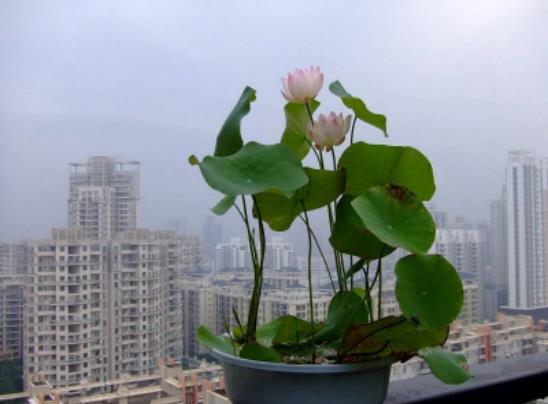
Environmental requirements for bowl lotus cultivation:
1. Appropriate fertilization: Bowl lotus likes fertilizer but avoids heavy fertilizer. If fresh pond mud rich in organic matter is used as the substrate, no base fertilizer is needed. During and after flowering, if the lotus leaves lose green and turn yellow, it is a sign of fertilizer deficiency, and two or three pieces of quick-acting compound fertilizer can be used as topdressing.
2. Sufficient sunlight: Lotus likes light, and after planting it needs at least 6 hours of direct sunlight every day. During the flowering period, if the bowl lotus is moved to an indoor hall for viewing, it cannot be placed for more than two days before being moved outdoors for cultivation.
3. Timely watering: Bowl lotus must never lack water at any time. In extreme heat, it should be watered 2 to 3 times a day. After autumn, when the bowl lotus is about to go dormant, keeping a small amount of water in the pot is enough.
The above is the relevant introduction in this article. I believe that after reading it, you also have a simple understanding of this. If needed, you can continue to follow No. 1 Home Network to learn more information.