What plant is the Rosa rubus? An analysis of the Rosa rubus flower language and symbolism
The Rosa rubus, also known as tumi and Xuan Gouzi rose. A deciduous or semi-evergreen trailing shrub. Branchlets bear hooked prickles. Pinnately compound leaves, with 5-7 leaflets, ovate-elliptic or obovate, with soft hairs on the underside, stipules adnate to the petiole, entire. Corymbose inflorescence. Flowers white, fragrant. Fruit nearly spherical, deep red. Flowering period April-May, fruit ripening period September-October.
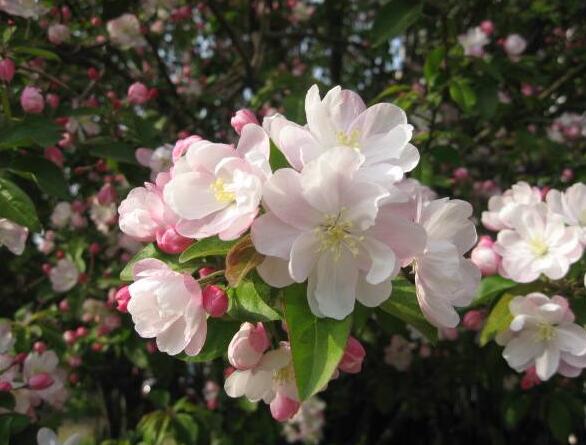
What is the Rosa rubus
The Rosa rubus has dense branch tips, abundant flowers and strong fragrance, and the fruit turns red after autumn. Suitable for hedges, and can also be planted singly at the edge of lawns. The fruit can be eaten raw or processed to make wine. The roots contain tannins, from which tannin extract can be obtained. The flowers are an excellent nectar source and can also be used to extract essential oil. It grows in areas at altitudes of 250 m to 2200 m, often growing in hillside scrub, among grasses, in mixed woods, by streams, on hillside roadsides, in shady places, and at forest edges. Drought-tolerant, afraid of waterlogging.
Rosa rubus flower language
The flower language of the Rosa rubus is: the beauty of the end of the road, a girl's youth has passed, the relationship has ended, leaving only the faint fragrance of the Rosa rubus to outline the beautiful memories of the past.
There are usually 5 leaflets, occasionally 3 near the inflorescence, 8-15 cm long including the petiole; the leaflets are ovate-elliptic, obovate, or rounded, 3-6(-9) cm long, 2-4.5 cm wide, apex caudate-acuminate, acute or gradually acuminate, base nearly rounded or broadly cuneate, margins with sharp serrations, shallow and sparse toward the base, dark green above, usually hairless or occasionally with soft hairs, densely soft-hairy or sparsely soft-hairy beneath; the petiolules and leaf rachis have soft hairs and scattered small groove-like prickles; stipules mostly adnate to the petiole, the free part lanceolate, apex gradually acuminate, entire often with glands, hairy.