How to plant water lilies? Teach you to grow the "sleeping beauty among flowers" well
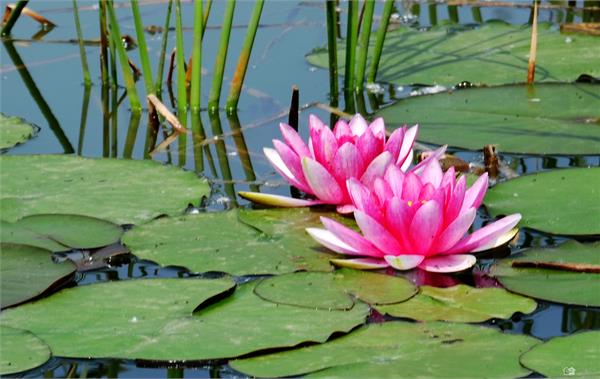
When talking about water lilies, the first thing you probably think of is the lotus, because the appearance of water lilies is very similar to that of lotuses, but their difference is that the leaves and petals of the lotus stand out of the water, while the leaves and petals of the water lily float on the water surface. TV therefore also gives the water lily the name "sleeping beauty among flowers." So, what is the planting method for water lilies? Let us take a look together below.
I. Introduction to water lilies
The water lily is also known as Ziwulian, and belongs to the family Nymphaeaceae, genus Nymphaea. Its leaves are deep green and its flowers are brightly colored, making it a very good water-surface landscaping plant. The water lily is a perennial aquatic plant with strong cold tolerance; in the Northeast region, with slight protection, it can overwinter safely. Its underground rhizome grows horizontally or its tuber grows upright, short and thick. The leaves grow in clusters, float on the water surface, are thick and glossy, and are round or oval; the upper side of the leaf is dark green, and the underside is dark purple or purplish red. Flower colors vary by cultivar and include white, pink, red, yellow, purple, and so on, bright and beautiful.
Flower colors vary by cultivar and include white, pink, red, yellow, purple, and so on. Excellent cultivars include Hongmudan, Baixianzi, Wucai, Luoshen, Mashan Guniang, Kewangzhe, and Haierfula. Water lilies are mainly propagated by division. Cold-hardy species are usually divided in March to April, before sprouting in early spring. Non-cold-hardy species have high requirements for air and water temperature, so this can only be done around mid-May.
Water lilies can be planted directly in ponds; at home they can be potted or planted in containers such as baskets and then placed into a water body. Household pots should be large; small pots are not conducive to the growth and flowering of water lilies. The planting depth should be level with the mud surface, and they should not be buried deep. Generally, the cultivation water depth is 20 to 40 cm; in summer the water level can be deeper, but rapid water flow should be avoided. If the pond water is too deep, a planting platform can be built in the water, or they can be potted and then placed into the pond. They should be planted in a ventilated, sunny place; otherwise, water moss is likely to grow, causing the water lilies to grow weakly and fail to bloom.
For water lilies, in spring each year from March to April, when the buds have just begun to sprout, dig up the rhizome and cut it into several pieces with a sharp knife. Make sure each rhizome piece has more than two plump buds, and plant them into the river mud in a pond or vat. Keep them there until they are taken out before sowing the following spring. Soak them in water at 25 degC to 30 degC to promote sprouting, changing the water every day, and they will sprout after two weeks. When the seedlings grow to 3 to 4 cm, they can be planted in the pond, ensuring sufficient water depth.
II. What is the cultivation method for water lilies?
1. Water level control: whether using pot cultivation, vat cultivation, pond cultivation, or field cultivation, the initial water level should not be too deep, and afterward the water level should be gradually increased as the plant grows. For water lilies planted in ponds, pay attention to drainage during the rainy season; they must not be submerged by large floods, but 1 to 2 days will not cause the water lilies to die.
2. Topdressing: water lilies need relatively more fertilizer. During the growing period, if the leaves are yellow and thin and the growth is weak, then topdressing is needed. For potted plants, urea, potassium dihydrogen phosphate, and so on can be used for topdressing. For pond planting, cake fertilizer, farmyard manure, urea, and so on can be used for topdressing.
3. Pest and disease control: the main pests harming water lilies are snails, which can be killed with molluscicides or controlled by manual capture. For disease control, refer to the control methods for lotuses.
4. Overwintering management: cold-hardy water lilies can overwinter naturally in ponds. 3456. However, they must not be dehydrated throughout the winter, and a certain water layer must be maintained. If potted water lilies are placed outdoors, when the lowest winter temperature is below -8 degC, they should be covered with weeds or agricultural film to prevent the tubers from being damaged by freezing; placed indoors, they can overwinter safely. Tropical water lilies should be moved into a greenhouse kept at no lower than 15 degC for storage. In May of the following year, move them out again for cultivation.
The above is the relevant introduction in this article. I believe that after reading it, you also have a simple understanding of this. If needed, you can continue to follow No.1 Home Network to learn more information.