How to grow bowl lotus? A step-by-step guide to the planting method
Nowadays many people place Schefflera octophylla (umbrella tree) in bedrooms and rooms to absorb nicotine, formaldehyde and other harmful substances, and it is also very suitable for growing in bedrooms, living rooms and other places. However, many flower lovers do not know whether Schefflera octophylla needs pruning when grown, and they are also not very clear about the cutting propagation method for Schefflera octophylla. Let's take a look below at what cutting methods there are for Schefflera octophylla.
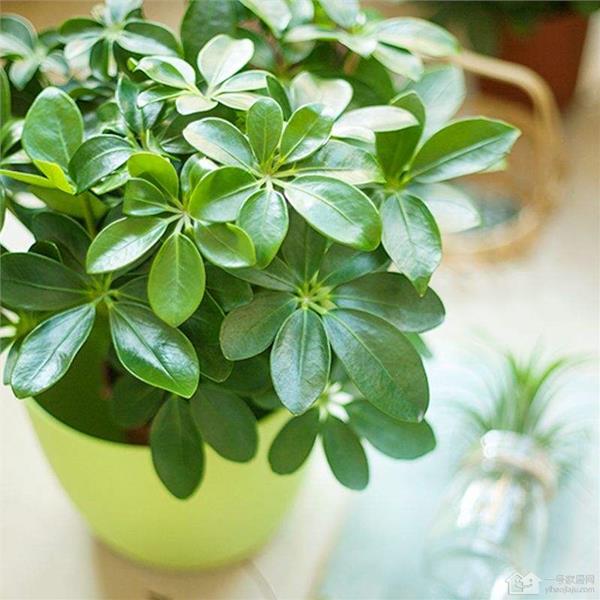
I. Growth habits of Schefflera octophylla
Schefflera octophylla can be grown for a long time in a bright, well-ventilated home for everyday ornamental display. The growing temperature is 15-25°C, and in winter it should not go below 5°C; the plant can continue to grow. Schefflera octophylla has strong adaptability: it can grow not only in conditions of high air humidity and sufficient soil and water, but also in dry environments. When growing older plants indoors, you can prune the overly large parts appropriately, or cut away part of the root system and replant.
II. What uses does Schefflera octophylla have
1. Ornamental
Schefflera octophylla has a full and graceful plant shape and strong adaptability, making it an excellent potted plant. It is suitable for placing in living rooms, studies and bedrooms. In spring, summer and autumn it can also be placed in shaded courtyard areas and on balconies of buildings for viewing. It can also be planted as a solitary specimen in courtyards, and it is a nectar source plant in southern winters.
2. Air purification
Schefflera octophylla can bring fresh air to smoking households. Its leaves can absorb nicotine and other harmful substances from smoke-filled air, and through photosynthesis convert them into harmless substances of the plant's own.
III. Cutting propagation of Schefflera octophylla
Carry out from April to September. Cut off one-year-old terminal branches, 8-10 cm long, remove the lower leaves, insert them in a sand bed, keep moist, at a room temperature of about 25°C; after insertion they can root in 30-40 days. Seed propagation: use indoor pot sowing in April-May, with an optimum germination temperature of 20-25°C, keep the potting soil moist, and they germinate 15-20 days after sowing. When seedlings are 5-8 cm tall, move them into 4 cm pots. Cultivation and management: potted Schefflera octophylla commonly uses 15-20 cm pots, with broken tiles or broken bricks placed at the bottom of the pot to improve drainage. During the growing period, fertilize once every half month, or use "Huiyou" 20-8-20 all-season high potassium nitrate fertilizer. In summer, shade with a 70% shade net; in winter no shading is needed. When leggy shoots sprout, attention should be paid to shaping and pruning. For young plants, carry out thinning and light pruning, mainly for shaping. When old plants become too large, carry out heavy pruning to readjust them. Young plants are repotted every spring, and adult plants are repotted once every 2 years.
Sowing is done in spring, keeping the potting soil moist; under a temperature of 20-25°C, seedlings emerge in 2-3 weeks. When seedlings are 5-7 cm tall, transplant once, and they can be planted out the following year. Cuttings are also done in spring: cut one-year-old branches 8-10 cm long, remove the lower leaves, and insert them into a bed soil made of river sand or vermiculite, keeping them warm and moist; at 25°C they root in 4-6 weeks.
Selection of cuttings: from mother plants that have grown for several years, cut off one-year-old branches 6-8 cm long, or in combination with repotting and heavy spring pruning, use the cut branches as cutting material. Remove the leaves from the part to be inserted, and insert the cuttings into a plastic flower pot with a diameter of 15-20 cm using perlite soaked in water beforehand as the substrate, with a tray at the bottom of the pot to catch the seepage. Insert 3 plants per pot or a single plant; after insertion they can root in about 1.5 months, and after insertion they should be watered frequently to keep moist. After insertion, place them in a low-light indoor spot and strengthen fertilizer and water management; after rooting, water with nutrient solution, replenishing the liquid once a week in the pot, 100 ml each time.
The above is the relevant introduction in this article. I believe that after reading it you now have a simple understanding of this. If needed, you can continue to follow No. 1 Home Network to learn more information.