Dumb Cane Plant Profile and Detailed Care Methods
Dumb cane (Alocasia macrorrhiza) is a highly ornamental plant that has long attracted widespread attention. Many people like this plant but do not know how best to grow it. Below, let's look at the techniques for growing dumb cane.
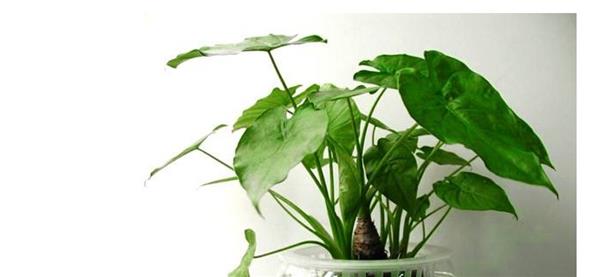
Growing techniques for dumb cane:
Temperature: It likes warmth and grows rapidly above 25°C. The most suitable temperature for growth is 25-30°C. It has a certain cold resistance; as long as the overwintering temperature is maintained above 2°C, it is fine.
Light: It likes partial shade and cannot tolerate exposure to strong sunlight. From May to September, shade should be provided, blocking about 50% of sunlight. At other times, it should be given plenty of sunlight. It cannot tolerate excessive shade, otherwise the leaf stalks become thin and elongated, and not only is the plant shape unattractive, but the stalks break easily.
Watering: Because the leaves are large and consume a lot of water, it is afraid of drought. It likes a slightly moist soil environment. During the growing period, watering should follow the principle of "alternating dry and wet, leaning toward moist." Water thoroughly, and even watering a bit more is harmless. Especially on hot, sunny summer days, pay even more attention to supplying water to meet the plant's water needs. Because the leaf surface is large, water droplets often appear at the leaf tips in the morning, which is quite strange, hence the name "dumb cane" (dripping Guanyin). However, the potting soil must normally be kept moist to ensure the plant absorbs sufficient water and relies on root pressure to transport water to the leaf tips and exude it; when the potting soil is dry, there will be no water to drip. In winter, water should be controlled, keeping the potting soil in a slightly moist state, as long as the leaves do not become soft and drooping; overly wet potting soil easily causes root rot.
Environmental humidity: It likes a humid environment and dislikes dry air. During the growing season, on sunny and dry days, water should often be sprayed on the branches, leaves and surroundings to maintain a relatively high air humidity.
Fertilizing: It likes fertilizer. Because of its large growth volume, nutrients need to be replenished in time so that the stems grow thick and sturdy and the leaves become large, deep green and glossy; when deficient in fertilizer, the leaves are small and yellow. During the growing period, apply a nitrogen-based fertilizer once about every 10 days. After the beginning of autumn, stop applying nitrogen fertilizer and apply 2-3 doses of phosphorus-potassium fertilizer. Stop fertilizing in winter.
Pruning: Yellow leaves should be cut off at any time. Because the leaf stalks are long, when moving, placing and caring for the plant, avoid breaking the leaf stalks. If they are broken, cut them off promptly.
Repotting: Repot once every 1-2 years. It does not have high requirements for soil, but likes fertile, loose sandy loam with good drainage. The growing medium can be made from materials such as leaf mold, garden soil, peat soil and river sand. If sufficient base fertilizer is applied, the leaves can grow large and thick. Because the leaves are large but few in number and the leaf stalks are long, when moving the plant and caring for it, avoid damaging the leaves, otherwise the ornamental value will be reduced.
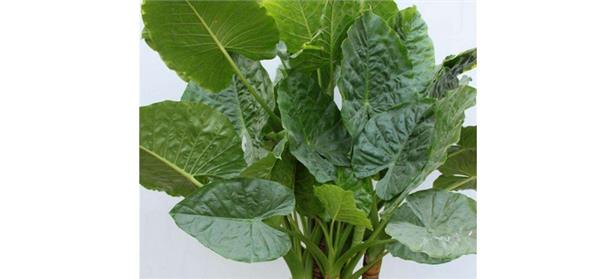
Dumb Cane Plant Profile
Chinese name: Haiyu (Alocasia macrorrhiza)
Latin scientific name: Alocasia macrorrhiza
Other names: Dripping Guanyin, Langdu (underground stem), Tianyu, Guanyin lotus, Xiu tian cao, Gehe xian, etc.
Binomial name: Alocasia macrorrhiza
Kingdom: Plantae
Phylum: Magnoliophyta (Magnoliophyta)
Class: Monocotyledoneae (Monocotyledoneae)
Subclass: Alismatidae (Alismatidae)
Order: Alismatales
Family: Araceae (Araceae)
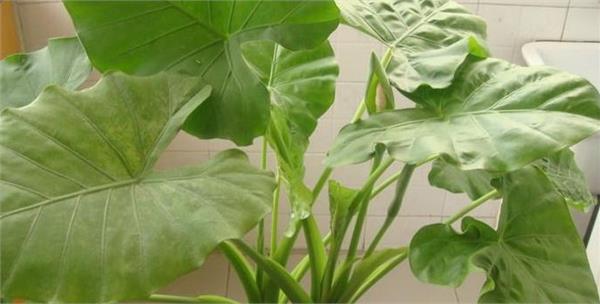
Propagation methods for dumb cane:
(1) Methods such as division and sowing can be used. Every summer and autumn, the tubers of Alocasia macrorrhiza sprout small Alocasia plants with leaves, and division can be carried out together with repotting and soil changing. After the fruit ripens in autumn, collect the orange-red seeds and sow them immediately after collection, or dry and store them and sow them after spring the following year.
(2) Trunk cutting of Alocasia macrorrhiza is aimed at old plants that have grown for many years. Combined with plant renewal, the trunk can be cut about 5 cm from where the plant body emerges from the soil surface for stem cutting propagation. Trunk cutting of Alocasia macrorrhiza has two advantages: first, because the plant loses its apical growth dominance, nutrients accumulate at the base, prompting large numbers of sprouts from the roots and stem base, which helps increase propagation speed and quantity; second, the cut old stems can be cut into branches about 15 cm long, placed in a shaded spot to air-dry for half a day, and then inserted into sandy loam for cultivation. Especially the section at the top that is still growing can, after all fully formed leaves are removed, be directly potted as a single plant, with cutting and cultivation carried out simultaneously. After two months of cultivation, it becomes a formed plant with large leaves, dense branching, and a short, sturdy and vigorous shape, which placed indoors has quite a bit of elegant charm. Stem cutting propagation of Alocasia macrorrhiza is suitable in all three seasons: spring, summer and autumn.
During the cutting period, the moisture of the growing medium (6 parts sand : 4 parts garden soil) should be maintained, and at the same time air humidity should be increased. After about 7-10 days, many sturdy roots will grow. During the cultivation of old plants, because of the shaded and humid environment or because the leaf surfaces are sprayed morning and evening every day in summer and autumn, a few new plants occasionally sprout on the old stems (especially on the stem base left after trunk cutting), and many aerial roots are attached. These can be broken off from where the daughter plant meets the mother plant and potted for planting.
The above is the relevant introduction in this article. I believe that after reading it, you now have a simple understanding of this. If needed, you can continue to follow Yihao Jiaju Wang to learn more information.