Detailed Guide to Rose Cuttings: Methods and Precautions
The best rose cuttings come from rose branches at the first-flowering stage. Below, let us take a look at an introduction to rose cutting methods and precautions.
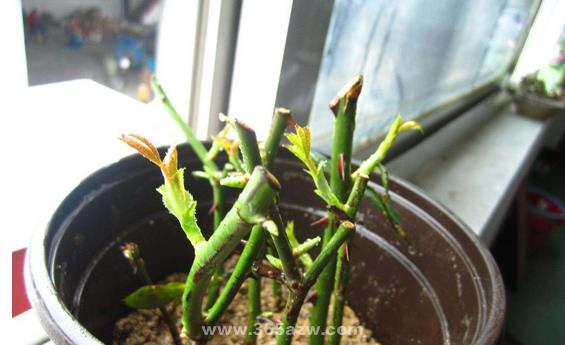
An Introduction to Rose Cutting Methods and Precautions
In a set of experimental data on root growth speed, growth amount and cutting survival rate of a group of cuttings, it was found that choosing rose cuttings at the first-flowering stage is beneficial for rooting, and that under the same period, cuttings taken from the upper part of the branch root better than cuttings from the middle and lower parts. However, the rose cuttings with the highest survival rate are those from the middle-flowering stage.
Research shows that modern roses are not easy to root from hardwood cuttings, but after switching to softwood cuttings or semi-lignified cuttings, rooting becomes easier. Therefore, among cuttings of different branch types from the same variety, the survival rate of flower branches used as cuttings is significantly higher than that of vegetative branches, and this conclusion applies to modern roses. Among cuttings from different branch positions of the same variety, the middle cuttings accumulate more organic nutrients and have moderate tissue maturity, so middle branches are easier to root.
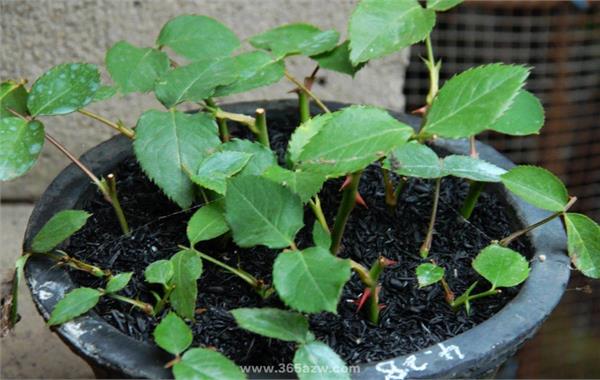
At the same time, cuttings with leaves are beneficial for rooting (keep only 1-2 leaves at the top). Although the leaves consume part of the nutrients, they can synthesize organic matter through photosynthesis and provide nutrients to the cuttings. During rose cutting, a false-alive phenomenon often occurs. That is, 5~10 days after rose cuttings are taken, the axillary buds on the cuttings have already sprouted or the cuttings have produced shoots and leaves, appearing to have survived, but soon they wilt and die. To prevent the false-alive phenomenon, first, do not choose branches with already sprouted buds as cuttings; choose branches with high maturity and plump but unsprouted axillary buds as cuttings (if there is an urgent need to use branches with already sprouted axillary buds as cuttings and the length is sufficient, the already sprouted section can be cut off before use. If the branch is short, the already sprouted axillary bud can be cut off by 1/3 with a sharp knife or the sprout can be completely removed to inhibit its development and allow the lower axillary buds to sprout and produce shoots. In this way, it can be encouraged to first root and then sprout and produce leaves); second, to enable the cuttings to root first and then produce leaves, the temperature of the cutting seedbed medium should be 1~2°C higher than the air temperature. This can regulate the nutrients inside the cutting to move to the lower end, first meeting the needs of lower-part rooting, and can promote rooting first and then leafing; finally, protect the mother leaves and prevent them from falling off. (Especially in autumn, which is a good time for softwood cuttings of roses. At this time, roses are also in the growing season. When using softwood cuttings, protecting the mother leaves and preventing them from falling off is very important. This is because the mother leaves at this time undertake the task of supplying nutrients needed for callus formation, adventitious root production, and axillary bud sprouting and leafing during the cutting survival process. Therefore, ensuring that the mother leaves do not fall off is even more important for autumn softwood cuttings.)
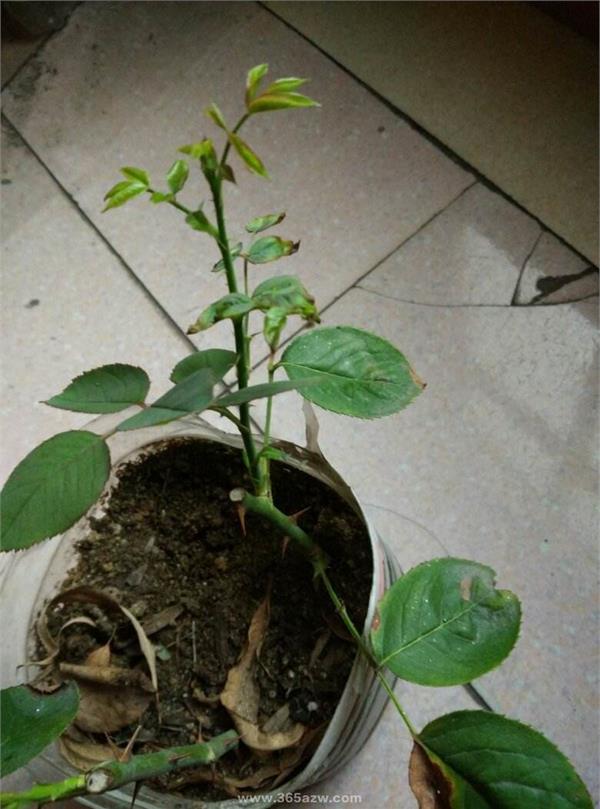
Finally, it must be noted that cuttings must never be taken from diseased mother plants, and both the seedbed and the medium must be strictly disinfected and sterilized, and light should be provided early, with good seedbed ventilation, to ensure improved rose cutting survival rates.
Advantages of rose cuttings:
Propagating roses by cuttings can not only maintain the excellent characteristics of the mother plant, but is also simple and easy to learn, fast to propagate, and has a high survival rate. Rose cuttings can be taken all year round, but hardwood cuttings in winter or autumn are preferable. For softwood cuttings in summer, attention must be paid to water management and temperature control, otherwise rooting is difficult. Winter cuttings are generally carried out in a greenhouse or plastic tunnel; if cuttings are taken in open ground, measures to increase moisture retention must be taken. During rose cutting, the "false-alive" phenomenon is likely to occur, reducing the survival rate of rose cuttings (as mentioned above, how to prevent false-alive roses).
Rose cutting time
Rose cuttings can be taken in both spring and autumn. In spring, from late April to the end of May, when the climate is mild and the branches are vigorous, roots can form 1 month after cutting, with a high survival rate. Autumn cuttings are taken from late August to the end of October. At this time, cuttings are affected by the large temperature difference between day and night, so rooting is relatively slow, requiring 40-50 days to root, and the survival rate is slightly lower than that of spring cuttings.
Selection of rose cutting branches
From middle-aged and young mother trees of excellent varieties, select robust, plump, strongly growing, pest- and disease-free 1- to 2-year-old spring shoots or current-year autumn shoots as cuttings. Such branches have high growth substance content and strong metabolic vitality, are not only easy to survive, but also produce good-quality seedlings. For branches transported from elsewhere as cuttings, attention must be paid to moisture retention and shading to maintain branch vitality. Cut off the upper part of the branch, select the middle and lower parts, and cut about every 10 cm into 1 section as one cutting, retaining 3-4 axillary buds on it. Do not keep leaves or keep only 1-2 leaves at the top, to prevent loss of water and nutrients from the cutting, so as to facilitate rooting and control branch and leaf growth. Cut the upper end of the cutting into a flat opening and the lower end into a slanted opening, with the cut 1 cm from the axillary bud. The cuts should be smooth to facilitate callus formation.
When taking rose cuttings
Try as much as possible to cut, treat and insert the branches as you go. When taking cuttings, never damage the bark. Generally, first use a small wooden stick or your finger to make 1 small hole in the cutting bed, then place the cutting into the hole. The cutting depth is 3/2-2/3 of the cutting length. After inserting, press the soil firm with your hand and water thoroughly once, so that the cutting and soil are closely combined.
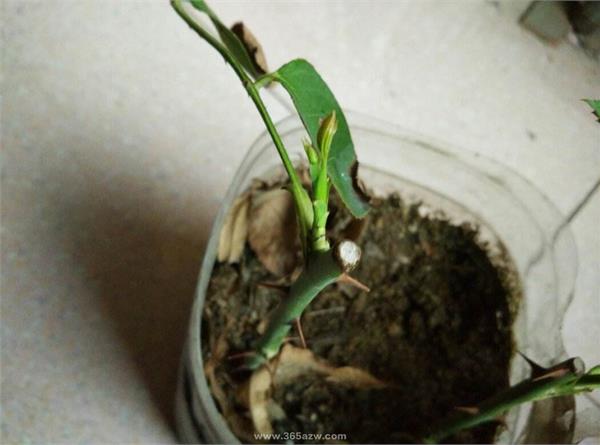
Management after rose cuttings
Building an arch shed and covering with a shade net and plastic shed can regulate the temperature and humidity of the soil and air. The shade net can prevent direct sunlight and lower the temperature. The light transmittance of the shade net should preferably be 20%-30%. In addition to covering the top of the seedbed with a shade net, curtains should also be hung on the east and west sides of the seedbed for shading to reduce morning and evening sunlight exposure. The optimal temperature for rose rooting is 20-25°C. If the temperature is too high, in addition to covering with a shade net, watering to cool down and ventilation to cool down can also be used. (This is aimed at large growers, but the spirit can be understood.)
Watering and fertilizing after rose cuttings
Early cutting stage: the cuttings have not yet sprouted leaves, so water supply should not be too much; generally watering once every 7-10 days is sufficient. After 1 month, the cuttings begin to root and produce shoots, and water consumption gradually increases, so they should be watered once every 3-5 days. The amount of watering should be determined according to soil moisture and air humidity, so that the soil is moderately dry and wet. The optimal moisture conditions after cutting are: the field water-holding capacity of the seedbed should be maintained at about 80%, and the relative air humidity at 80%-90%. If humidity is too high, control the amount of watering and strengthen ventilation; if humidity is too low, increase the amount of watering and the number of sprays. (Understand the spirit.)
Fertilizing: rose cuttings do not need much fertilizer. Since base fertilizer was already applied when preparing the land, there is no need to fertilize the soil again before the seedlings are transplanted, but foliar fertilization is needed. That is, 1 month after cutting, alternately use 0.3% urea liquid fertilizer and 0.2% monopotassium phosphate liquid fertilizer once every 15 days for foliar fertilization to promote rooting.
When taking cuttings, never damage the bark. Generally, first use a small wooden stick or your finger to make 1 small hole in the cutting bed, then place the cutting into the hole. The cutting depth is 3/2-2/3 of the cutting length. After inserting, press the soil firm with your hand and water thoroughly once, so that the cutting and soil are closely combined.
Management after rose cuttings
Building an arch shed and covering with a shade net and plastic shed can regulate the temperature and humidity of the soil and air. The shade net can prevent direct sunlight and lower the temperature. The light transmittance of the shade net should preferably be 20%-30%. In addition to covering the top of the seedbed with a shade net, curtains should also be hung on the east and west sides of the seedbed for shading to reduce morning and evening sunlight exposure. The optimal temperature for rose rooting is 20-25°C. If the temperature is too high, in addition to covering with a shade net, watering to cool down and ventilation to cool down can also be used. (This is aimed at large growers, but the spirit can be understood.)
Watering and fertilizing after rose cuttings
Early cutting stage: the cuttings have not yet sprouted leaves, so water supply should not be too much; generally watering once every 7-10 days is sufficient. After 1 month, the cuttings begin to root and produce shoots, and water consumption gradually increases, so they should be watered once every 3-5 days. The amount of watering should be determined according to soil moisture and air humidity, so that the soil is moderately dry and wet. The optimal moisture conditions after cutting are: the field water-holding capacity of the seedbed should be maintained at about 80%, and the relative air humidity at 80%-90%. If humidity is too high, control the amount of watering and strengthen ventilation; if humidity is too low, increase the amount of watering and the number of sprays. (Understand the spirit.)
Fertilizing: rose cuttings do not need much fertilizer. Since base fertilizer was already applied when preparing the land, there is no need to fertilize the soil again before the seedlings are transplanted, but foliar fertilization is needed. That is, 1 month after cutting, alternately use 0.3% urea liquid fertilizer and 0.2% monopotassium phosphate liquid fertilizer once every 15 days for foliar fertilization to promote rooting.