What are the flower meanings and legends of the camellia?
One of its flower meanings is prudence. However, this depth and prudence also make it feel especially lonely. Below, let us take a look at exactly what the flower meanings and legends of the camellia are.
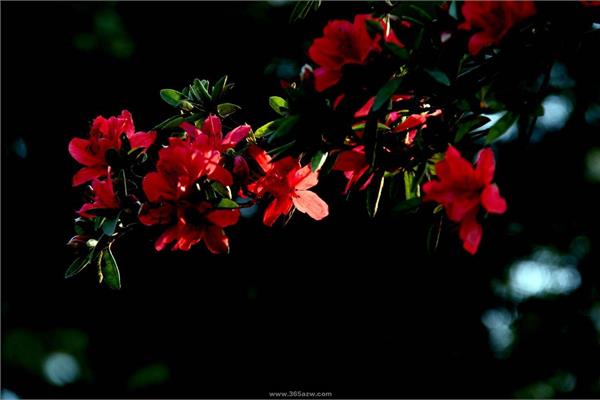
What exactly are the flower meanings and legends of the camellia?
Camellias come in many colors. The flower meaning of the white camellia is "pure and innocent," and the flower meaning of the red camellia is "naturally beautiful." People yearn for that pure white camellia, feeling that it gives them a joyful enjoyment of the soul. It is a freeze-frame of an image and of time, and the content behind it is very complex, because every life has the pursuit of blooming in beauty.
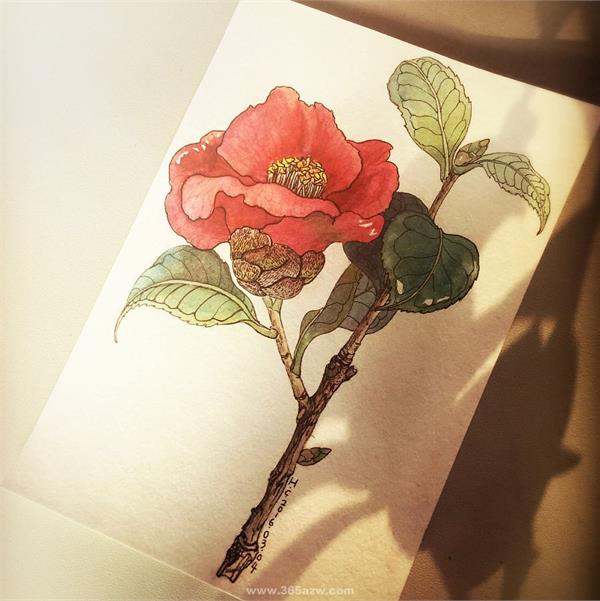
The legend of the camellia's flower meaning
It is said that the camellia always blooms quietly in the courtyard when the weather turns slightly cool in late autumn. When a camellia fades, it is not the whole flower that falls, but the petals that slowly wither one by one, until life ends. Is this careful, reluctant way of fading not just like people's attitude in pursuing their ideal partner? So gradually, the camellia became the spokesflower for expressing feelings to the woman one admires. In winter, when almost all flowers have withered, the red camellia makes people feel especially warm and full of life. Moreover, planted in a courtyard, it also lets people appreciate its faint floral fragrance. Therefore, the camellia makes people feel cuteness, modesty, ideal love, prudence, and extraordinary charm.
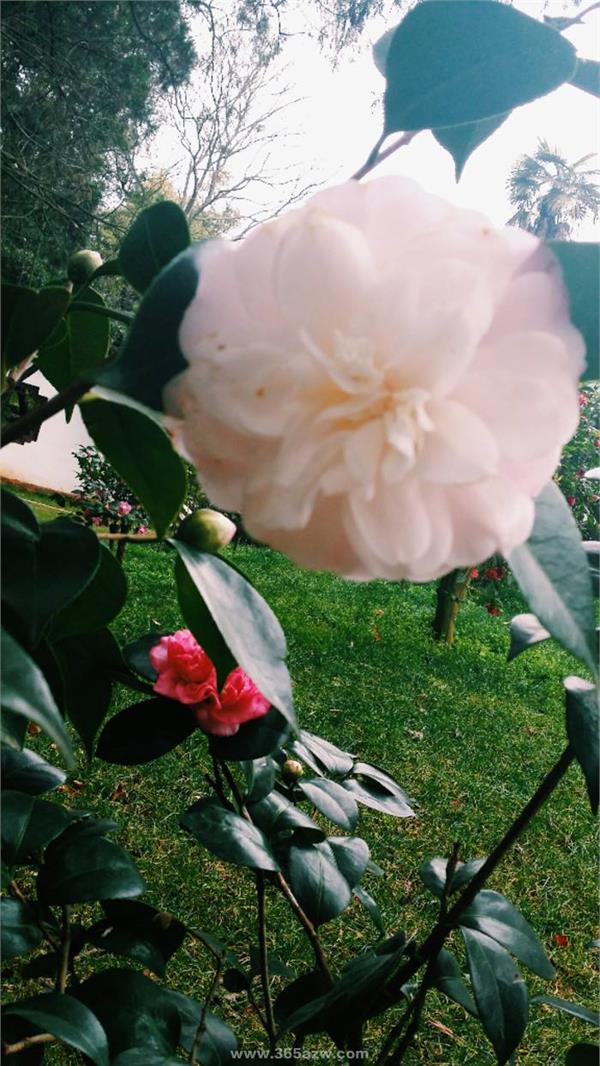
Selected prose on the camellia's flower meaning: The camellias of my hometown
Author: Master of the Yilan Chamber
Living in a small town on the border of southern Jiangxi, I have had a deep affection for camellias since childhood.
When heaven bestows the first spring rain on the earth, the camellia trees all over the mountains and fields seem to be awakened at once, raising buds wrapped in green calyxes one after another. Within no more than three days, the snow-white camellias crowd densely over the entire tips of the branches.
I remember that when I was still in elementary school, I had to get up early every morning to graze cattle on the hillside. Most of the time, I also invited several good companions along. Because it was still early, the mountain mist had not yet dispersed, hanging thick and hazy. When my companions and I arrived at the agreed destination, we let the herd go find food on its own. At this time, the early spring deep plowing and weeding had just begun, and the rice seedlings had not yet been sown, so there was no need to worry that the cattle would ruin the crops.
As soon as we reached the destination, we would look for the stem of a kind of fern, the thicker the better. We would take its middle section and pull out the white core, and a natural "straw" was made. Once the "tools" were ready, we got busy. At that moment, we were more like a group of tireless little bees, sucking from every camellia full of nectar. The night dew had not yet dried, and although the nectar was diluted, we still drank it as if it were syrup. When we found that the flower center was overflowing with nectar, we could not hold back a surge of excitement and joy. As the first light of dawn appeared, bees and other insects that had rested for the night woke up, and in an instant there was a buzzing sound everywhere. By this time, the cattle had eaten about enough. We drove the herd along, carrying the fragrance and sweetness of camellia nectar, and set off home contentedly...
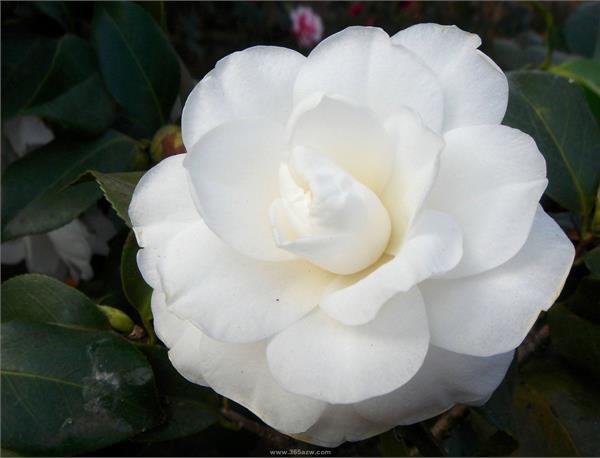
The camellia tree is a drought-tolerant, sun-loving deciduous shrub. It is not tall, and its wood is solid. It generally grows halfway up hillsides or in mountain hollows. In my hometown, camellia wood is mostly used for tool handles or for wedges at mortise-and-tenon joints. From my father I learned that over the years, the strong young people of my hometown have gone out to work, the fields have become overgrown, and the camellia trees that flourished in earlier years, because surrounding plants grew wildly with no one to cut them back, have gradually declined in vigor today. Although the camellia tree's growing environment is at a disadvantage, it has always grown upward tenaciously and unyieldingly, opening up a sky of its own.
Because of work, I have not returned for many years to that native land nourished by Hakka culture, and the camellias growing on that land can only bloom and fade in the author's dreams.
The camellia: its color is snow-white, yet not pallid, warm and substantial; its fragrance cannot match the richness of gardenia, yet it is elegant and fresh, never showing off; its branches are slender and lush, yet not seductive. The Hakka people are like the camellia in a secluded valley, pure and simple; the spirit of the Hakka people is like the camellia tree, indomitable and steadfast; and the good reputation of the Hakka people, even more, is like camellia oil, leaving its fragrance in the world forever!
Leaving its fragrance in the world forever!