What causes yellowing leaves on geraniums?
Geraniums (Pelargonium) originated in Africa and are now grown all over the world. They are very suitable for growing indoors and for ornamental display. Geraniums, also known as zonal pelargoniums, are succulent herbaceous plants that are very easy to grow. Recently, some owners have mentioned that the newly grown leaves of their geraniums are turning yellow. What is going on? Today, let's find out together.
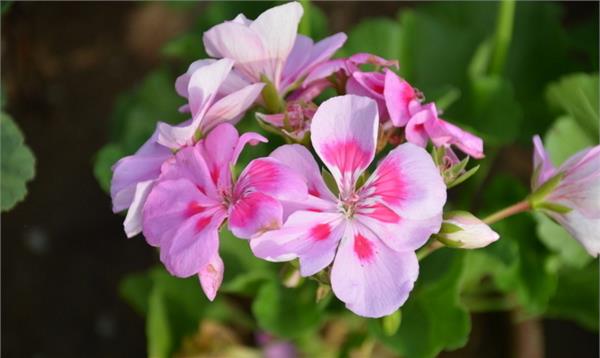
Geranium illustration 1
Causes and solutions for yellowing new leaves of geraniums:
Generally, this situation is mostly caused by two reasons: one is yellowing of new leaves caused by a lack of fertilizer, and the other is yellowing of new geranium leaves caused by excessive moisture.
1. Yellowing of new leaves caused by a lack of fertilizer. Generally speaking, this situation is relatively rare, and it is fairly easy for flower lovers to rule out. If no fertilizer has been applied for a long time and the plant grows weakly, an appropriate top dressing can be given.
2. Besides a lack of fertilizer, another very important cause is excessive moisture. The pots usually used are tall, deep pots (for example: gallon pots), where the upper part of the soil is relatively dry while the lower 1/3 of the pot is still very moist.
Solution: increase ventilation, you can scrape off the surface layer of soil, and control watering on the basis that the soil is moist.
Note: Wilting or soft rot of geranium leaves is mostly caused by overwatering, while leaves that are relatively firm but have scorched yellow edges may be caused by insufficient watering. Generally, both of these situations can cause leaf drop.
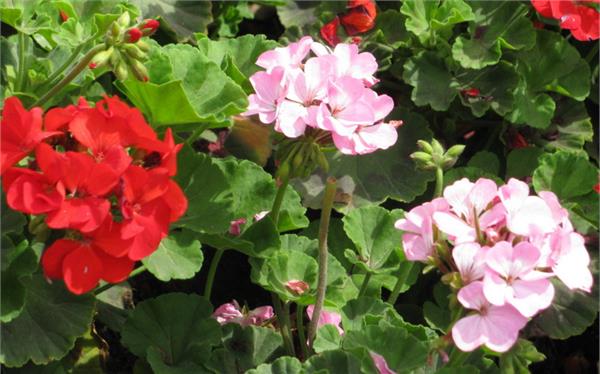
Geranium illustration 2
Extended knowledge - how to grow geraniums:
1. Soil: Geraniums are also highly adaptable and can grow in all kinds of soil, but they grow best in sandy loam rich in humus.
2. Watering: Geraniums like dryness and dislike moisture. In winter, watering should not be excessive; water only when the soil is dry. When the soil is wet, the stems are tender, which is not conducive to the sprouting and opening of flower stems; long-term excessive moisture will cause the plant to grow leggy, the position where flower stems emerge to move upward, and the leaves to gradually turn yellow and fall off.
3. Sunlight: Geraniums need plenty of sunlight during their growing period, so in winter they must be placed in a sunny spot. Insufficient light leads to leggy stems and leaves, thin and soft flower stalks, and poor inflorescence development; flower buds under weak light often fail to open smoothly and wither prematurely.
The above is the relevant introduction in this article. I believe that after reading it, you have a simple understanding of this as well. If needed, you can continue to follow Yihao Home Network to learn more information.