A Detailed Guide to Clivia Care and Management Methods
Clivia likes a well-ventilated environment and prefers deep, fertile, loose soil. Below, let us take a look at exactly what the care and management methods for Clivia are.
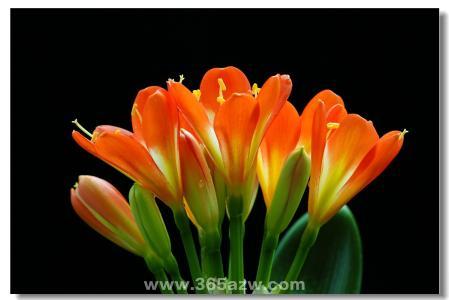
What exactly are the care and management methods for Clivia?
Spring is the peak growing season for Clivia, so doing a good job of spring care and management is very important. The key points are:
1. Do not move it outdoors too early without thinking.
Clivia likes warmth, so in spring it must be moved outdoors at the right time; it is safer to move it outdoors around Qingming (Tomb-Sweeping Day) when the temperature has steadily reached above 12°C. At the same time, before moving it outdoors, first do the hardening-off work: open doors and windows more often, or on a sunny day at noon move the flowerpot outdoors to get some sun, then move it back indoors at night. Only by gradually adapting to the natural environment and then moving it outdoors can its normal growth and flowering be ensured.
2. Avoid wind and direct sun.
During the winter period when Clivia is kept indoors, its root system is in a relatively dormant state. After being moved outdoors, it resumes growth slowly and has weak absorption capacity. If exposed to wind and direct sun, it easily causes an imbalance in the plant's internal water metabolism, resulting in leaf dehydration, wilting, thinning, and reduced firmness, and in severe cases yellowing and rotting, affecting growth and flowering.
Therefore, after Clivia is moved outdoors, it should initially be placed under tree shade or a shade shed, avoiding dry cold winds or dry hot winds and strong direct sunlight. Wait until a windless sunny day when the temperature reaches 15-20°C and the plant has fully revived, then gradually move it into the sunlight to promote vigorous growth.
3. Do a good job of repotting.
Clivia is generally repotted once every 1-2 years. This is mostly done in early spring before budding growth, and for mature flowering plants after the flowers fade. Lift the plant out of the flowerpot together with the soil, gently shake off most of the old soil, making sure not to damage the new roots, thin out and prune diseased and rotten roots and old roots, then replant in a pot. The growing medium is made by mixing leaf mold, coniferous soil, sawdust and organic fertilizer. It is required to be loose, breathable, fertile, and good at drainage, water retention and fertilizer retention.
4. Division propagation.
Along with repotting and changing the soil, division propagation can be carried out. Break off the offsets on the mother plant that have 3-5 leaves, and plant them separately in pots or temporarily plant them in a seedling bed. When dividing, apply potassium permanganate or sulfur powder or plant ash to the wound for disinfection, to prevent wound infection and rot and to promote healing and rooting.
5. Water in moderation.
In spring the temperature is relatively low and the humidity is relatively high, so Clivia should not be watered much. As the temperature rises, gradually increase watering, keeping the potting soil slightly moist. After moving outdoors, apart from watering thoroughly when repotting and changing soil and replanting divided plants in pots, do not water heavily, and strictly prevent waterlogging; excessive humidity causes root rot, yellow leaves, and even the death of the whole plant.
6. Do not apply concentrated fertilizer or raw fertilizer
In spring, Clivia's growth consumes a lot of nutrients, so fertilizer must be applied continuously to replenish them. Use fermented cake fertilizer or soaking liquid of animal and plant residues, or special fertilizer, and adhere to small amounts applied many times, frequently applying thin fertilizer. Never apply concentrated fertilizer or raw fertilizer, to prevent root damage, scorched leaves and spoiled flowers.
When growing Clivia, the following points need attention:
Soil selection - Clivia's roots are fleshy roots, suitable for growing in loose, fertile, well-aerated, slightly acidic soil, so the soil for cultivating Clivia should be chosen to meet the above requirements.
Watering - the watering principle - do not water if not dry; when watering, water thoroughly. Never water just a little at a time; that skimming-the-surface approach is especially harmful to Clivia. Also pay attention to the watering time; it is best in the morning or evening. At noon in summer, when the temperature is very high, it is not suitable to water. One more point is that watering should avoid the flower heart, to avoid causing heart rot.
Fertilizing - there is no doubt that fertilizer is an essential and important source of nutrition for vigorous plant growth, and of course Clivia is no exception; it also likes fertilizer to supply nutrients. Clivia's fertilizing should be determined specifically according to Clivia's size, variety, and growth and development. Applying too much or too little fertilizer is no good. Too much will cause root burn; too little will cause a lack of nutrition, and the leaves will clearly become narrower and not upright.
Light - Clivia is a plant that likes a moist environment and is suitable for growing in high-humidity conditions, but it has low light requirements. As long as the temperature is suitable, it does not matter whether the light duration is a bit longer or a bit shorter. Although good light can ensure that Clivia's flowers are brightly colored, it still prefers slightly weaker light, so strong light must be avoided.
Repotting - when Clivia grows bigger, it needs to be given a larger pot; this is "repotting and changing soil." The best time to change the soil is in spring and autumn, because at this time Clivia grows vigorously and changing the soil will not affect the plant's growth. The most critical point of changing the soil is to fill the soil firmly around the roots; otherwise, if there is no soil around the roots, then water and nutrients cannot reach the roots, easily causing root rot.
Besides being an ornamental plant, Clivia can also absorb dust. Keeping one or several pots of Clivia indoors helps one feel relaxed and comfortable and full of energy.
Because at this time Clivia grows vigorously and changing the soil will not affect the plant's growth. The most critical point of changing the soil is to fill the soil firmly around the roots; otherwise, if there is no soil around the roots, then water and nutrients cannot reach the roots, easily causing root rot.Besides being an ornamental plant, Clivia can also absorb dust. Keeping one or several pots of Clivia indoors helps one feel relaxed and comfortable and full of energy.