A Detailed Introduction to the Cultivation and Care Methods of Honeysuckle Bonsai
Honeysuckle has been praised since ancient times as a good medicine for clearing heat and detoxifying. It is sweet in nature, cold in property, aromatic, and sweet-cold to clear heat without harming the stomach. Below, let us take a look at a detailed introduction to the cultivation and care methods of honeysuckle bonsai.
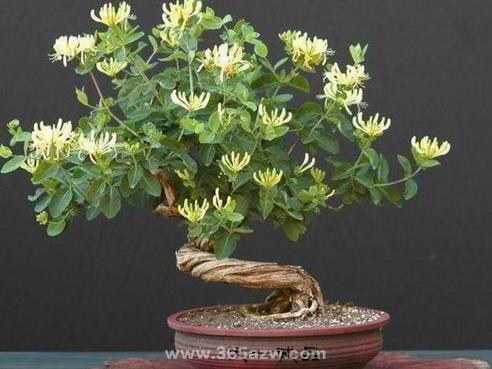
A Detailed Introduction to the Cultivation and Care Methods of Honeysuckle Bonsai
Cultivation Methods for Potted Honeysuckle
1. Water
Normally, keep the potting soil sufficiently moist, and especially during the flowering period it must not lack water. If the potting soil is too dry, it will affect growth and flowering.
Although honeysuckle is easy to manage when cultivated, watering should still follow the principle of "wet then dry," that is, water until water comes out of the bottom of the pot, and water again only when the potting soil has lost water and become dry.
It is best to use river water, rainwater, or ditch and pond water; tap water in cities contains a lot of chlorine, so it can be stored and left to stand in advance, and used after the chlorine has completely volatilized. In winter, the water temperature for watering flowers should be close to room temperature. The amount of watering is greatest in summer, second in spring and autumn, and least in winter.
During the flowering period, water as little as possible, as this can extend the flowering period.
2. Soil
The preparation of the cultivation soil is key. The cultivation soil should be nutrient-rich, loose, and have strong water-holding capacity, and is best if acidic or slightly acidic.
Generally, a mixture of river sand and pine needle leaf mold can be used as the growing medium. After sieving, divide it into 3 types of growing medium: coarse, medium, and fine, for later use.
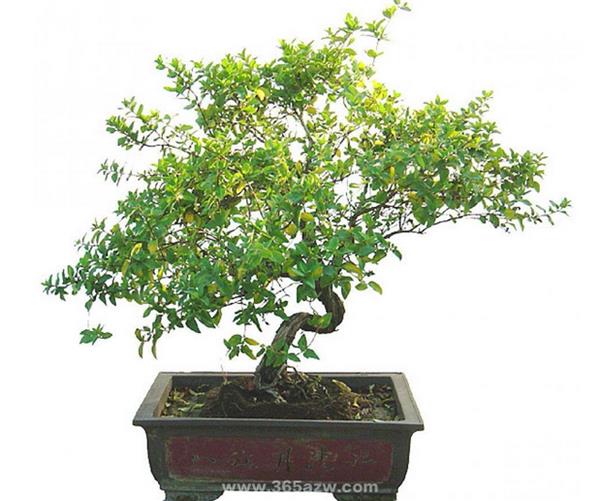
When adding soil, first use 2 pieces of broken tile overlapped to cover the drainage hole at the bottom of the pot, then place the coarser growing medium in the bottom layer, and add decomposed manure as a slow-release fertilizer; then cover the fertilizer with medium-grained growing medium, then plant the plant, and finally cover the surface with fine-grained growing medium.
The potting soil of a newly potted plant is very loose, so it can be gently pressed firm by hand, and then watered slowly to prevent the surface soil from being washed into a large pit. After the first watering has fully seeped down, water once more, until a small amount of water flows out from the hole at the bottom of the pot.
3. Pruning
Shaping and pruning are the main processing methods for potted honeysuckle.
Because honeysuckle has extremely strong sprouting ability, it is suitable for many kinds of bonsai styling.
Honeysuckle should be pruned in time during the dormant period.
When pruning, keep only 1 main trunk 10-20 cm tall, keep 3-5 main branches on the trunk, and keep 3-5 side branches on each main branch, so that the whole plant takes on a "flowering type" shape. After the beginning of spring, remove all the buds growing on the main trunk, and before flowering remove the growing tips of the main branches to encourage the plant to produce more flowering branches.
After flowering, pruning should be carried out again, cutting short the upper part of the flower branches that have already finished blooming, leaving only 3-5 nodes, and according to the specific situation cutting away some new shoots and thin, weak branches.
Through pruning, make the whole plant shape have coordinated trunk and branches and distinct layers.
4. Fertilizer
Honeysuckle blooms in early summer. It is best to apply a "flower bud fertilizer" once around the Spring Equinox. When flower buds cover the branch tips, apply a phosphorus fertilizer again. After the first round of flowers has bloomed all over, it is still necessary to regularly apply a dilute organic liquid fertilizer. Also cut off the flower clusters that are near withering, reduce nutrient consumption, and promote continued flowering. Honeysuckle can also be given a "bud-promoting fertilizer" at Major Cold and a "root-promoting fertilizer" at the Beginning of Spring.
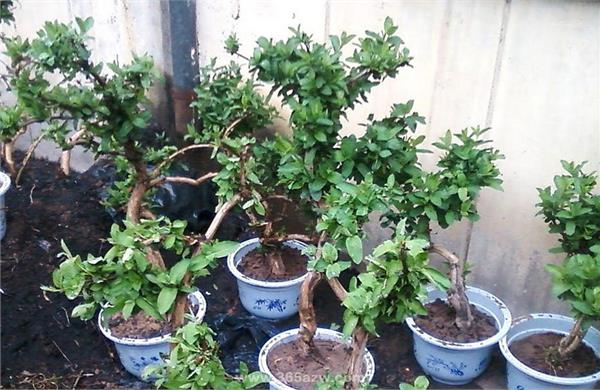
Honeysuckle has very strong sprouting ability, so pruning is very important. During the dormant period, cut off thin and weak branches and all kinds of branches that affect the shape, and appropriately shorten strong branches. After the first flowering, pinching can promote a second flowering of honeysuckle. After the branches are pruned, the sprouted buds are mostly flowering branches, and they usually bloom when they grow to 10-20 cm.
Care Methods for Potted Honeysuckle
I. Selection of Honeysuckle Stumps
Although honeysuckle has all kinds of stumps in nature, not too many are suitable for making bonsai, so try to choose tree stumps with well-developed roots, a thick and sturdy trunk, an ancient and simple look, curved variation, a short and compact tree shape, thick and short dense internodes, and natural tapering transitions.
To cultivate honeysuckle bonsai, you can also plant small honeysuckle seedlings with short internodes and easy flowering in a place with deep soil, loose and fertile soil, and rapid growth for directional training. When the ideal thickness is reached, they can be potted for cultivation. In this way, you can usually enjoy the flowers and pick the flowers, and also obtain relatively ideal honeysuckle stumps, achieving multiple goals at once.
II. Cultivation Management
Honeysuckle bonsai can be planted in all four seasons, and planting in late autumn and early winter is best. In order to make honeysuckle bonsai grow well, honeysuckle that has already survived from cuttings can be planted in late autumn and early winter in an ornamental pot of a size suitable for the stump, then cultivated with prepared fertile humus loam, with green moss spread on the surface, and watered immediately to help it survive. Because of the limits of the cultivation container, honeysuckle bonsai often needs supplemental water and nutrients. Especially in the growing season, fertilization should mainly be phosphorus and potassium fertilizer, applying decomposed cake fertilizer once a week to promote thick and sturdy branches and vines and lay a good foundation for the next year's growth.
From winter to before the next year's bud break, planting, pruning, and shaping can all be carried out. According to the needs of bonsai styling, generally keep 3-5 main branches, keep 2-3 buds on each branch, and cut off all other branches and vines. This is the key to ensuring rapid shaping. In addition, after each flowering, be sure to combine fertilization with timely pruning and shaping, so as to achieve the ornamental effect of flowering multiple times.
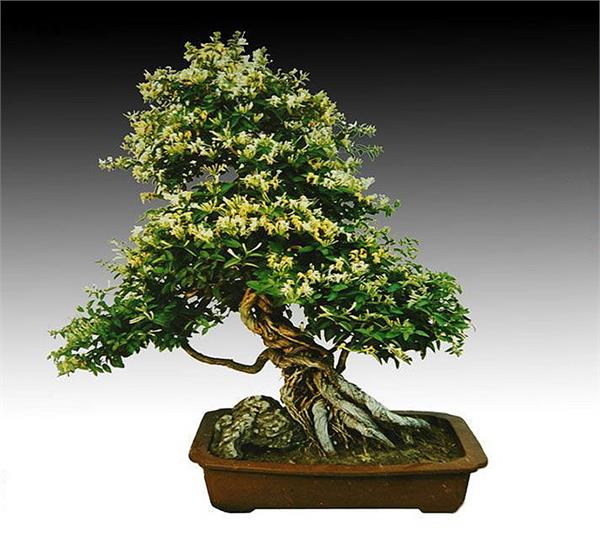
The work of bud removal and pinching of honeysuckle bonsai is very important. According to the growth characteristics of honeysuckle and the needs of styling, bud removal should be carried out many times each year. Especially when buds sprout in early spring, every internode of honeysuckle is covered with uneven sprouts. At this time, you must be good at identifying them. First, promptly remove the water sprout buds that will grow vigorously in the future, are twining, and disrupt the tree shape; during the growth process, especially resolutely control water sprout buds. Second, remove the thin and weak branch buds that will be unable to bloom in the future, so as not to affect ventilation and light penetration. Third, keep only the buds of ordinary growth branches that can bloom normally in the future; generally after they become branches, cut them at about 20 cm, and most of the branches can bear flowers, and bear many flowers. For individual long branches that affect the tree shape, you can first pinch the growing tips to ensure the tree shape is compact, ventilated, and light-transmitting, with no twining branches.
During the growing season of honeysuckle bonsai, fertilizer and water management is very important. Only under conditions of sufficient fertilizer and water can honeysuckle develop and grow normally, but it must not be allowed to grow unchecked. During this period, according to its growth condition, flexibly and promptly withhold water, control the tree shape, increase flower quantity, prevent excessive growth, promote maturity of the stems and vines, shorten the internodes, and dwarf the plant shape. Generally, in addition to applying decomposed cake fertilizer once a week, also spray the leaves 2-3 times with a 0.2% potassium dihydrogen phosphate solution. Before flower bud formation, apply little or no nitrogen fertilizer, and increase phosphorus and potassium fertilizer. After the branches stop growing and during the bud stage, appropriately apply nitrogen fertilizer to promote large and bright flowers.
III. Pest and Disease Control
During cultivation, honeysuckle bonsai basically has no pests or diseases. A small number of plants may develop brown spot disease and powdery mildew. The main control methods are: regularly pick up and remove dead branches and fallen leaves; apply more phosphorus and potassium fertilizer to improve the disease resistance of the plants; in the early stage of disease, spray with a 500-fold dilution of 65% zineb wettable powder, or spray with half-strength Bordeaux mixture for control. Pests include inchworms and aphids that eat tender leaves, and coffee tiger longhorn beetles that bore into and eat branches and vines. Commonly, spray and kill with 0.1% fenitrothion or an 800-1000-fold dilution of 95% crystal trichlorfon. If there are not many pots, manual capture is best, as it is simple and easy, economical and practical, and pollution-free.
so as to achieve the ornamental effect of flowering multiple times.
The work of bud removal and pinching of honeysuckle bonsai is very important. According to the growth characteristics of honeysuckle and the needs of styling, bud removal should be carried out many times each year. Especially when buds sprout in early spring, every internode of honeysuckle is covered with uneven sprouts. At this time, you must be good at identifying them. First, promptly remove the water sprout buds that will grow vigorously in the future, are twining, and disrupt the tree shape; during the growth process, especially resolutely control water sprout buds. Second, remove the thin and weak branch buds that will be unable to bloom in the future, so as not to affect ventilation and light penetration. Third, keep only the buds of ordinary growth branches that can bloom normally in the future; generally after they become branches, cut them at about 20 cm, and most of the branches can bear flowers, and bear many flowers. For individual long branches that affect the tree shape, you can first pinch the growing tips to ensure the tree shape is compact, ventilated, and light-transmitting, with no twining branches.
During the growing season of honeysuckle bonsai, fertilizer and water management is very important. Only under conditions of sufficient fertilizer and water can honeysuckle develop and grow normally, but it must not be allowed to grow unchecked. During this period, according to its growth condition, flexibly and promptly withhold water, control the tree shape, increase flower quantity, prevent excessive growth, promote maturity of the stems and vines, shorten the internodes, and dwarf the plant shape. Generally, in addition to applying decomposed cake fertilizer once a week, also spray the leaves 2-3 times with a 0.2% potassium dihydrogen phosphate solution. Before flower bud formation, apply little or no nitrogen fertilizer, and increase phosphorus and potassium fertilizer. After the branches stop growing and during the bud stage, appropriately apply nitrogen fertilizer to promote large and bright flowers.
III. Pest and Disease Control
During cultivation, honeysuckle bonsai basically has no pests or diseases. A small number of plants may develop brown spot disease and powdery mildew. The main control methods are: regularly pick up and remove dead branches and fallen leaves; apply more phosphorus and potassium fertilizer to improve the disease resistance of the plants; in the early stage of disease, spray with a 500-fold dilution of 65% zineb wettable powder, or spray with half-strength Bordeaux mixture for control. Pests include inchworms and aphids that eat tender leaves, and coffee tiger longhorn beetles that bore into and eat branches and vines. Commonly, spray and kill with 0.1% fenitrothion or an 800-1000-fold dilution of 95% crystal trichlorfon. If there are not many pots, manual capture is best, as it is simple and easy, economical and practical, and pollution-free.