How to plant water lilies for the best results? These basic facts you need to master
Lysimachia christinae is a small perennial herb with slender creeping stems covered in grey short soft hairs, rooting at the nodes; the leaves are kidney-shaped to round; the flowers are solitary in the leaf axils, with flower stalks shorter than the leaf stalks, thread-like; the sepals are obovate-oblong to spoon-shaped; the corolla is bell-shaped, shorter than to slightly longer than the calyx, yellow; the capsule is nearly spherical, small, shorter than the calyx; the flowering period is May to July, and the fruiting period is July to October. Let's take a look below at an introduction to how to grow Lysimachia christinae.
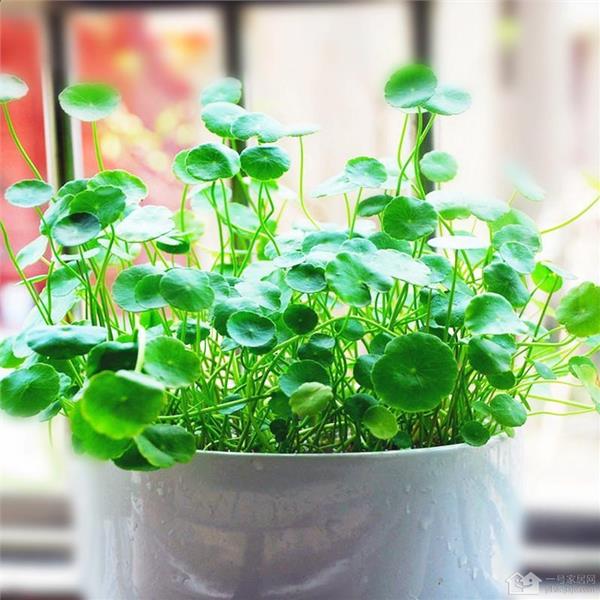
I. Basic facts about Lysimachia christinae
Lysimachia christinae, a traditional Chinese medicine name. It is the dried whole plant of the Primulaceae plant Lu Gu Huang (scientific name: Lysimachia christinae Hance). It is distributed in all provinces of Jiangnan. In summer it has the effects of clearing heat and detoxifying, dispersing blood stasis and reducing swelling, and removing dampness and relieving jaundice. It can be used for heat strangury, sand strangury, painful difficult urination, jaundice with dark urine, carbuncles, swellings and boils, venomous snake bites, liver and gallbladder stones, urinary tract stones and other conditions. Modern research shows that this product mainly contains phenolic components and sterols, flavonoids, amino acids, tannins, volatile oils, choline, potassium salts, etc. It also has stone-discharging, antibacterial and anti-inflammatory effects, and has an inhibitory effect on both humoral immunity and cellular immunity. In addition, the Urticaceae plant Pilea peperomioides, one of its alternative names, is also called Lysimachia christinae.
II. Ecological habits of Lysimachia christinae
Lysimachia christinae prefers shady, damp and humid environments, and is not cold-tolerant. It is suitable for fertile, loose sandy loam rich in humus. It grows in fields, forest edges, roadsides, forest grasslands, by streams and riversides, or in shady damp grass clumps near villages; it is not strict about soil requirements, but loose, fertile, well-drained sandy loam is best; it is suitable for growing under warm and humid climatic conditions.
III. How to grow Lysimachia christinae
1. Temperature
It prefers warmth, dislikes high temperatures, and tolerates low temperatures. It grows well within a temperature range of 16 to 24 degrees, and the overwintering temperature should not be lower than 5°C. When the water temperature exceeds 30°C, the plant's growth will be inhibited.
2. Pest and disease control
The main pests are grubs and snails that bite and eat the stems and leaves. You can choose to drench with 90% crystal trichlorfon at 1000 times dilution; or broadcast 8% metaldehyde bait granules or 10% metaldehyde granules, 1.5 grams per sq m, or 1.5 kg per mu, broadcast on a sunny evening, to kill adult insects or young snails.
3. Water quality requirements
It has strong adaptability to the pH of the water body, but it is best to keep it between six and seven.
4. Propagation methods
It can be propagated by seeds or by cuttings. However, because Lysimachia christinae seeds are very small and not easy to collect, and the seedlings grow slowly, cuttings are mostly used for propagation.
IV. The efficacy and effects of Lysimachia christinae
The efficacy of Lysimachia christinae: clearing heat and promoting diuresis, relieving strangury, and reducing swelling. It is used for heat strangury, sand strangury, painful difficult urination, jaundice with dark urine, carbuncles, swellings and boils, and venomous snake bites; liver and gallbladder stones, urinary tract stones. For heat strangury, it is especially good at treating stone strangury; it can be decocted alone in a strong decoction and drunk as tea, or used together with Lygodium japonicum, chicken gizzard lining, etc. For damp-heat jaundice, it can be used together with Yinchen and Zhizi. In modern treatment of cholelithiasis, it is used in combination with Yinchen, Huangqin, Muxiang, etc. The effects of Lysimachia christinae: used for liver and gallbladder stones and urinary tract stones, heat strangury, and jaundice. Lysimachia christinae has good effects in removing dampness and relieving jaundice and in discharging stones and relieving strangury. To treat liver and gallbladder stones and jaundice, this product can be used alone in a decoction drunk as tea, or combined with Yinchen, Yujin, Dahuang, etc. to enhance the effects of clearing the liver and gallbladder and discharging stones.
Lysimachia christinae can not only be used for home greening, but its efficacy, effects and edible methods are also numerous and beneficial. This small and lovely plant has long been deeply rooted in people's hearts and has made everyone remember it firmly! Friends who like it can also plant a pot; it is not only beautiful but also very easy to grow!
The above is the relevant introduction in this article. I believe that after reading it you also have a simple understanding of this. If needed, you can continue to follow No. 1 Home Network to learn more information.