How to Grow Schefflera arboricola and Precautions for Growing It
Schefflera arboricola is an evergreen shrub in the family Araliaceae, with many branches and fairly dense branching. It has palmately compound leaves that are deep green and glossy. The flowers are small, white, inconspicuous and fragrant, blooming between winter and spring. Because it is highly adaptable, tolerates low-light environments, has good ornamental value, and its leaves can absorb nicotine and other harmful substances diffused in the air and convert them into harmless substances through photosynthesis, it has become one of the most popular indoor potted plants in the world, suitable for hotels, conference rooms, halls, homes and more.
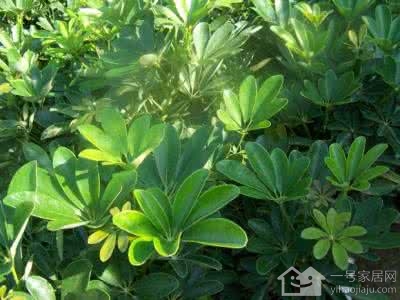
I. How to Grow Schefflera arboricola
Soil: Peat soil, leaf mold with a little base fertilizer, or sandy soil can all be used for cultivation. Make sure the soil has good air permeability and drainage.
Temperature: The usual growing temperature for Schefflera arboricola is 15-25°C. Below 5°C it will drop its leaves, so pay attention to ventilation at ordinary times.
Light: Schefflera arboricola is a semi-shade plant, and four hours of direct sunlight a day is enough; it must not be exposed to strong sun.
Watering: In spring, summer and autumn, water about once every 3-4 days, but do not water too much, as waterlogging will cause the roots to rot; at the same time, keep the soil moist. Reduce watering in winter, and the water temperature should preferably be close to that of the soil.
Fertilizing: Schefflera arboricola is mainly given a mixed fertilizer of nitrogen, phosphorus and potassium. For variegated varieties, if there is too much nitrogen fertilizer and the light is weak, the patches on the leaves will become less distinct.
Pruning: Schefflera arboricola generally does not need pruning. If the leaves drop and the lower branches become bare, you can cut off the upper part to encourage new branches to sprout. The cut-off parts can also be re-planted as cuttings.
II. Growth Habits of Schefflera arboricola
Schefflera arboricola can be grown for a long time in a bright, well-ventilated home for everyday display. Its growing temperature is 15-25°C, and in winter, as long as it is not below 5°C, the plant can continue to grow.
Schefflera arboricola has strong adaptability. It can grow not only in conditions of high air humidity and sufficient soil and water, but also in dry environments. When growing older plants indoors, you can appropriately prune the oversized parts, or cut off part of the root system and replant.
III. Precautions for Growing Schefflera arboricola
Schefflera arboricola likes semi-shade and can be displayed indoors for a relatively long time in a bright and well-ventilated home. About 4 hours of direct light indoors each day is enough for it to grow well. For varieties with yellow or white markings, if the light is too weak or nitrogen fertilizer is applied one-sidedly, the markings will become blurred, thus losing their original characteristics.
The optimum growing temperature is 15-25°C, and the minimum winter temperature should not be below 5°C, otherwise the leaves will fall off. New leaves will appear the following spring. It grows well in environments with high air humidity and sufficient soil moisture, but it has strong adaptability to the dry climate of the north. Note that the potting soil must not lack water, otherwise a large number of leaves will fall off. Under low winter temperatures, watering should be appropriately controlled. During the growing season, apply liquid fertilizer once every 1-2 weeks.
Repot once every spring; if plastic containers are used, pay attention to drainage. Prepare the potting soil with peat soil, leaf mold, perlite and a small amount of base fertilizer. Fine sandy soil can also be used for potting. Pruning does not require major cutting; if the lower leaves have all dropped and it has become a bare stem, cut it back at the upper half to encourage new branches to sprout. The cut branches can also be used for cuttings, and after rooting they will become new plants. If you do not want Schefflera arboricola to grow too tall, you can pinch it once it reaches 30 cm, that is, remove the top bud, and after some time side branches will grow.
The above is the related introduction in this article. I believe that after reading it you also have a simple understanding of it. If needed, you can continue to follow No. 1 Home Network to learn more information.