What are the precautions for growing Kalanchoe blossfeldiana?
The flower language of Kalanchoe blossfeldiana is longevity and great good fortune, so many elders also like to grow it. So, what precautions are there in the process of growing Kalanchoe blossfeldiana? Is it enough as long as there is good sunlight and sufficient water? Let's take a look!
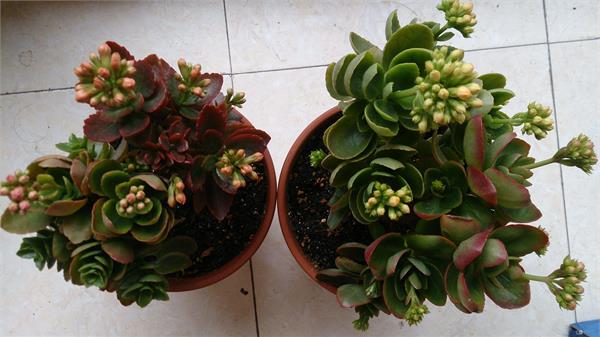
1. Soil selection for growing Kalanchoe blossfeldiana:
Kalanchoe blossfeldiana cannot be grown in heavy, sticky soil, otherwise it will lead to poor growth, root rot and leaf drop, and in severe cases cause the plant to die. The potting soil should be mixed with 4 parts leaf mold, 4 parts garden soil, 2 parts river sand, plus a small amount of bone meal. This kind of growing medium is loose and fertile, has good drainage, and shows a slightly acidic reaction, which is beneficial to root development.
2. Fertilization methods for growing Kalanchoe blossfeldiana:
Kalanchoe blossfeldiana cannot be grown in heavy, sticky soil, otherwise it will lead to poor growth, root rot and leaf drop, and in severe cases cause the plant to die. The potting soil should be mixed with 4 parts leaf mold, 4 parts garden soil, 2 parts river sand, plus a small amount of bone meal. This kind of growing medium is loose and fertile, has good drainage, and shows a slightly acidic reaction, which is beneficial to root development.
During the peak growing season, apply a dilute compound liquid fertilizer once every 15-20 days to promote robust growth and abundant flowering. After flower buds form in November, apply 1-2 additional applications of 0.2% potassium dihydrogen phosphate or 0.5% superphosphate, and then there will be more flowers, brighter colors, and a longer flowering period.
3. Watering methods for growing Kalanchoe blossfeldiana:
Like other succulent flowers, Kalanchoe blossfeldiana contains a relatively large amount of water in its body and has strong drought resistance, so it does not need a large amount of watering. During the growing period, it is enough to water thoroughly once every 2-3 days and keep the potting soil slightly moist. When the temperature is low in winter, watering should be controlled even more. If watered too much, drainage is poor, and the potting soil is too wet, it is easy to cause root rot.
Although Kalanchoe blossfeldiana is relatively drought-tolerant, it cannot lack water during the growing season. Normally, it can be watered once every 2-3 days. During the vegetative growth stage, the soil must be kept moist, with timely and appropriate watering. In summer, when Kalanchoe blossfeldiana is in an environment of high heat, strong sunlight, high evaporation, and dry air, it can be watered once every evening. In cold winter, Kalanchoe blossfeldiana enters a dormant period, so watering should be controlled, or even no watering for a short period.
4. Light requirements for growing Kalanchoe blossfeldiana:
Kalanchoe blossfeldiana likes sufficient sunlight. When grown at home, it should be placed in a place with direct sunlight all year round. In the hot summer in the north, the light intensity is high, which can easily make the leaves turn yellow, so appropriate shade around noon is advisable, or place it in a semi-shaded spot indoors, but pay attention to ventilation and cooling. When cultivating Kalanchoe blossfeldiana, if there is insufficient light for a long time, not only will the branches be slender and the leaves thin and small, affecting the beauty of the plant shape, but the number of flowers will also decrease, the flower color will not be bright, and it will also cause a large number of leaves to fall off, losing its ornamental value.
5. Temperature requirements for growing Kalanchoe blossfeldiana:
The most suitable temperature for the growth of Kalanchoe blossfeldiana is 20-25°C. Above 30°C or below 10°C, growth clearly stops and it enters a dormant or semi-dormant state. In winter, if the temperature is below 10°C, it should be moved into a greenhouse to overwinter. If conditions permit, the indoor temperature can be controlled at 16-20°C during the day and 10-15°C at night, so that Kalanchoe blossfeldiana can bloom at New Year's Day and Spring Festival.
In winter, the room temperature should not be lower than 12°C. It is best at 15-18°C during the day and above 10°C at night. If the temperature drops to 6-8°C, the leaves will turn red and the flowering period will be delayed.
The above is the relevant introduction in this article. I believe that after reading it you also have a simple understanding of this. If necessary, you can continue to follow No.1 Home Network to learn more information.