What are the characteristics of the sensitive plant (Mimosa pudica)? A complete guide in one article
A light touch on this plant's leaves makes them close and droop immediately, and even a gust of wind can trigger the same reaction. Let's take a look below at exactly what characteristics the sensitive plant has.
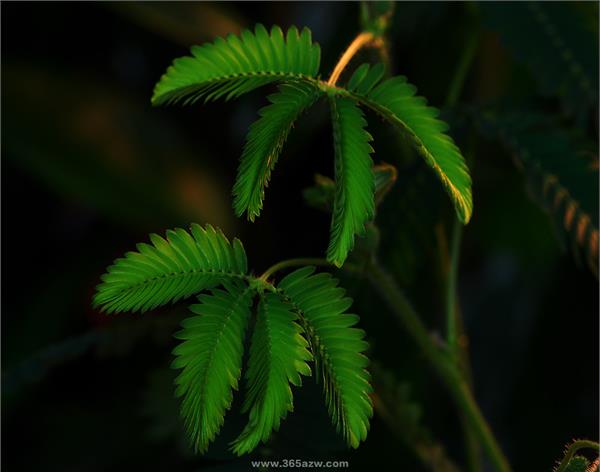
What exactly are the characteristics of the sensitive plant?
Characteristic 1 of the sensitive plant: Its greatest characteristic is that when it is stimulated (such as by touch), the surface of its leaves contracts and folds together. If the stimulus is strong, this stimulus is quickly passed along in turn to the neighbouring leaflets, and even to the leaflets of the entire compound leaf, making the petiole droop. If the stimulus is strong enough, it can even make the leaflets of the whole plant fold up and the compound leaves droop. But after a period of time, it can return to its original state. The sensitive plant also reacts very quickly to vibration: it begins to respond 0.1s after being stimulated, and completes the response within a few seconds.
Characteristic 2 of the sensitive plant: At night, it also folds its leaflets together and droops its petiole, and during the day, when some leaflets are shaken, they also fold together in pairs. It is more sensitive when the light is weak. Normally, the water in the pulvinus supports the leaf blade; but when it is stimulated by an external force, the water in the pulvinus immediately flows elsewhere, causing the leaves of the sensitive plant to close. In addition, it automatically contracts at night (that is, sleep movement). This unique trait is exactly the source of the sensitive plant's name and nickname.
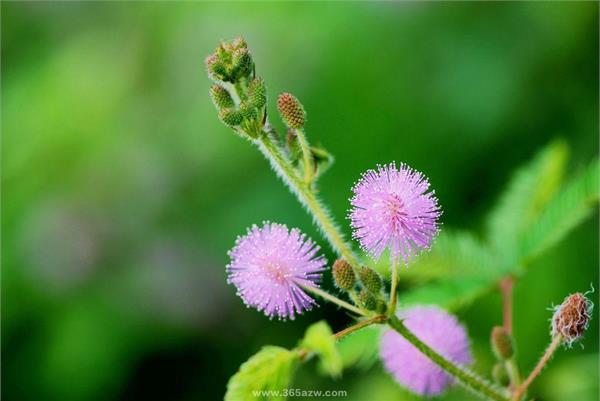
Characteristic 3 of the sensitive plant: Because the sensitive plant has strong vitality and grows rather messily, many places classify it as a type of grass, but in fact it also flowers. The flowering period of the sensitive plant is from July to October each year, but its flowering period is very short; the flower withers less than two days after blooming. The flowers are pink, and the capitulum is round like a ball, shaped like a pompom. After flowering, it also produces pods, and the fruit is flat and round.
Cultivation method: potted growing
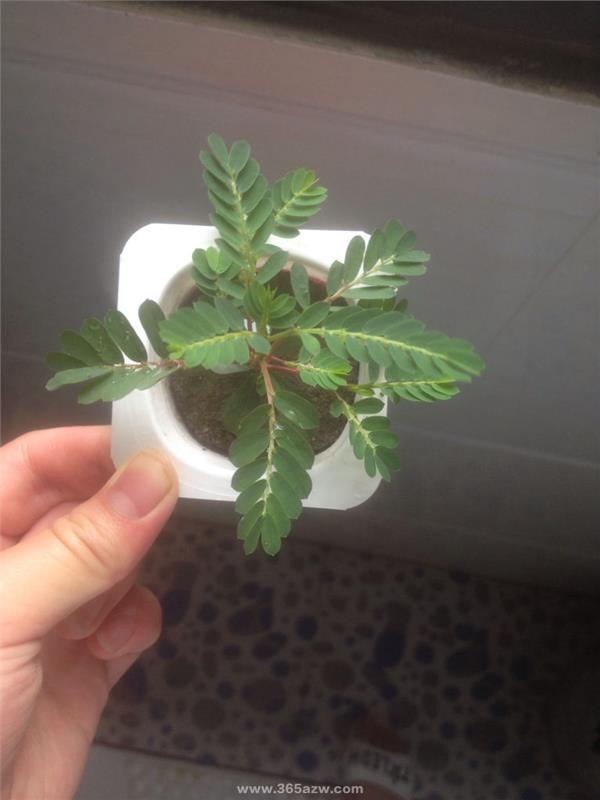
When you touch the leaves of the sensitive plant, it slowly closes, which is very peculiar. And its flowers are like little fuzzy pink balls, especially cute. Because of its living habits, the sensitive plant is a small plant suitable for potted growing.
Watering:
Since the sensitive plant is originally a tropical plant and very fond of humid environments, we should often keep the potting soil moist. In summer, water according to the condition of the potting soil, roughly once a day, and never let the soil dry out. You can also often spray water on the plant. In winter, reduce the amount of watering to prevent cold damage.
Fertilising:
The sensitive plant has low requirements for soil; ordinary soil will do. But if you want the sensitive plant to grow better, you can choose soil that is relatively loose and fertile, and you can also use a mixed soil of leaf mould and sandy soil. You can also use only leaf mould, and humus soil is also a good choice.
Sunlight:
The sensitive plant likes sunlight. Placing it in a sunny spot is very beneficial to its growth. If there is too little sunlight, it is instead bad for its growth.
Precautions for growing the sensitive plant:
1. Prevent cold damage. The sensitive plant is suited to growing in a warm environment, with a suitable temperature between 20-28 degrees. If the temperature is too low, it will hinder its growth. Because the winter temperature is too low, water less to avoid cold damage to the roots and stems. The watering time should be around the hottest time of the day. If the temperature is below 10 degrees, it is best to give it some protection.
2. Prevent pests and diseases. The sensitive plant generally rarely has pests or diseases, and the most common pest is the slug. If pests are found, you can sprinkle some lime powder to deal with them.
3. When fertilising, fertilise according to your own situation, and the sensitive plant can be fertilised about once a month. If you think the potted sensitive plant grows too large to look good, you can give up fertilising the sensitive plant.