Basic Introduction and Detailed Morphological Characteristics of Thalictrum
Traditional Chinese medicine has always radiated a sacred brilliance, not only because it has inherited the historical culture of the Chinese nation for thousands of years, but also because this highly skilled craft is regarded as a calling card of our country, renowned throughout the world, generating tremendous interest among people in other countries. However, learning traditional Chinese medicine is by no means easy. To achieve mastery, one must devote an enormous amount of time and energy, especially given the vast and complex array of medicinal herbs, which is enough to give anyone a headache. Today, we introduce one of these many herbs: Thalictrum.
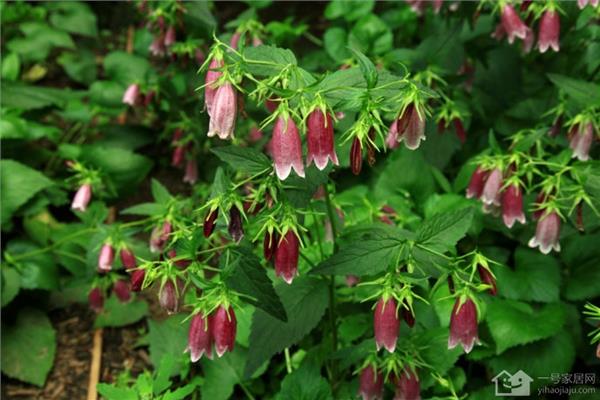
Basic Introduction to Thalictrum
Thalictrum is derived from Thalictrum foliolosum and Thalictrum cultratum of the genus Thalictrum in the Ranunculaceae family, with the roots used as medicine. In spring and autumn, the roots are dug out, the above-ground stems and leaves are cut off, the soil is washed away, and the roots are sun-dried. Thalictrum foliolosum: a perennial herb, the entire plant is hairless. Underground there is a horizontal rhizome bearing many slender roots, all yellow, with long branches on the upper part. The middle stem leaves are tripinnate or nearly pinnately compound; the leaf blade reaches up to 28 cm in length. The inflorescence is paniculate, much branched. The achene is spindle-shaped, 3 mm long. 2. Thalictrum cultratum: similar to the above species. Underground it produces many slender roots, with a yellow cross-section. The cauline leaves are bipinnate or more compound.
Morphological Characteristics
1. Thalictrum fortunei, a perennial herb, 60-85 cm tall. The rhizome is short, with numerous stout fibrous roots. The stem is erect, branched, with glandular hairs on the upper part. Leaves are alternate; the petiole reaches up to 4 cm, with a short sheath at the base; the leaves are tripinnately compound; the leaf blade is 5-9.5 cm long; the leaflets are herbaceous, broadly obovate, elliptic, or nearly circular, about 0.7-1.6 cm in length and width, with 3-5 teeth on the upper part, a rounded or shallowly cordate base, densely covered with small glandular hairs on the upper surface, and densely covered with short pubescence along the veins on the lower surface, with inconspicuous reticulate veins; the petiolule is 0.5-1 cm long; the hairs on the rachis reach up to 0.2 mm.
2. Thalictrum cultratum, a perennial herb, 50-120 cm tall. The entire plant is hairless, or the upper stem and the underside of the leaves have sparse short hairs. The stem is erect, branched on the upper part. Leaves are alternate; the petiole is 1-4 cm long; the basal leaves and lower stem leaves wither at flowering time, and the middle stem leaves are tripinnate to quadripinnately compound, with short petioles; the leaf blade is 9-20 cm long, with 4-6 pairs of primary pinnae; the leaflets are thinly leathery or slightly fleshy, rhombic-obovate, broadly rhombic, or nearly circular, 5-14 mm long, 3-14 mm wide, the apex usually acute, the base obtuse, rounded, or shallowly cordate, 3-lobed, the lobes entire or with 2 small teeth, the upper surface veins sunken, the lower surface covered with white powder, the veins raised, the reticulate veins conspicuous.
3. Thalictrum baicalense, a perennial herb, 45-80 cm tall. The entire plant is hairless. The stem is erect, branched on the upper part. Leaves are alternate; the petiole is 1-2.5 cm long, with a narrow sheath at the base; the stipules are narrow, membranous; the middle stem leaves are tripinnately compound, with short petioles; the leaf blade is 9-16 cm long; the leaflets are herbaceous, the terminal leaflet broadly rhombic, flattened-rhombic, or rhombic-obovate, 1.8-4.5 cm long, 2-5 cm wide, the base broadly cuneate or nearly circular, 3-shallowly-lobed, the lobes with round teeth, the veins raised on the lower surface, the reticulate veins slightly conspicuous.
Pharmacological Effects
Fetidine alkaloid has a hypotensive effect, and its crude preparation can treat hypertension. For magnoline, berberine, jatrorrhizine, etc., see the entries for Aristolochia debilis and Coptis chinensis. Plants of the same genus, such as Thalictrum petaloideum or Thalictrum simplex, contain thalictrine, which has anti-inflammatory, analgesic, and cooling effects on animals. Thalictrum purpurascens contains thalicarpine, thalipurpurine, and thalicberine, and is effective against Walker carcinosarcoma 256 in rats and Lewis lung carcinoma in mice. Thalicarpine also has a weak hypotensive effect.
This is just an introduction to one member of the vast army of traditional Chinese medicines, and it is already quite complex, with many pharmacological properties that researchers of traditional Chinese medicine must commit to memory, because patients' lives are in their hands and no carelessness is permitted. Therefore, mastering traditional Chinese medicine is no simple matter. As medical personnel, they bear an especially heavy responsibility, but difficulties cannot stop our determination to carry on the tradition. Traditional Chinese medicine and Chinese materia medica, this great heritage and culture, need us to protect and carry forward.
The above is the relevant introduction in this article. I believe that after reading it, you have gained a simple understanding of this topic. If needed, you can continue to follow No. 1 Home Network to learn more information.