Causes and Solutions for Yellowing Cyclamen Leaves
What is going on when cyclamen leaves turn yellow? What methods can solve it? Yellowing cyclamen leaves are a common problem during cyclamen cultivation, so what could be the causes of yellowing cyclamen leaves? Let's take a look below at the causes of yellowing cyclamen leaves, as well as the solutions and correct cultivation methods.
I. Introduction
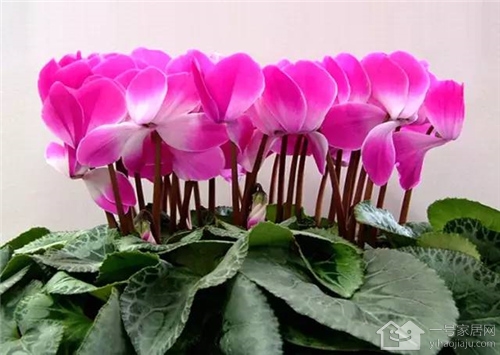
Also known as radish begonia, rabbit ear flower, rabbit flower, yipin crown, bonfire flower, and doubled-petal lotus, it is a perennial herbaceous plant in the genus Cyclamen of the family Primulaceae. Cyclamen is a commonly grown flower, and its cultivation method is suitable for indoor flower pots, while in winter it needs greenhouse cultivation. Some cultivated varieties of cyclamen have a rich fragrance, while others have a faint fragrance or no fragrance.
II. Habits
Cyclamen likes sufficient sunlight and a warm, humid environment, and it dislikes heat and fears waterlogging. The most suitable temperature is 20°C; around 20°C is fine. Above 30°C it easily sheds leaves and goes dormant, and below that the tuber is prone to frost damage, so the best cultivation environment for cyclamen in winter is greenhouse growth, requiring loose, fertile, well-drained soil.
III. Causes of Yellowing Cyclamen Leaves
Cause 1 of yellowing cyclamen leaves: spraying pesticide too concentrated. Cyclamen showing phytotoxicity from this should be promptly sprayed with clean water to relieve it.
Cause 2 of yellowing cyclamen leaves: sunburn during ventilation. If the previous care environment had weak or somewhat poor light, a sudden change in light conditions will make it unable to adapt, especially when the outdoor temperature is relatively high (which causes dormancy); if the air is also dry, it is very easy for the leaves to wither and yellow.
Cause 3 of yellowing cyclamen leaves: caused by drought. When placed outdoors for ventilation, the water in the pot soil is not sufficient, and the outdoor high temperature plus too much ventilation causes the plant to lose water very quickly.
Cause 4 of yellowing cyclamen leaves: repotting is not needed now; if dormancy is not given in summer, repotting should wait until autumn.
IV. Solutions for Yellowing Cyclamen Leaves
1. At a temperature of 17°C-18°C, watering cyclamen once every 3 days is enough, and wait until the soil is completely dry before watering. In addition, to avoid yellowing cyclamen leaves, be careful not to spray water on the leaves and flowers of cyclamen.
2. Flower lovers who grow cyclamen are advised to water it with purified water or boiled water that has been left to cool for a day after buying it, and apply specialized fertilizer once every half month; this can effectively avoid yellowing cyclamen leaves.
3. After cyclamen leaves turn yellow, you can take the tuber out of the flower pot and place it in a plastic bag, then put it in the refrigerator to chill, but the temperature should not be below 0°C. After the Beginning of Autumn, take the tuber out, remove old roots and dead leaves, and replant it in a flower pot. When new leaves begin to sprout, gradually resume normal water and fertilizer management.
V. Cyclamen Cultivation Methods
Cyclamen light: Cyclamen likes sunlight, so it should be placed in a sunny place for care. Sufficient light is very beneficial to its growth, but it fears direct strong sunlight in summer.
Cyclamen fertilization: Cyclamen is a fertilizer-loving plant. Apply 2‰ potassium dihydrogen phosphate once each in spring and autumn every year. Do not apply nitrogen fertilizer during the flowering period, otherwise it will cause excessive growth of branches and leaves and shorten the lifespan of the flowers.
Cyclamen temperature: Cyclamen is not tolerant of high temperatures. Too high a temperature will make it enter a dormant state. Above 30°C the plant will stop growing and enter dormancy, and above 35°C it is prone to rot and death. In winter during the flowering period, the temperature must not be lower than 10°C; if the temperature is too low, the flower color will be dull and the flowers will easily fall off. The suitable growth temperature is 15-20°C.
Cyclamen watering: Cyclamen is a plant that likes moisture and fears waterlogging, so it should not be watered too much; overwatering can cause root rot and death. Keeping the soil moist every day is enough.
Cyclamen pests and diseases: Cyclamen has more diseases than pests. The main diseases are gray mold and soft rot, mostly caused by bacterial infection. The diseased parts appear soft and rotting. Apply thiophanate-methyl or chlorothalonil for prevention.
The above is the relevant introduction in this article. I believe that after reading it you also have a simple understanding of this. If needed, you can continue to follow No.1 Home Network to learn more information.