What environmental conditions are needed for growing Birenmei (Meiren Mei)?
Birenmei is a hybrid of purple-leaf plum (Prunus cerasifera) and the plum blossom cultivar "Gongfen Yuanyuan", combining the advantages of both: it has the plum blossom's beautiful flower shape, larger blooms, double petals and delicate colors, as well as the purple-leaf plum's dense flowering and purple-red foliage. It is a new type of ornamental flowering tree with both beautiful flowers and leaves, suitable for planting in courtyards, plazas, lawns, road green belts and other places. It is suitable whether planted alone or in groups, and can also be grown in pots for ornamental purposes or made into bonsai. Let's take a look at how to grow potted Birenmei below.
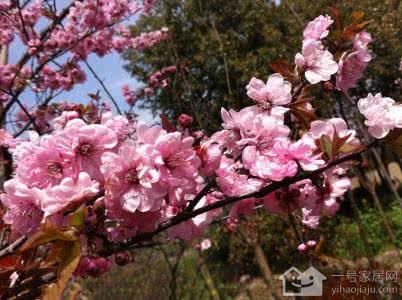
I. Birenmei growing environment
It prefers a sunny, well-ventilated and open environment. It requires deep soil with good drainage and rich in organic matter. Propagated by grafting, layering and cuttings. An excellent tree species for garden ornament and environmental greening.
II. How to grow potted Birenmei
1. Substrate
It has strong adaptability and is not strict about soil texture; it can adapt to mountain soil, open ground, slightly acidic and slightly alkaline conditions, and tolerates poor soil.
2. Temperature
Birenmei inherits the plum blossom's cold resistance. For seedlings planted in autumn, measures such as wrapping the trunk with straw rope and covering the tree pit with plastic film should also be taken. Once Birenmei has grown, its cold resistance is strong; apart from watering enough antifreeze water, it can overwinter in the open ground without any additional protection.
3. Light
Birenmei prefers light and does not tolerate shade; if planted under large trees or in shaded places, it will grow poorly.
4. Watering
Watering: For ground-planted plants, water once in early spring to revive growth. During the growing season, if it is not too dry, watering can be omitted, but during high-temperature and drought in summer, appropriate watering is needed to prevent the plant's new leaves from struggling to grow and old leaves from turning yellow and drying out due to lack of water. Pay attention to drainage on rainy days, especially after continuous rain or heavy rain, otherwise waterlogging in the soil will cause root rot. In early winter, water once more with freeze-protection water to increase the plant's cold resistance in winter.
5. Pruning and shaping
Birenmei tolerates pruning relatively well, and the general tree shape is the natural open-center form. Keep 3 main branches, and retain 3 to 4 side branches on each main branch. Pruning is divided into winter pruning and post-bloom pruning: the former focuses on shaping, cutting off useless large branches as well as diseased, pest-infested, crossing and water-sprout branches. Weak seedlings should be heavily pruned in winter, thinning out some branches, and long branches can be shortened. The latter is to cultivate new flowering branches, shortening the aged branches after blooming, leaving 3 to 4 buds at the base to stimulate branch growth. When branches grow to 40 cm, pinch off the tips to promote plump axillary buds. To improve the survival rate of transplanting, pruning should combine heavy shortening with branch thinning, which can reduce the tree's nutrient consumption and water evaporation, but large cuts should be treated with white paint.
6. Pest and disease control
The main diseases include leaf spot and gummosis. Besides strengthening management to make the plant grow robustly and increase its disease resistance, you can also spray broad-spectrum fungicides such as chlorothalonil and carbendazim 2 to 3 times in succession in early summer and early autumn each year. When disease occurs, broad-spectrum antibacterial agents can also be sprayed. It is best to alternate several agents to avoid developing resistance.
The main pests include aphids, slug moths, red spiders and longhorn beetles, which can be controlled with broad-spectrum insecticides such as dichlorvos, but drugs prone to causing phytotoxicity, such as omethoate, should not be used. For more stubborn pests such as longhorn beetles, pesticide concentrate can be injected into the trunk for control.
The above is the relevant introduction in this article. I believe that after reading it, you have gained a simple understanding of this. If needed, you can continue to follow No.1 Home Network to learn more information.