A Complete Guide to Geraniums: Introduction and Fascinating Flower Meanings
Among the many potted flowers, the geranium is undoubtedly outstanding. Every spring, geraniums add beauty to the world alongside a hundred other blooms. Five petals form an umbrella shape, gathered together at the tip of the flower stalk. Several flowers cluster together, quite united, packed tightly side by side like a ball. Every flower is waiting for the person destined to decipher its flower meaning. So, what is the flower meaning of the geranium? Let's find out together.
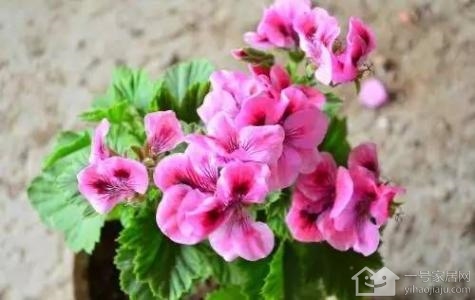
I. Introduction to Geraniums
Chinese name: Geranium
Scientific name: Pelargonium hortorum
Alternative names: Shilabong, Rulabong, Rilanbong, Yangkui
Family: Geraniaceae
Genus: Pelargonium
Origin and distribution: The geranium is native to southern Africa and is widely cultivated around the world.
Morphological characteristics: Young geranium plants are succulent herbs, while older plants become semi-woody; the leaves are opposite, with circular, kidney-shaped or fan-shaped blades; flower colors include white, red, purple, pink, orange and more, borne in umbel inflorescences, blooming in all four seasons, most profusely in spring.
Geraniums come in many color variations: red, white, pink and purple. Native to South Africa, they are perennial herbaceous flowers. The leaves are palmate with long stalks, mostly serrated along the margins, and the leaf surface bears relatively deep ring-shaped markings. The corolla usually has five petals, and the inflorescence is umbel-shaped, growing at the tip of an upright flower stalk. Because the clustered flowers are as dense as a ball, it is also known as the "foreign hydrangea." The flowering period begins in early winter and lasts until early summer of the following year.
The geranium is a famous ornamental plant valued both for its foliage and its flowers. Geranium leaves are usually alternate, palmately lobed or pinnately parted, generally with long petioles; some species have light and dark veining on the leaves. Each flower has five petals, and the flowers cluster into an umbel shape, called a "false umbel inflorescence." Flower shapes range from star-shaped to funnel-shaped in various forms, and colors include white, pink, red, orange-red, purple and even nearly black, in all varieties.
II. Growth Habits of Geraniums
Geraniums like warm winters and cool summers. Indoors in winter, maintaining 10-15°C during the day and above 8°C at night allows them to bloom normally. However, the optimum temperature is 15-20°C. Geraniums prefer dry conditions and dislike dampness, so watering should not be excessive in winter; water only when the soil is dry, and let it dry between waterings. When the soil is wet, the stems become soft and tender, which is unfavorable for the sprouting and opening of flower branches; prolonged excessive moisture causes the plant to grow leggy, the flower-bearing nodes to shift upward, and the leaves to gradually yellow and drop.
The geranium is native to southern Africa and is widely cultivated around the world. Young plants are succulent herbs, and older plants become semi-woody; in the West it is an excellent flower for decorating windowsills, and it is especially common in continental Europe, such as in Germany and Austria. The geranium is commonly known as the "hydrangea" and has single, semi-double, double and tetraploid varieties. Geraniums like sunlight and warmth. They have pain-relieving, antibacterial, cell-defense-enhancing, deodorizing, hemostatic and tonic effects. Geranium is suitable for all skin types and can deeply cleanse the skin, tighten pores and balance oil secretion. It can quickly generate new cells to repair scars, stretch marks and more.
II. Flower Meanings of Geraniums
The flower meaning of the geranium is: a chance encounter, happiness is right by your side. Depending on the color of the geranium, the flower meanings differ as follows:
Red geranium: You linger in my mind.
Pink geranium: Glad to be by your side.
Yellow geranium: An unexpected meeting.
Silver-leaved geranium: Reminiscence.
Dark-colored geranium: Melancholy.
Trailing geranium: A wedding gift.
Scented geranium: A long-awaited reunion.
Wild geranium species: Devotion, steadfastness.
Variegated geranium: Sincere friendship.
There is a piece of history behind the origin of the geranium. The first geranium species to be cultivated was the zist rose-scented geranium, native to South Africa. Before 1600, it was brought back to the botanical garden in Leiden, the Netherlands, by a ship that had stopped at the Cape of Good Hope. In 1631, the English horticulturist John Tradescant purchased seeds from Rene Morin in Paris and introduced this plant to England. The English name Pelargonium was given by Johannes Burman in 1738.
In the animated series "Flower Fairy," Xiaobei searched the whole world, only to discover that the seven-colored flower was actually in her own garden. This is often how things are in life: true happiness is often those things right beside you that you have always ignored and taken for granted. So plant a geranium, and constantly remind yourself to cherish the ordinary happiness before your eyes.
From this it can be seen that geraniums are not only good for foliage and flowers, but the beneficial geranium compounds they contain also have quite good skincare and beauty effects. Truly, the whole plant is a treasure, and no wonder people have given the geranium such a wonderful flower meaning. Plant a pot of geraniums on your balcony, and let happiness come to you by chance.
The above is the related introduction in this article. I believe that after reading it, you now have a simple understanding of this topic. If you need more, you can continue to follow No. 1 Home Network to learn more information.