What plant is kudzu? A detailed explanation of the benefits and effects of kudzu flower
Kudzu is the plant of the climbing vine species Pueraria montana var. lobata. Kudzu flower contains more than ten kinds of amino acids and more than ten kinds of trace elements needed by the human body. Next, let us take a look at the morphological characteristics and effects of kudzu.
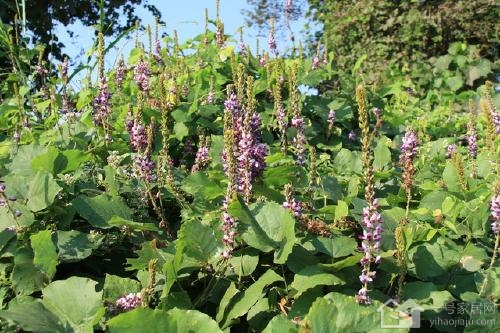
Kudzu is a stout climbing vine, up to 8 m long, the whole plant covered with long yellow bristly hairs, the stem base woody, with thick tuberous roots. Pinnately compound leaves with 3 leaflets; stipules dorsifixed, ovate-oblong, with lines; stipels linear-lanceolate, equal to or longer than the petiolules; leaflets three-lobed, occasionally entire, the terminal leaflet broadly ovate or obliquely ovate, 8-15(-19) cm long, 5-12(-18) cm wide, apex long acuminate, lateral leaflets obliquely ovate, slightly smaller, the upper surface covered with pale yellow, appressed sparse pubescence. The lower surface is denser; the petiolules are covered with yellow-brown tomentum.
Racemes 15-30 cm long, with fairly dense flowers above the middle; bracts linear-lanceolate to linear, much longer than the bracteoles, early deciduous; bracteoles ovate, less than 2 mm long; flowers 2-3 clustered at the nodes of the rachis; calyx campanulate, 8-10 mm long, covered with yellow-brown pubescence, lobes lanceolate, acuminate, slightly longer than the calyx tube; corolla 10-12 mm long, purple, the standard petal obovate, with 2 auricles at the base and a yellow callus-like appendage, with a short claw, the wings falcate, narrower than the keel, base with linear, downward auricles, the keel falcate-oblong, base with very small, acute auricles; the stamen opposite the standard petal free only in its upper part; ovary linear, hairy.
[Properties and characteristics] This product is pungent, sweet and cool, tends to rise and disperse, and acts on the spleen and stomach. It is not only good at dispersing pathogenic qi from the muscles, interstices, meridians and collaterals to relieve the exterior, promote sweating and reduce fever, making it an essential medicine for treating stiffness and pain of the nape and back; it is also good at invigorating the clear yang qi of the spleen and stomach to rise upward, and has the effects of promoting fluid production and quenching thirst, raising yang and stopping diarrhea, and promoting the eruption of rashes and toxins.
[Effects] Relieves the muscles and reduces fever, promotes rash eruption, promotes fluid production and quenches thirst, raises yang and stops diarrhea.
[Indications] (1) Exterior syndrome due to external contraction, with stiffness and pain of the nape and back. (2) Incomplete and unsmooth eruption at the early stage of measles. (3) Feverish diseases with restlessness and thirst, and wasting-thirst syndrome. (4) Early stage of damp-heat diarrhea and dysentery, and diarrhea due to spleen deficiency.
[Dosage and usage] For stopping diarrhea it should be used prepared by roasting; for reducing fever and promoting fluid production it should be used raw.
[Compatibility] Raw kudzu root combined with Scutellaria baicalensis and Coptis chinensis: the three medicines used together both clear heat, dry dampness and remove toxins, and vent heat, raise yang and stop diarrhea, mainly treating the early stage of damp-heat diarrhea and dysentery.
What effects does kudzu flower have
One of the effects and benefits of kudzu flower is lowering blood pressure. Bioflavonoids have been the first-choice medicine used by major hospitals from ancient times to the present for preventing and treating cardiovascular and cerebrovascular diseases. The bioflavonoids contained in kudzu flower are the component unique to kudzu flower, kudzu flower su, which has the effects of purifying the blood, softening blood vessels and unblocking blood vessels; at present they are widely used in major domestic hospitals, all without toxic or side reactions.
Side effects of kudzu flower
"Ben Jing Feng Yuan" says: Gehua (kudzu flower) can relieve alcohol toxins; when used in Gehua Jiecheng Tang, it must be combined with ginseng. However, those without alcohol toxins must not take it; taking it damages one's primordial qi, because it greatly opens the muscles and pores, and discharges and damages fluids. That is to say, if people without the corresponding ailment take it, it easily damages primordial qi and consumes fluids; long-term use can cause a weak state of dual deficiency of qi and yin.
The above is the relevant introduction in this article. I believe that after reading it you also have a simple understanding of this. If needed, you can continue to follow Yihao Home Network to learn more information.