Is Geranium Suitable for the Bedroom? A Detailed Look at Its Growing Environment
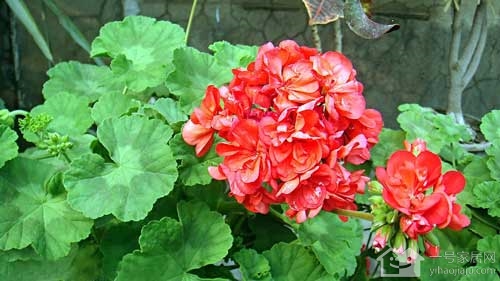
Geranium is also called zonal geranium. Perhaps you will fall in love with it at first glance. It is widely cultivated all over the world. Young geranium plants are succulent herbs, while older plants are semi-woody. In Western countries it is a very good flower for decorating windowsills, and it is very common in continental Europe. So, is geranium toxic? Let's find out together.
I. A Brief Introduction to Geranium
Perennial herb, 30-60 cm tall. Stem upright, woody at the base, succulent in the upper part, much branched or unbranched, with obvious nodes, densely covered with short soft hairs, with a strong fishy odor; leaves alternate; stipules broadly triangular or ovate, 8-15 mm long, covered with soft hairs and glandular hairs; petiole 3-10 cm long, covered with fine soft hairs and glandular hairs; leaf blade circular or kidney-shaped, heart-shaped at the base, 3-7 cm in diameter, margin wavy and shallowly lobed, with rounded teeth, both surfaces covered with transparent short soft hairs, with a dark red horseshoe-shaped ring pattern inside the leaf margin on the surface.
Young geranium plants are succulent herbs, while older plants are semi-woody; in the West it is a very good flower for decorating windowsills, and in continental Europe, such as Germany and Austria, it is especially common. Geographical distribution
Geranium has medicinal value. Its scent is sweet and slightly heavy, a bit like rose, and also slightly like mint. Historical clinical records: it was once used to treat cholera and bone injuries, and it also has an exorcism effect.
II. The Growing Environment of Geranium
Geranium likes a warm winter and cool summer environment. In winter indoors, it still needs to be kept at 10-15 degrees every day, and at night it also needs to be above 8 degrees, so that it can bloom normally, while the most suitable temperature is still between 15-20 degrees. It likes dry places and does not like humid ones. In winter it is not suitable to water it too much; it is best to alternate between dry and wet. Moist soil will make its stems succulent and tender, which is not conducive to the sprouting and opening of flower branches. If it is too moist for a long time, it will cause the plant to grow excessively, and the leaves will gradually turn yellow and fall off.
During the growing period, geranium needs sufficient sunlight, so in winter it must be placed in a sunny spot. If the light is insufficient, its stems and leaves will grow excessively, its flower stalks will also become thinner and softer, and the inflorescence will develop poorly. Flower buds under weak light generally do not open smoothly, and will even wither early. Geranium does not like heavy fertilizer, because too much fertilizer will make its growth excessive and is not conducive to flowering.
III. Is Geranium Toxic?
Is geranium toxic? Many people have raised this question. In fact, it should be said that geranium is not toxic, but it can cause irritation in some people with sensitive constitutions, producing allergy symptoms. Just as some people are prone to allergy symptoms when they encounter pollen in spring, but most people are perfectly fine.
Is geranium toxic, and is it suitable for the bedroom? We also said earlier that geranium is actually not toxic, but some people's constitutions are sensitive to geranium. If you have this allergic constitution, it is still better not to put it in the bedroom. For most people, geranium can be placed in the bedroom. Geranium has the effect of repelling mosquitoes and insects. It can give your bedroom the atmosphere of a rose garden, and it can also help regulate hormones, stimulate lymphatic detoxification, and balance skin oil secretion.
Geranium essential oil is formed from more than 30 kinds of terpenoid compounds and their derivatives. Its main components include geraniol, citronellol, linalool, citronellyl formate, geranyl formate and menthone, etc. Geranium oil can be used as a substitute for rose oil, used to blend essences, and as an additive in foods, soaps and toothpaste.
Overall, geranium is not very toxic, but the particles released by geranium can cause skin allergies and itching in people. During pregnancy, it is better not to use it. Geranium is not only the pride of African people, but is also very popular in Europe and Asia. That is all for today's introduction on whether geranium is toxic. Thank you for your participation.