A Complete Analysis of the Botanical and Ecological Characteristics of Canna
The labellum is lanceolate and curved; the capsule is long ovoid and green; the flowering and fruiting period is from March to December. Below, let us take a look at a detailed explanation of the botanical and ecological characteristics of canna.
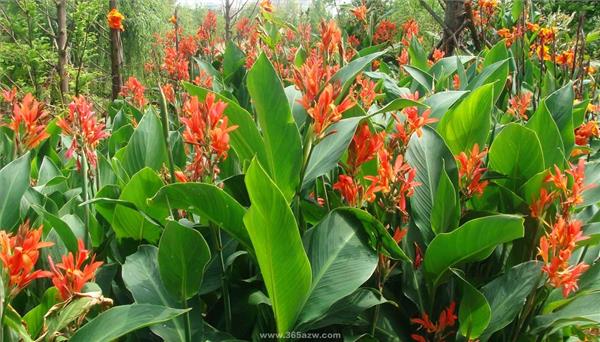
A Detailed Explanation of the Botanical and Ecological Characteristics of Canna
Canna is a perennial erect herb of the genus Canna in the family Cannaceae. Also known as red canna, tanhua, orchid canna, and dwarf canna. It is native to tropical America, Africa, and other places.
It has thick, fleshy rhizomes, and its leaves are alternate and broad. The petals are sepal-like; the showy petals are actually petaloid stamens. The inflorescence is a raceme, and the petals may be yellow, red, spotted, and so on depending on the variety. The seeds are relatively large, blackish brown, and have a hard seed coat. The flowering period opens successively from early summer to late autumn.
Flower colors include bright red, pink, orange-red, purple-red, creamy white, purple, as well as red and yellow mixed, and red petals with golden edges. The flowering period is from May to July, blooming continuously. Among them, the large red canna is the most beautiful, called "red canna," hence the name canna. It likes warmth and humidity, fears severe cold, likes full sunlight, and prefers deep soil layers and fertile soil. It can tolerate poor soil. Its root buds have strong branching ability, it reproduces quickly, and it has a long flowering period. It is a good groundcover plant and can also be used as material for flower beds, flower borders, and flower landscapes.
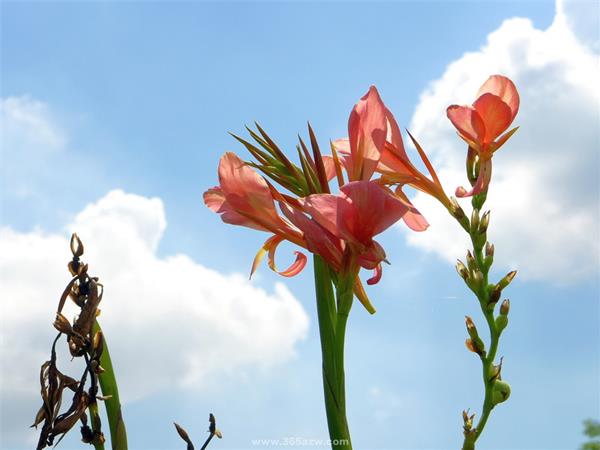
Morphological Characteristics
Canna (C. indica) has underground rhizomes that grow horizontally, are fleshy and enlarged, rich in starch, mostly branched, with obvious nodes, and the lateral buds on the nodes have strong sprouting ability. The plant height is about 1 to 2 m. The stems and leaves are green. The leaves are oblong-elliptical, 10-30 cm long and 5-15 cm wide. The inflorescence is small and sparse, usually with 2 small flowers. The petaloid petals are narrow and upright, bright red, and the labellum is orange-yellow with red spots. The leaves are simple and alternate, very large, oblong-elliptical, with obvious veins. It blooms large red or yellow flowers throughout the year. The flowers are bisexual, in terminal spikes, racemes, or narrow panicles. The flowers are large, 10-12 cm in diameter, with 3 sepals, small and green; 3 petals, usually narrow and pointed and similar to the sepals, with the petals and sepals joined into a tube; there are petaloid staminodes, usually 2-3, the largest one becoming the labellum, and the remaining 1-2 narrow and curled, with developed anthers on only one side; the pistil tube is connate. Flower colors are rich, including white, yellow, orange-red, pink, bright red, purple-red, or mixed colors. The raceme is terminal, often covered with waxy white powder, and each flower has 1 ovate bract about 1.2 cm long; 3 sepals, lanceolate, pale green; the corolla is tubular, 3-lobed, green or red; 5 stamens, petaloid, bright red, yellow, creamy yellow, or variegated; one of them has an anther, the outermost 3 are staminodes, oblanceolate, larger than the corolla, and another is especially large, reflexed as the labellum, with entire margins. The capsule is green, long ovoid, with soft spines, 1.2-1.8 cm long.
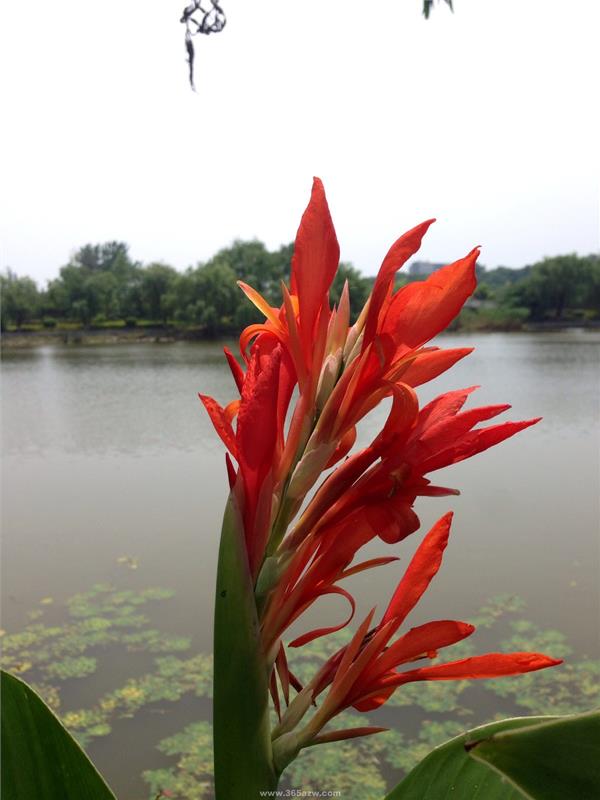
Physiological Characteristics
It likes warmth and sufficient sunlight, and is not cold-tolerant. It requires deep, fertile soil, and for pot cultivation the soil should be loose and well-drained. Fertilize regularly during the growing season. In the north, the underground tubers must be dug up before frost and stored in an environment at about 5°C. Because its flowers are large and colorful, the colors are rich, the plant form is good, and cultivation is easy. The optimum temperature for open-field cultivation is 13-17°C. It has low requirements for soil and grows best in loose, fertile, well-drained sandy loam, and it also adapts to growth in fertile clay soil. South of the Yangtze River, it can overwinter outdoors in a wind-protected spot. Propagate by division or by seed. Division propagation is carried out from April to May when the buds begin to sprout, cutting the rhizomes into sections with 2-3 buds each for replanting.
Generally, south of the Yangtze River basin, it can overwinter safely outdoors with slight covering; north of the Yangtze River, the stems and leaves wither after frost in early winter, so around the time of Frost's Descent, the aboveground stems and leaves should be cut off, the rhizomes dug up, air-dried for 2-3 days, the surface moisture removed, laid flat indoors, covered with river sand or fine mud, and kept at a room temperature above 8°C, then planted after the last frost in the following spring; propagation by forcing sprouts and division can also be carried out after February. Because canna likes moisture and avoids dryness, in the hot summer, if exposed to direct sunlight or dry hot winds, the leaf margins may become scorched; watering with water that is too cold can also cause the same phenomenon.
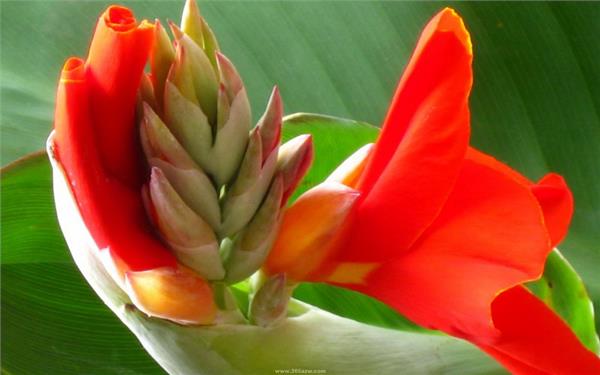
A perennial herb of the family Cannaceae, with thick fleshy rhizomes underground, and underground stems erect and unbranched. Leaves alternate, broad, with sheath-like petioles. Monochasial cyme, with broad leaf-like involucres; both pistils and stamens are petaloid, and the petaloid lobe of one stamen often rolls downward, called the labellum. Capsule spherical, seeds blackish brown. Flowering period in summer and autumn. Native to America. It likes a warm, hot, and sunny environment and has some cold tolerance; in northern regions the aboveground parts wither in winter. It requires thick, well-drained soil, and also tolerates poor soil and short-term waterlogging.
A perennial herbaceous flowering plant. The plant height can reach 100-150 cm, and the rhizomes are enlarged; the aboveground stems are fleshy and unbranched. The stems and leaves have white powder. The leaves are alternate, broad, long elliptically lanceolate. Broadly elliptical. The raceme is produced from the top of the stem, and the flower diameter can reach 20 cm. The petals are straight, with four petaloid stamens. Flower colors include creamy white, bright yellow, orange-yellow, orange-red, pink, bright red, purple-red, mixed-color spots, and more than 50 varieties. The flowering period in the north is from June to October (north); in the south it is year-round.
It also tolerates poor soil and short-term waterlogging.A perennial herbaceous flowering plant. The plant height can reach 100-150 cm, and the rhizomes are enlarged; the aboveground stems are fleshy and unbranched. The stems and leaves have white powder. The leaves are alternate, broad, long elliptically lanceolate. Broadly elliptical. The raceme is produced from the top of the stem, and the flower diameter can reach 20 cm. The petals are straight, with four petaloid stamens. Flower colors include creamy white, bright yellow, orange-yellow, orange-red, pink, bright red, purple-red, mixed-color spots, and more than 50 varieties. The flowering period in the north is from June to October (north); in the south it is year-round.