Why Gardenia Leaves Turn Yellow and How to Fix It
Our editors have carefully selected and shared this article on what to do when gardenia leaves turn yellow and how to fix it, so you can learn more about flowers. Take a look!
Analysis of why gardenia leaves turn yellow:
1. Improper watering: When growing gardenias, do not water too much. Water accumulating in the pot or overly wet potting soil will cause new leaves to become dull and lusterless with slow growth, while old leaves turn yellow-green and gradually wither.
2. Improper lighting: Both too much and too little light can cause the plant's leaves to turn yellow. With prolonged direct strong light, yellow spots will appear on the leaf surface, but if the plant is kept in a shaded environment for a long time, the leaves will drop because they cannot get enough sunlight, so light must be supplemented in time.
3. Improper fertilizing: During gardenia cultivation, a high fertilizer concentration will cause the plant to turn yellow. The tips of new leaves will appear yellow-brown, the leaf surface will be uneven and lusterless, and old leaves will gradually wither and drop. At this point, fertilizer needs to be supplemented in time, but before that, you need to judge from the plant's symptoms which fertilizers should be added.
4. Too-low temperature: Gardenias can tolerate low temperatures, but excessively low temperatures can cause leaf yellowing. During gardenia care, winter cold injury is common; if no warming measures are taken on early spring and early winter nights, the plant is prone to cold injury.
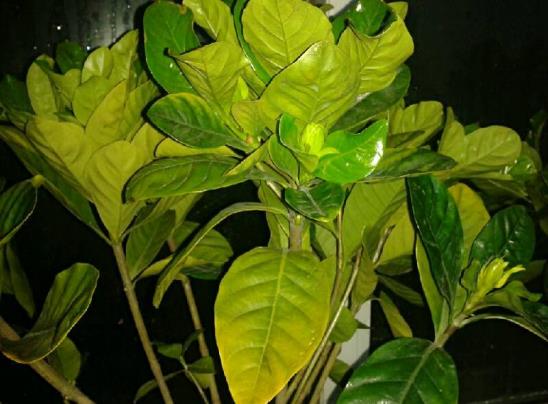
How to fix yellowing gardenia leaves:
1. Let it adapt to the environment gradually: Gardenias just bought from the market are mostly taken out of greenhouses and need a period of adaptation when moved to a new environment. If the environmental difference is too great, it will cause yellow leaves, and this is an uncontrollable factor. Therefore, when leaves turn yellow, observe for a period of time first and care for the plant well during this period.
2. Water more: Gardenias like water, prefer warm southerly winds and like moist environments, but in the north the weather is dry and the air humidity is insufficient, all of which can cause the plant's leaves to turn yellow. Whether in the south or the north, the best method is to place the plant in a large tray, fill the tray with water, and be careful to sprinkle water on the leaf surface every day so the leaves absorb moisture and become plump and glossy.
3. Acidic water is more suitable: Gardenias like acidic soil, while tap water is alkaline or neutral, so when watering, often add some acidic substances, such as edible vinegar or citric acid.
4. Open windows for ventilation: Gardenias cared for indoors need frequent ventilation. Ensure the environment is bright with light, and place the plant by a window for care.
5. Fertilize reasonably: For the various signs of fertilizer deficiency in gardenias, supplement fertilizer appropriately according to the plant's growth state to ensure a balance of every nutrient. If too much fertilizer is applied, water immediately to flush it out, or repot and change the soil.
6. Prune yellow leaves: The gardenia has woody stems. When yellow leaves appear, directly cut off the yellowed branches and stems to ensure normal growth of the main trunk. With careful care, new leaves will grow before long.
The above is the relevant introduction in this article. I believe that after reading it, you also have a simple understanding of this. If needed, you can continue to follow No. 1 Home Network to learn more information.