What plants can purify formaldehyde indoors?
After renovating a new home, there is often a smell of paint and various building materials. These are harmful gases, including formaldehyde. In fact, some plants are quite good at purifying formaldehyde. Placing these plants at home can effectively purify formaldehyde, so which plants are better for purifying formaldehyde in a new home? These plants can both beautify the indoor environment and help prevent formaldehyde poisoning.
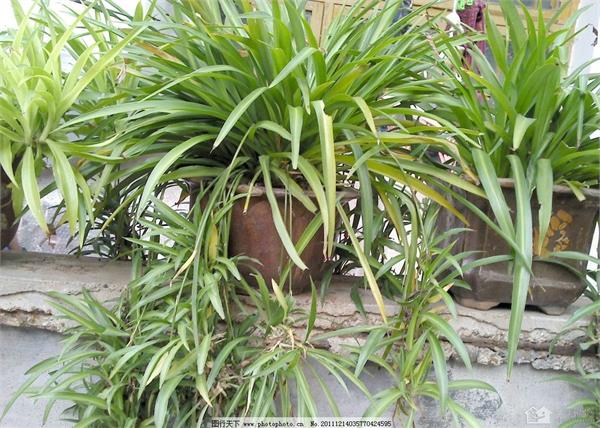
Which plants are better for purifying formaldehyde in a new home:
Formaldehyde-purifying plant for a new home 1: Spider plant
Spider plant comes first, because it is the most common and also the easiest to keep alive. It can absorb more than 80% of harmful gases indoors, and its ability to absorb formaldehyde is extremely strong. Generally, keeping 1-2 pots of spider plant in a room can absorb almost all toxic gases in the air, so spider plant is also known as a "green purifier."
Formaldehyde-purifying plant for a new home 2: Ivy
It is a typical shade-loving plant, can grow in full-light environments, grows well under warm and humid climate conditions, and is not cold-tolerant. It has a strong formaldehyde-removing function. It can break down two harmful substances, namely formaldehyde found in carpets, insulation materials, and plywood, and xylene hidden in wallpaper that is harmful to the kidneys.
Formaldehyde-purifying plant for a new home 3: Snake plant
It is one of the most common household potted plants. It is drought-tolerant, likes sunlight and warmth, also tolerates shade, and dislikes waterlogging. It can absorb more than 80% of harmful gases indoors, and its ability to absorb formaldehyde is extremely strong.
Formaldehyde-purifying plant for a new home 4: Gerbera (also known as African daisy)
It likes a warm, sunny, and well-ventilated environment, is a semi-cold-tolerant flower, and prefers fertile, loose sandy loam rich in humus. This plant is not only good at absorbing formaldehyde, but also highly ornamental, and many varieties can even be used as cut flowers.
Formaldehyde-purifying plant for a new home 5: Agave
It likes a warm, well-lit environment and is extremely drought-tolerant. It is also good at absorbing formaldehyde. In addition, it can be used for brewing alcohol, and the tequila made from it is very famous.
Formaldehyde-purifying plant for a new home 6: Chrysanthemum
Chrysanthemum can break down two harmful substances, namely formaldehyde found in carpets, insulation materials, and plywood, and xylene hidden in wallpaper that is harmful to the kidneys. Not only that, it is also highly ornamental, and there are many potted varieties or garden flowers to choose from.
Formaldehyde-purifying plant for a new home 7: Begonia
It likes warm, humid, and shaded environments, fears direct strong light, and requires well-drained sandy soil. It is not only good at absorbing formaldehyde, but its flowers, leaves, stems, and roots can all be used as medicine. It has effects such as clearing heat and reducing swelling, activating blood circulation and dispersing blood stasis, cooling blood and stopping bleeding, and regulating menstruation and relieving pain. It can treat sore throat, vomiting blood, irregular menstruation, and gastric ulcers, and also has fairly good edible value.
What methods are there for removing formaldehyde in a new home:
1. Open windows for ventilation.
2. Absorption by green plants. Green vegetation adsorption and opening windows for ventilation: characteristics: the processing capacity of green plants is too small, and opening windows is easily limited by climate conditions.
3. Place activated carbon. Activated carbon adsorption technology: uses adsorption materials made with micropore technology to adsorb chemical pollutants, and has a very good effect on formaldehyde and ammonia; drawback: it easily becomes saturated in the short term, needs regeneration, and requires frequent replacement.
4. Nano-photocatalysis technology: uses nano-photocatalysis to break down formaldehyde; drawback: trace amount, minimal effect. Nanotechnology catalysis technology takes effect quickly and completely eliminates formaldehyde. Drawback: it requires professional formaldehyde removal personnel to operate.
5. Covering technology (spraying, painting): covers the pollution source; drawback: the surface looks good, but formaldehyde is still slowly released.
6. Oxidation technology: uses strong oxidizing properties to break down pollution; drawback: toxic.
7. Formaldehyde decomposition technology, which uses the precious metal platinum to break down formaldehyde into carbon dioxide and water at room temperature, with no secondary pollution.
8. Mineral crystal formaldehyde remover: uses pure natural mineral crystal materials such as volcanic rock, bentonite, sepiolite, attapulgite, and diatomaceous earth, and adds materials such as nano titanium dioxide photocatalyst and air catalyst. It prevents secondary pollution. Safe and effective.
The above is the relevant introduction in this article. I believe that after reading it, you also have a simple understanding of this. If needed, you can continue to follow No. 1 Home Network to learn more information.