Ginseng Fruit Planting and Management Methods and Precautions
The ginseng fruit tree first became known to many people only after it was introduced in the TV series "Journey to the West" as an interesting fruit tree, but many friends may not know how the ginseng fruit tree is cultivated. Below, relevant information is compiled to introduce the miraculous ginseng fruit tree, from propagation to fruiting and growth key points. Let's take a look at how ginseng fruit is grown.
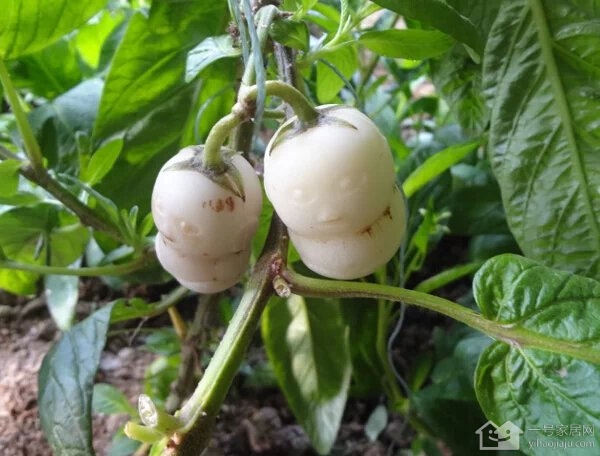
I. Basic Information on Ginseng Fruit
Ginseng fruit originated in New Zealand. It can be grown year-round in greenhouses, while large-scale open-field planting is from March to August. Fruit harvesting begins 3 months after planting. A single fruit weighs about 250 grams, with the largest fruit around 500 grams. Young fruit is emerald green, and when ripe it is golden yellow with purple markings. It is sweet and delicious when eaten fresh, and fragrant and crisp when cooked. "Ginseng fruit" is rich in calcium and vitamin C, molybdenum, cobalt, selenium, and more than a dozen trace elements needed by the human body, and can help prevent and treat high blood pressure, obesity, coronary heart disease, and cancer. "Ginseng fruit" has been called by the medical community the "fire of life" and the "king of anti-cancer."
II. Construction of Ginseng Fruit Planting Site
Generally, choose a plot with sufficient sunlight, sandy and relatively fertile soil, and convenient irrigation and drainage. In mountainous areas, terraced fields in mountain valleys have fewer pathogens and are also very good for planting. For single-row beds, the width is 60 cm; for double-row beds, 100 cm; plant spacing is 40 cm. Dig holes and break the soil fine. Plant about 1500 plants per mu. Before applying base fertilizer, it is best to scatter some pesticide for disease and insect prevention in the holes.
III. Planting and Management of Ginseng Fruit
1. Temperature and Light
Ginseng fruit is a temperature-loving crop, with the optimal growth temperature being 20-30°C. If the temperature is too high in summer, cooling can be achieved through shading; in winter, flower pots can be placed indoors or covered with film and a straw mat to keep the nighttime temperature no lower than 10°C, and light should be increased as much as possible.
2. Fertilizer and Water Management
Potted ginseng fruit should be top-dressed and watered according to different seasons, different weather, and the requirements of different growth stages. In cold seasons and at the seedling stage, top-dressing and watering are generally done once every 7-10 days; in warm seasons and during the flowering and fruiting stage, generally once every 2-3 days, preferably alternating one clear water and one fertilizer water; in hot seasons, water every day, and frequently spray fertilizer on the leaves. A 0.4% urea solution or 0.2% monopotassium phosphate solution or other foliar fertilizer solution can be used for foliar spraying.
3. Other Management
Potted ginseng fruit generally keeps 4 main branches, and each main branch keeps 2 branches on its upper part. All other dense and weak branches should be removed. When pruning, leave a few millimeters at the base of the side branches; over time, this forms a tumor-like shape, which can add a bit of beauty and improve ornamental value. After the plant grows taller, tie the vines. Tie 1 bamboo pole to each main branch, either straight or curved, tying them into shapes, and make the main branches evenly distributed to achieve ventilation and light penetration.
4. Pest and Disease Control
It likes warmth, light, and fertilizer. The suitable temperature is 22-28°C, and the adaptable temperature range is 8-35°C. Above 35°C, physiological functions become disordered; below 8°C, growth stops; below 0°C, it freezes and dies.
5. Trellising and Shaping
The stems of ginseng fruit are relatively soft, so special attention should be paid to trellising and shaping when growing it in pots. Generally, for each pot, use four smooth small bamboo poles or small tree branches about 60 cm long and insert them around the pot (10 cm into the soil). Use wire to make a circle, square, or oval on top, comparable in size to the pot opening, and tie it firmly with rope or thin wire. Then use plastic skin, hemp skin, etc. to tie its stems to the support. The stems should be upright, and the tightness should be moderate. Note that on each inflorescence, only 4-6 robust flowers should be retained, and all the rest should be removed; when the fruit grows to the size of a bean, thin the fruit, keeping 2-4 fruits per side branch. At the same time, select and retain flowers and fruits distributed around the pot and at the top, with even distribution, consistent size, and attractive fruit shape, to improve its ornamental value.
IV. Precautions for Cultivation
When the temperature is above 38°C or below 8°C, ginseng fruit cannot grow normally; below 0°C, the whole plant freezes to death. In the rainy season, especially in years with excessive rain, root rot is very likely, and in severe cases the whole plant dies. Ginseng fruit is extremely sensitive to dimethoate pesticide, so it should not be used to control aphids and mites, otherwise it will cause plant death or total loss of yield.
The above is the relevant introduction in this article. I believe that after reading it, you also have a simple understanding of this. If needed, you can continue to follow No. 1 Home Network to learn more information.