Growth Habits of Variegated Canna and Methods of Propagation and Cultivation
Variegated canna is vigorous and easy to grow, and it can grow normally in full sun or partial shade. Below, let us take a look at the growth habits of variegated canna and the methods of propagation and cultivation.
Growth Habits of Variegated Canna and Methods of Propagation and Cultivation
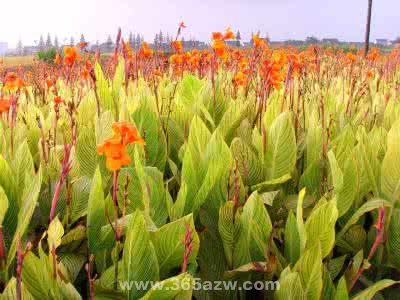
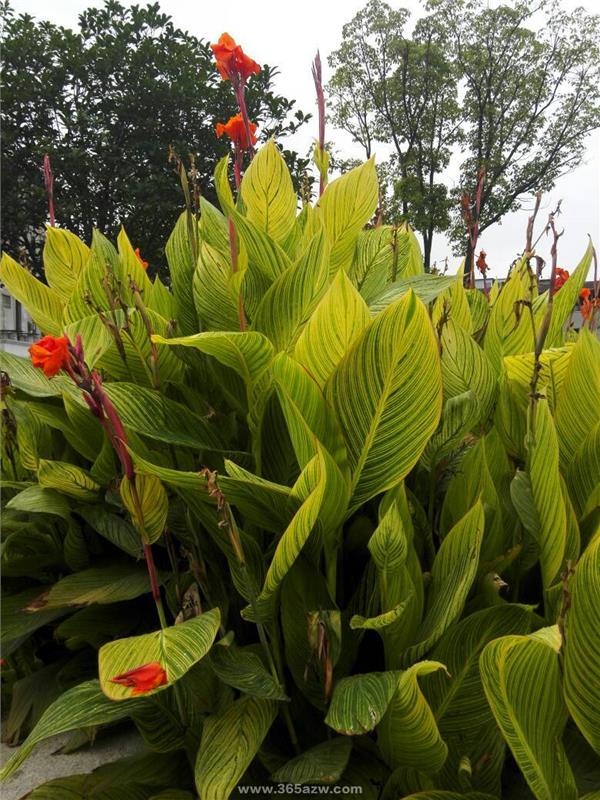
Variegated canna is a garden variety of canna. It is a perennial herbaceous plant with a rhizome. It is dwarf, with a plant height of 50-80 cm, and has stout rhizomes. The leaves are broadly elliptical, alternate, with obvious midribs and pinnate lateral veins, inlaid with earth-yellow, cream-yellow, and green-yellow colors. The terminal raceme bears about 10 red flowers, slightly smaller than those of terrestrial canna. The flowering period is from July to October, and the green period lasts about 240 days a year.
Variegated canna is one of the canna varieties newly introduced in recent years. Like canna, it is vigorous, has few pests and diseases, and a long flowering period. What is even more valuable is that the plant is short, only about 50 cm tall, making it very suitable for pot cultivation and appreciation. Moreover, its parallel veins are golden yellow. On the curled, about-to-unfold new leaves, they look like golden threads set into colorful makeup and green sleeves, full of delicate charm and grace, making it lovable.
Propagation and Cultivation
Variegated canna is mainly propagated by division, generally carried out in April or May. When dividing, dig the underground stem out of the soil, use a sharp knife to divide the tuber into several pieces, each with 2-3 buds, and plant them directly in holes in the open ground or in pots.
Variegated canna is vigorous and easy to grow, and it can grow normally in full sun or partial shade. When cultivating, the soil should be deeply turned and sunned to raise the ground temperature and sterilize it, and organic fertilizer should be applied. Plant in clumps or in broad beds. Summer to autumn, from July to October, is the peak growing season, so light, fertilizer, water, and ventilation management should be strengthened, and overly dense plants and flowering plants should be pruned promptly. After 1-2 years of cultivation, it needs to be dug up and replanted. The main pests and diseases of variegated canna include snails, slugs, cottony cushion scale, whiteflies, and rust.
Pot Cultivation Techniques
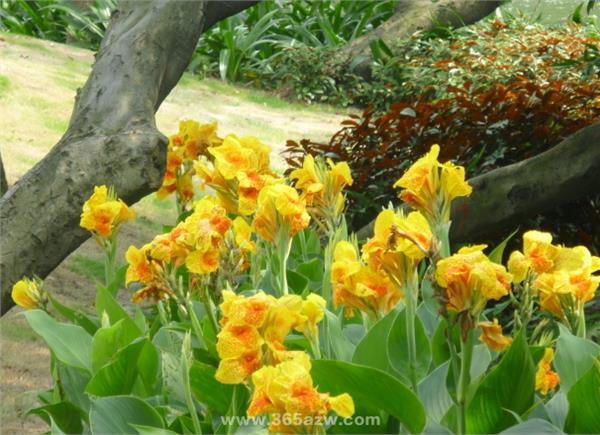
For potted canna, dwarf varieties should be chosen. Generally, the soil should be a mix of leaf mold, vegetable garden soil, and rice husk ash in a ratio of 1:1.5:0.5, with a small amount of bean cake, bone meal, and other fertilizers added and mixed in.
In spring, from March to April, take out the tubers, remove the rotten parts, select stem pieces with 2-3 robust buds, and bury them in the potting soil, preferably with the bud tips exposed above the soil. Because canna greatly likes fertilizer and tolerates moisture, the pot should be watered thoroughly. When it grows to its 5th leaf, apply a decomposed topdressing once every 7-10 days, and water after fertilizing. Generally, apply a 1% ferrous sulfate fertilizer solution once a month, or add a small amount of plant ash, to promote straight and sturdy stems, lush green and thick leaves, and bright flower colors. Stop fertilizing at the flowering stage. If it is placed in a relatively cool place while flowering, the flowering period can be extended. After the flowers at the stem tips fade, the stems and branches should be cut off from the base at any time so as to sprout new buds, grow flowering branches, and continue blooming one after another.
Potted canna sometimes shows symptoms of scorched and yellowing leaf edges, mainly caused by applying too much ferrous sulfate, or by drought or exposure to strong sunlight. In hot summer, watering with water that is too cold can also cause scorched leaf edges. If fertilizer is applied too strongly during the hottest summer period, it may even burn the rhizomes and "burn them to death." In addition, when the temperature is above 40, the canna can be moved to a ventilated and cool place. Around Frost's Descent, potted canna can be moved to a place at 5-10, and it can safely overwinter. During overwintering, stop fertilizing.
Overwintering Management
1. Bring it indoors as a houseplant
Variegated canna is very pleasing as an indoor ornamental plant. Place the potted canna in a place with ample light and apply an appropriate amount of comprehensive fertilizer in a timely manner. Do not water too much. If the leaves become damaged and wilted, cut the leaf stalks back to 4 inches long, and a new stalk will slowly grow out.
2. For canna in the garden, then "see you next year"
Warm regions: Canna may have difficulty overwintering where you are. You can dig it out of the garden and plant it again next season. Or leave it in the soil to overwinter. If winter frost poses a threat to it, covering it with a light blanket is a very effective good idea.
Cold regions: Let the canna remain in the soil until frost blackens the leaves (this is the inevitable result for summer-flowering cannas, unless they are tuberous begonia plants that have been treated before frost). Then cut the stems back to 4 inches long. Carefully dig up the corms, brush off the soil, and break or cut apart the rhizomes, making sure each rhizome has one visible leaf. Then place them in a dry, cold place to air-dry. Be careful not to damage the rhizomes. Remember to label them with the variety name while the leaves are still recognizable before they are completely air-dried. After they are dry, cut off some of the remaining leaves, and pack the corms with several layers of vermiculite; wrapping them with a layer of peat moss is even better. Store in a dry, cool place until the following spring.
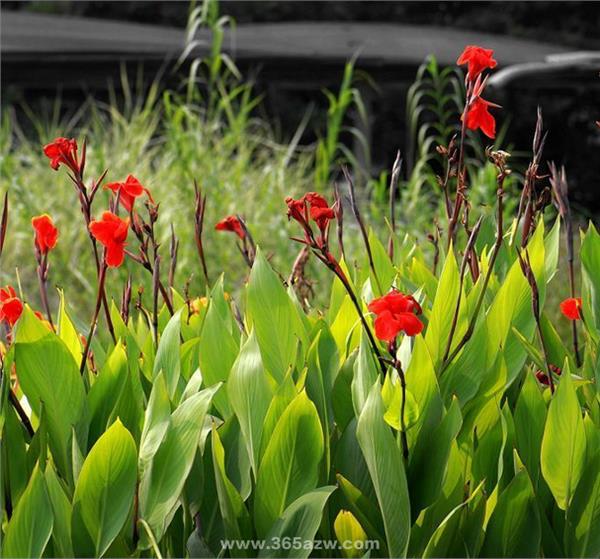
The following spring, indoor potted canna will look completely refreshed in the summer garden. Canna grown 8 weeks earlier than your usual planting date (counting from the end of the last frost) gains 2 months of life.
Plant in spring. Choose a high, dry site and avoid water accumulation. Apply sufficient base fertilizer before planting. If you want earlier flowering, you must dig out the underground stems after the plants wither in December, place them in a greenhouse with moist sand to force sprouting, and maintain a temperature of 20-25°C. When dormancy breaks and they sprout, divide the rhizomes and plant them indoors, then move them outdoors in March, and they can flower 2 months earlier. Apply a thin manure fertilizer once before flowering, and apply topdressing another 2-3 times during the flowering period. After flowering, promptly cut off the faded flowers to avoid consuming nutrients, and also to allow new stems to emerge successively so that flowering continues without interruption. In December, after the aboveground parts wither, cut them off and place them over the plants, then mound soil around them to prepare for safe overwintering. The following spring, remove the covering material to facilitate the emergence of new shoots.
Throughout the entire growing period, maintain good light and ventilation conditions; usually keep the potting soil moist, and during the plum rain season prevent water from accumulating in the pot. Apply 20% bean cake fertilizer solution twice a month. After flowering, cut off the faded flowers, which can maintain a good ornamental effect and also benefit the opening of the next round of flowers. In winter, move it indoors together with the pot; if stored in the open air, it must be covered to overwinter safely.
Variegated canna is vigorous and easy to grow, and it can grow normally in full sun or partial shade. When cultivating, the soil should be deeply turned and sunned to raise the ground temperature and sterilize it, and organic fertilizer should be applied. Plant in clumps or in broad beds. Summer, from July to October, is the peak growing season, so light, fertilizer, water, and ventilation management should be strengthened, and overly dense plants and flowering plants should be pruned promptly. After 1-2 years of cultivation, it needs to be dug up and replanted. The main pests and diseases of variegated canna include snails, slugs, cottony cushion scale, whiteflies, and rust.