Reasons for Yellowing Leaves on Money Tree and How to Fix Them
The money tree (Pachira aquatica) is a highly ornamental plant species that has long attracted widespread attention. Next, let us look at what to do when money tree leaves turn yellow, so that by learning about money tree care we can better apply it in daily life.
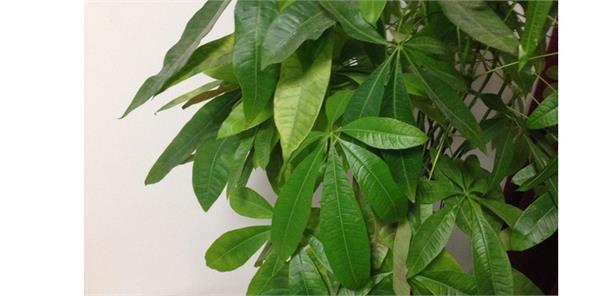
Causes of Yellowing Leaves on Money Tree
1. Overwatering
Some plants do not need frequent watering, such as the money tree. If watered frequently, the potting soil becomes too wet, which causes a lack of oxygen in the soil, makes some fibrous roots rot, hinders normal respiration and the absorption of water and nutrients, and causes leaves to turn yellow and drop.
2. Drought and Dehydration
A plant that goes without water for a long time will inevitably develop yellow leaves. If watering is improper and the soil becomes wet on top and dry below, it will also affect nutrient absorption and easily cause dull, lusterless leaf color and wilting, drooping leaves. First the lower old leaves age, then gradually turn yellow and drop from bottom to top. You can water lightly or spray water, and once the plant recovers, return to normal watering.
3. Overfertilizing
Overfertilizing leads to excess nutrients in the plant, producing new leaves that are thick and mostly uneven, while old leaves dry at the tips, turn scorched yellow and drop. At this point you can stop fertilizing and increase watering so the fertilizer flushes out from the bottom of the pot.
4. Hot High Temperatures or Excessive Shade
Leaving the money tree in direct sunlight for a long time also easily causes the leaf tips and leaf margins of young leaves to scorch, or leaves to yellow and drop. At this point it should be moved to a ventilated, shady spot.
Conversely, leaving the money tree in a shaded spot or a place with insufficient light for a long time will also cause its leaves to turn yellow. The money tree has strong shade tolerance and can be kept indoors for 2-4 weeks before being moved to a sunny spot, but it should not be kept in a place without sunlight for long periods.
5. Damage from Pests and Diseases
When a plant is attacked by fungi and other pathogens, leaf spot disease can result; at this point localized leaf necrosis appears, or yellow spots or patches form, and in severe cases the leaves turn scorched yellow and drop. At this point the plant should be sprayed with a treatment for prevention and control.
6. Temperature Too Low
Yellowing leaves on the money tree are also related to temperature. In winter the minimum temperature of the growing environment is 16-18°C; below this temperature the leaves turn yellow and drop; below 10°C it easily dies. In winter the money tree can be watered less, with an occasional spray of water on the leaves.
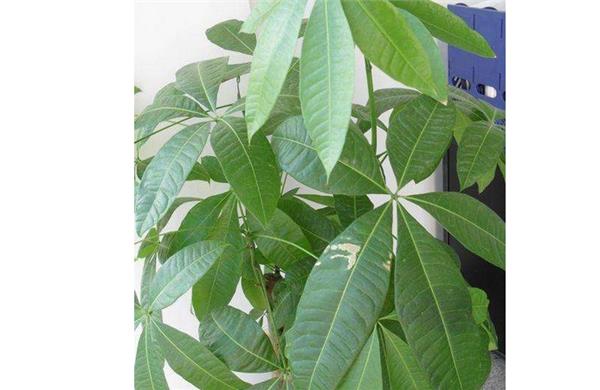
Money Tree Leaves Turning Yellow
First, water-induced yellowing: caused by overly frequent watering; its characteristic is that old leaves show no obvious change while young leaves turn yellow. In this case, watering should be stopped immediately.
Second, drought-induced yellowing: caused by lack of water and drought; its characteristic is that old leaves turn yellow first, from bottom to top. If the water shortage lasts a little long, the whole plant's leaves will turn yellow, or it may even die, so it should be watered promptly.
Third, fertilizer-induced yellowing: caused by overly frequent fertilizing or too high a concentration; its characteristic is that young leaves are thick, glossy and uneven; fertilizer should be reduced, and the soil cultivated and watered.
Fourth, starvation-induced yellowing: caused by insufficient fertilizer, too low a fertilizer concentration, and too long an interval between fertilizing; its characteristic is that the young leaves and tender stems turn yellow first. If this phenomenon is seen and fertilizer is not applied in time, it can also cause the whole plant's leaves to turn yellow or even die. For flowers lacking fertilizer, never apply a large amount of concentrated fertilizer at once, to avoid burning the roots.
Fifth, iron-deficiency yellowing: in greenhouses, woody flowering plants and the like, because soil fertility conditions vary greatly, often develop yellow leaves; the characteristic is that young leaves are clearly affected while old leaves are less so, with yellow leaf flesh and green veins, forming a typical network pattern. This can be solved by applying a ferrous sulfate aqueous solution; the method is: 7 parts cake fertilizer, 5 parts ferrous sulfate, 200 parts water, mixed into a solution and poured on.
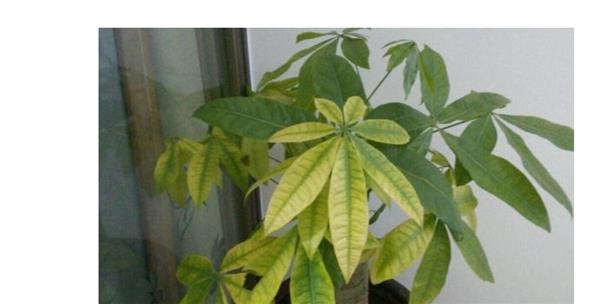
Causes of Yellowing Leaves on Money Tree and Solutions
1. Improper watering: the money tree likes a warm, humid climate environment, and the potting soil is best kept moist, but when grown indoors the potting soil is generally not watered until dry, and when watered, water thoroughly. This is because if you do not water thoroughly and only wet the top while the bottom stays dry, it will affect nutrient absorption, causing the leaf color to become dull and lusterless and gradually turn scorched yellow and drop from bottom to top. In this situation, you need to water lightly and spray water often, so that it gradually recovers before returning to normal watering.
2. Unsuitable light: the money tree likes light but cannot tolerate strong direct light; semi-shade or scattered light is best, and only in winter does it need better light conditions to grow well. Starting in late April, you can choose a clear, warm midday to move the pot outdoors or onto a balcony, expose it to direct sunlight for 1-2 hours, and gradually extend the time; this will give very good growing results. Being in a shady spot or a dim place for a long time will cause leaves to turn yellow and drop, and in severe cases it may also develop
3. Pest and disease control: leaf spot disease is a common ailment of the money tree; the symptom is that a few spots appear first, then the spots gradually expand and extend to the entire leaf, and it drops. Garlic juice can be sprayed to sterilize. As for pests, the main ones are red spider mites and scale insects. Red spider mites are small, with a body length of less than 1 mm; they can be effectively controlled with miticides such as manjing, kemian, and dicofol. Scale insects differ in size depending on the species, and their colors vary greatly, but they share one common feature: they are round or oval, generally do not move, and cling tightly to the plant's stems or leaf stalks and other parts to suck sap. When there are few, they can be wiped clean with a cloth strip, because scale insects die as soon as they leave the plant; when there are many, you can spray a solution of wind oil (fengyoujing) or 0.2% laundry detergent for control.
4. Too much fertilizer: generally, during the money tree's suitable growing temperature period, fertilizer should be applied regularly to ensure lush growth of the plant; usually a light fertilizer is applied once about every 20 days, and when repotting, decomposed base fertilizer should be added. But applying too much fertilizer, or applying fertilizer that is not decomposed, will cause the money tree's roots to burn, resulting in yellowing and dropping leaves.
5. Dust on the leaf surface: if the dust on the leaf surface is too thick, it not only affects appearance but also affects the plant's respiration and photosynthesis, thereby causing the tree's leaves to turn yellow. The dust should be wiped clean promptly.
6. Incorrect soil-changing operation: when changing the soil, incorrect operation can also cause the money tree's leaves to turn yellow. When changing the soil for the money tree, try to damage the roots as little as possible; the added substrate should be sterile, breathable, fertile and slightly acidic, and the potting soil should be packed firmly without leaving gaps. If there are gaps, then no matter how much water is poured, the plant will still experience water shortage, causing the leaves to turn yellow.
7. Low ambient temperature: the money tree likes a warm, humid environment; its suitable growing temperature is 20-30°C. When the temperature is below 18°C the money tree stops growing; it can also adapt to temperatures as low as 10°C, but the temperature must not be lower than 5°C, otherwise frost damage will occur, with mild cases showing yellow, falling leaves and severe cases resulting in death.
8. Hot high temperatures: for the money tree, which likes a warm, humid environment, if it is placed in high temperatures and exposed to the sun, the plant's transpiration is excessive, and the roots cannot supply enough water and nutrients, very easily causing leaf tips to scorch or leaves to yellow and drop; it needs to be moved promptly to a well-ventilated, shady spot.
9. Poor ventilation due to crowding: if the money tree's branches and leaves grow too luxuriantly and are not pruned for a long time, the inner branches and leaves get insufficient light, very easily causing leaves to yellow and drop; pruning should be strengthened promptly to allow ventilation and light penetration.
10. Soil and water too alkaline: in most northern regions the soil and water contain more salt and alkali, which is not very suitable for growing the acid-loving money tree, because the soil lacks iron that it can absorb, and the money tree's leaves will gradually turn yellow. Therefore, when planting, pay attention to choosing acidic soil, and during the growing period frequently water with alum fertilizer water.
The above is the relevant introduction in this article. I believe that after reading it you now have a simple understanding of this. If needed, you can continue to follow No. 1 Home Network to learn more information.
Scale insects differ in size depending on the species, and their colors vary greatly, but they share one common feature: they are round or oval, generally do not move, and cling tightly to the plant's stems or leaf stalks and other parts to suck sap. When there are few, they can be wiped clean with a cloth strip, because scale insects die as soon as they leave the plant; when there are many, you can spray a solution of wind oil (fengyoujing) or 0.2% laundry detergent for control.4. Too much fertilizer: generally, during the money tree's suitable growing temperature period, fertilizer should be applied regularly to ensure lush growth of the plant; usually a light fertilizer is applied once about every 20 days, and when repotting, decomposed base fertilizer should be added. But applying too much fertilizer, or applying fertilizer that is not decomposed, will cause the money tree's roots to burn, resulting in yellowing and dropping leaves.
5. Dust on the leaf surface: if the dust on the leaf surface is too thick, it not only affects appearance but also affects the plant's respiration and photosynthesis, thereby causing the tree's leaves to turn yellow. The dust should be wiped clean promptly.
6. Incorrect soil-changing operation: when changing the soil, incorrect operation can also cause the money tree's leaves to turn yellow. When changing the soil for the money tree, try to damage the roots as little as possible; the added substrate should be sterile, breathable, fertile and slightly acidic, and the potting soil should be packed firmly without leaving gaps. If there are gaps, then no matter how much water is poured, the plant will still experience water shortage, causing the leaves to turn yellow.
7. Low ambient temperature: the money tree likes a warm, humid environment; its suitable growing temperature is 20-30°C. When the temperature is below 18°C the money tree stops growing; it can also adapt to temperatures as low as 10°C, but the temperature must not be lower than 5°C, otherwise frost damage will occur, with mild cases showing yellow, falling leaves and severe cases resulting in death.
8. Hot high temperatures: for the money tree, which likes a warm, humid environment, if it is placed in high temperatures and exposed to the sun, the plant's transpiration is excessive, and the roots cannot supply enough water and nutrients, very easily causing leaf tips to scorch or leaves to yellow and drop; it needs to be moved promptly to a well-ventilated, shady spot.
9. Poor ventilation due to crowding: if the money tree's branches and leaves grow too luxuriantly and are not pruned for a long time, the inner branches and leaves get insufficient light, very easily causing leaves to yellow and drop; pruning should be strengthened promptly to allow ventilation and light penetration.
10. Soil and water too alkaline: in most northern regions the soil and water contain more salt and alkali, which is not very suitable for growing the acid-loving money tree, because the soil lacks iron that it can absorb, and the money tree's leaves will gradually turn yellow. Therefore, when planting, pay attention to choosing acidic soil, and during the growing period frequently water with alum fertilizer water.
The above is the relevant introduction in this article. I believe that after reading it you now have a simple understanding of this. If needed, you can continue to follow No. 1 Home Network to learn more information.