Detailed introduction to the benefits and effects of elderberry
Burning elder or bringing it into the house is considered unlucky. However, properly processed elder can provide protective functions. Below, let us take a look at the details on the benefits and effects of elderberry.
Details on the benefits and effects of elderberry
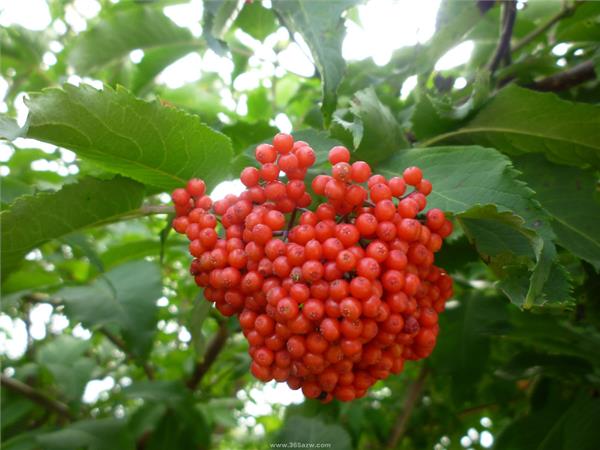
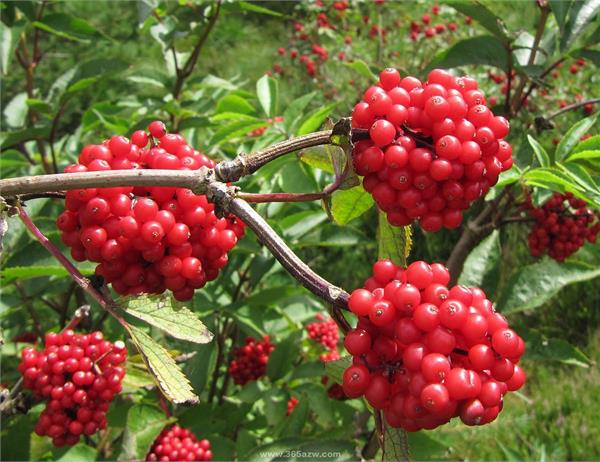
Elder is a deciduous shrub or small tree, 5-6 m tall; the old branches are pale reddish-brown, with obvious long elliptical lenticels, and the pith is pale brown. The fruit of elder, the elderberry, is red, with very few elderberries being blue-purple-black, oval or nearly round, 3-5 mm in diameter; with 2-3 pyrenes, oval to elliptical, 2.5-3.5 mm long, slightly wrinkled. The flowering period is generally April-May, and the fruit ripening period is September-October.
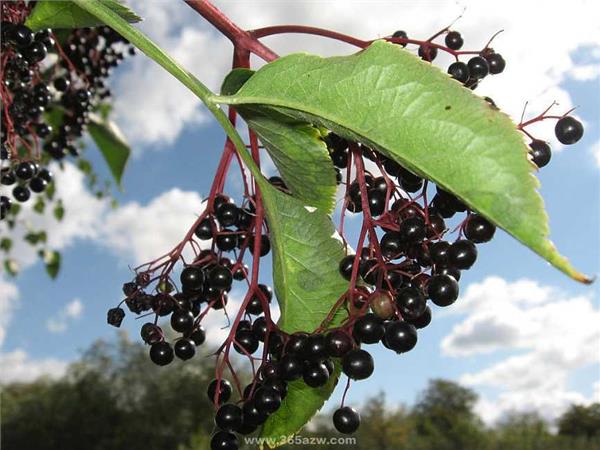
Elderberry tastes sweet and bitter, neutral. It dispels wind, drains dampness, invigorates blood, and relieves pain. It is used for rheumatic muscle and bone pain, low back pain, edema, rubella, urticaria, postpartum blood dizziness, traumatic swelling and pain, fractures, and traumatic bleeding. The root or root bark (elder root): sweet, neutral. It is used for rheumatic joint pain, phlegm-fluid retention, edema, diarrhea, jaundice, traumatic injury, and scalds. The leaf (elder leaf): bitter, cool. It invigorates blood, moves blood stasis, and relieves pain. It is used for traumatic fractures, rheumatic arthralgia, and muscle and bone pain. The flower (elderflower): used for inducing sweating and promoting urination.
Elderberry mainly has uses in traditional Chinese medicine. The ancient medical text Bencao Xinbian records elderberry: it enters the joints, specifically reconnects tendons and bones; for fracture injuries it is swallowed with wine, and for wind itch it is used as a bath decoction. Using it alone to reconnect joints and bones is indeed remarkable, but when used among blood-generating and blood-invigorating medicines, its bone-reconnecting effect is even more remarkable, though it is best used fresh. As for using the dried wood, its strength is reduced by half, and when stir-fried it is reduced by half again. Modern practical Chinese materia medica texts also record that elderberry is an analgesic. Elderberry treats hemiplegia of the hands and feet and rheumatic low back pain, various pains between the bones, cold pain of the limbs, and swelling of the feet. It is also used as a bath ingredient for traumatic bone pain, rubella, prickly heat, and the like.
In the She ethnic group households of southwestern Zhejiang, with a history of about 1,500 years, there is a precious type of liquor: She green qu liquor. According to She elders, the She people have lived in seclusion in deep mountains since ancient times and commonly suffer from ailments such as insect bites and rheumatism, and the simple way to solve such problems is a tribal secret formula passed down for over a thousand years: regularly drinking green qu liquor. One of the precious and mysterious ingredients in this green qu liquor is said to be elderberry.
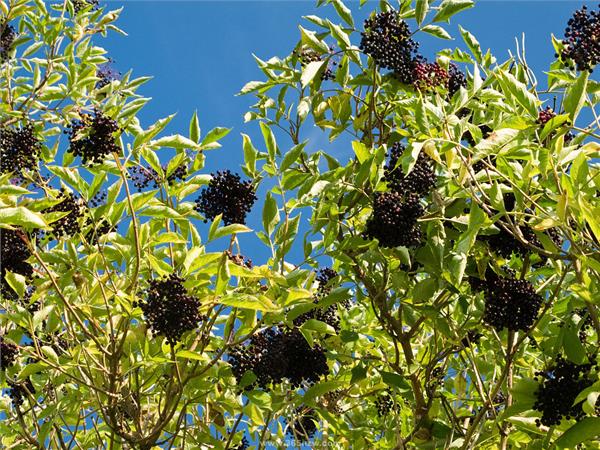
Garden application: Elder has luxuriant branches and leaves, is covered with white flowers in spring, and bears abundant red fruits in summer and autumn. It is a good ornamental shrub, suitable for planting on lawns, at forest edges, or by water. According to measurements, it has strong resistance to hydrogen fluoride, and also relatively strong resistance to chlorine, hydrogen chloride, sulfur dioxide, aldehydes, ketones, alcohols, ethers, benzene, and others.