How to grow Dianthus? A detailed summary of cultivation methods to understand in one article
It grows in areas from 10 m to 2,700 m in elevation, mostly in grasslands and hillside meadows. Below, let us take a look at a detailed summary of Dianthus cultivation methods.
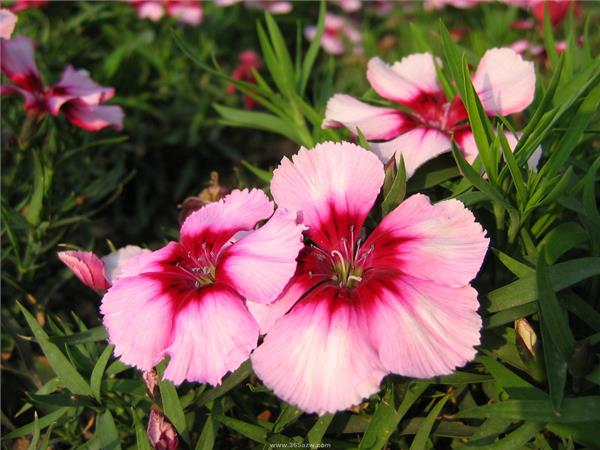
A detailed summary of Dianthus cultivation methods
Dianthus is a traditional famous flower and is now widely cultivated. It can be planted in large patches for ornamental display or grown in pots to beautify the home environment. Dianthus has many varieties and bright flower colors. After pruning, it blooms abundantly and is very eye-catching, making it quite effective for accenting indoor spaces. Dianthus is a herbaceous flower with weak perennial habit and is often cultivated as a 1-2 year plant. Care is simple, and 2-3 plants per pot are enough for it to grow very well! Below, let us look at the cultivation methods and precautions for Dianthus!
1. Soil: Dianthus requires fertile, loose, well-drained loam or sandy loam containing lime. It tolerates alkaline soil fairly well. A culture soil mixed with 6 parts garden soil, 2 parts compost, and 2 parts sandy soil can be used.
2. Sunlight: During the growing period, Dianthus requires sufficient light. Place it in a sunny spot. In summer, scattered light is suitable, avoiding harsh sun exposure. When temperatures are high, provide shade and cooling.
3. Temperature: The most suitable temperature for Dianthus growth is 15-20°C. In summer, when temperatures are higher, pay attention to appropriate shading and cooling. In winter, it should be placed in a greenhouse, keeping the temperature above 12°C.

4. Watering: During growth and development, it is best to keep the potting soil moist. Too much watering easily causes root rot. Watering should follow the principle of not watering until dry. For Dianthus sown in autumn, watering in November to December requires attention to frost prevention. When growing indoors, the water temperature should be close to room temperature. Watering should preferably be done at noon when the temperature is higher, and there should be no standing water on the leaves at night. In the second spring, water to promote green-up, with the same requirements as in winter.
5. Fertilizing: Apply topdressing 2-3 times throughout the growing period, using decomposed cake fertilizer or organic fertilizer. Apply sufficient base fertilizer, with 2-3 plants per pot.
6. Pruning: To make Dianthus bloom more, prune it promptly. When the plant grows taller, pinch the growing tips to promote branching, and promptly remove leaf buds to reduce nutrient loss. After pruning, Dianthus will bloom again. Dianthus can bloom again after pruning. To bloom more, pinch the growing tips to encourage more branching, and promptly remove axillary buds to reduce nutrient consumption.
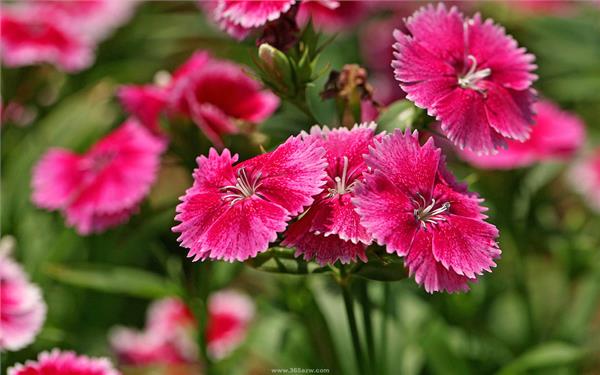
6. Pests: Dianthus often suffers from rust disease and red spider mite damage. For rust disease, spray with 50% carboxin wettable powder at 1500 times dilution; for red spider mites, spray with 40% omethoate emulsifiable concentrate at 1500 times dilution.
During the growing period, potted Dianthus should be placed in a sunny, well-ventilated place for care, keeping the potting soil moist, and applying a decomposed dilute liquid fertilizer about once every 10 days. In summer, when there is excessive rain, pay attention to drainage and loosening the soil. Before flowering, promptly remove some axillary flower buds, mainly to ensure the terminal flower buds bloom. In winter, water less. If the temperature is kept at 5-8 degrees, it will bloom continuously through winter and spring.
Precautions:
1) Replenish water and provide shade
Ensure 6-8 hours of light every day. In midsummer, Dianthus is in a semi-dormant state, and at this time care should be taken to avoid harsh sun exposure. The potting soil must not become waterlogged, otherwise root rot easily occurs.
2) Prevent and control pests and diseases
Dianthus does not have many pests and diseases. Common ones include calyx rot, rust disease, gray mold, bud rot, and root rot. Once disease occurs, promptly remove diseased plants and spray pesticides for control; do not delay.