How to grow geraniums well? A complete guide to cultivation methods
In our daily lives, geraniums are a widely grown flowering plant, with rich and varied flower colors and a long blooming period. Grown in pots, they create a very good decorative effect in the home, and they are also one of the flower varieties many people choose to decorate their homes with. So, what are the cultivation methods for geraniums? Let us take a look together.
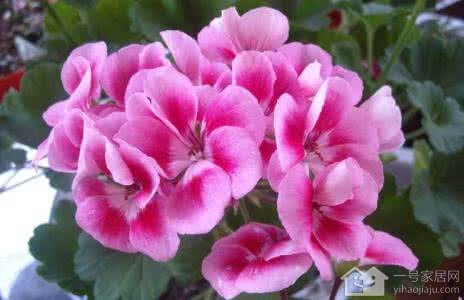
I. Introduction to geraniums
Geraniums are also called yangxiuqiu, rulahong, shilahong, rilinhong, yangkui, mosquito-repellent grass, yanghudie, and so on. They originated in South Africa and are perennial herbaceous flowers. The leaves are palmate with long petioles, the leaf margins are mostly serrated, and the leaf surface has relatively deep ring-shaped markings. The corolla usually has five petals, and the inflorescence is umbel-shaped, growing at the top of upright peduncles. Because the clustered flowers are dense like a ball, they are also known as yangxiuqiu. The flower colors vary greatly among red, white, pink, and purple. The blooming period begins in early winter and lasts until early summer of the following year. Potted plants are suitable for indoor and outdoor decoration; they can also be used as flowers for spring flower beds.
They prefer a warm, humid environment with plenty of sunlight. They have poor cold tolerance and are afraid of waterlogging and high temperatures. The suitable growing temperature from March to September is 13 to 19°C, and the winter temperature is 10 to 12°C. From June to July they enter a semi-dormant state, and watering should be strictly controlled. They prefer fertile, loose sandy loam with good drainage. The winter temperature should not be lower than 10°C, and they can tolerate 5°C for a short time. Single-petaled varieties require artificial pollination to increase the seed-setting rate. The seeds mature about 40 to 50 days after flowering.
Geraniums like warm winters and cool summers. Indoors in winter, maintaining 10 to 15°C each day and a nighttime temperature above 8°C is enough for them to bloom normally. But the most suitable temperature is 15 to 20°C. Geraniums like dryness and dislike dampness, so watering in winter should not be excessive; water only when the soil is dry. If the soil is wet, the stems are tender, which is unfavorable for the sprouting and opening of flower branches; long-term excessive moisture will cause the plant to grow leggy, the position where flower branches form to move upward, and the leaves to gradually turn yellow and fall off. Geraniums need sufficient sunlight during their growing period, so in winter they must be placed in a sunny spot. If light is insufficient, the stems and leaves grow leggy, the peduncles become thin and soft, and the inflorescence develops poorly; flower buds under weak light often fail to open smoothly and wither early. Geraniums do not like heavy fertilizer; too much fertilizer will make geraniums grow too vigorously and be unfavorable for flowering. To make flowering abundant, water once with dilute fertilizer water (decomposed soybean cake water) every 1 to 2 weeks, and apply 800 times diluted potassium dihydrogen phosphate solution every 7 to 10 days to promote normal flowering.
II. How to grow geraniums
1. Living environment
Geraniums have high requirements for light and temperature. Generally, the best suitable temperature for geranium growth is between 10 and 20°C, which means spring and autumn are very suitable for geranium growth. Too hot in summer and too cold in winter will both cause geraniums to enter a dormant state. Therefore, be careful not to expose geraniums to the sun in summer and not to place them in places below 0°C in winter, otherwise both will harm them. In addition, prevent the impact of bad weather on geraniums. If heavy rain soaks them, the roots of the geraniums will have difficulty breathing and thus rot.
2. Water
Geraniums originated in southern Africa and are plants that do not like too much water. Therefore, during cultivation, never water geraniums too much. If watered too much, the roots of the geraniums will rot. If they grow in this water-rich environment for a long time, it will affect their growth and lead to death. Therefore, when growing geraniums, it is enough to water them once every two to three days, but each watering must be sufficient.
3. Fertilizing
Applying fertilizer in the right amount is also a key point in growing geraniums. If too much fertilizer is applied, it will cause geraniums to dehydrate and affect their normal growth, but if you do not fertilize them for a long time, it will likewise cause insufficient nutrients. The amount of fertilizer for geraniums is directly related to the quality of the soil, the size of the plant, and the size of the flowerpot. Therefore, when purchasing, it is best to ask the shopkeeper to understand the required fertilizer amount and frequency.
4. Temperature
Geraniums like a warm, humid environment with plenty of sunlight. The most suitable growing temperature is between 10 and 20°C, which is the temperature of spring and autumn. Therefore, protective measures must be taken in both winter and summer. In winter, place them in an environment where the temperature is not lower than 0°C to avoid frost damage, while in the hot summer, move them to a cool place to avoid exposure to the scorching sun.
5. Pest and disease control
For geraniums, the two common diseases are leaf spot and wilt. General control for these two is usually to place geraniums in a ventilated and well-lit place to prevent the branches from being too dense. After discovering diseased leaves, remove them promptly to avoid infecting other leaves. Also note that excessive fertilizing can also cause geraniums to become diseased.
6. Pruning
The growing environment of geraniums requires fertile soil, which also makes courtyard-type geraniums grow very quickly. As ornamental plants, geraniums should usually be carefully maintained and pruned. Generally, prune them three times a year. The first time is mainly to thin out branches, the second time is to cut off withered flowers and overly dense branches, and the third time is overall adjustment, that is, shaping.
The above is the related introduction in this article. I believe after reading it you also have a simple understanding of this. If needed, you can continue to follow No.1 Home Network to learn more information.