How to grow a Chinese elm bonsai? Detailed guide to care methods and precautions
How do you grow a Chinese elm bonsai? Speaking of Chinese elm, many friends born in the 1980s and 1990s will surely get excited, because as children they would pick some elm seeds by the courtyard, wash them, and eat them. In fact, Chinese elm can be made into bonsai and grown at home, so how should a Chinese elm bonsai be cared for? What points need attention? Let's take a look below at how to grow a Chinese elm bonsai.
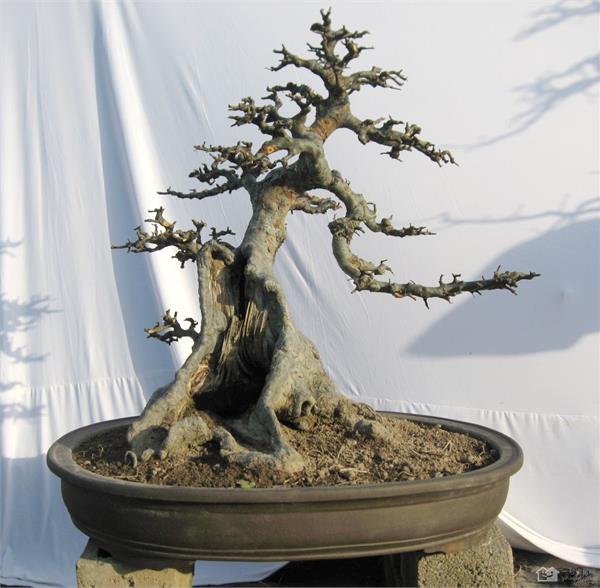
How to grow a Chinese elm bonsai
I. Steps to carry out when making a Chinese elm bonsai
1. A newly dug old Chinese elm stump should be planted in plain sandy soil in the ground or in a clay pot for "stump cultivation." This is generally done from late autumn to spring (the survival rate is highest in the two or three months before budding). Before planting, first prune the root system and branches and trunk; sticky sap often flows out from the cut surfaces. If too much liquid seeps out, it will seriously affect the survival rate. You can seal the cuts with paint or wax, or apply a layer of erythromycin ointment or sulfonamide ointment, then sprinkle on fine sandy soil. After planting, press the soil down as firmly as possible; there is no need to water, only spray the branches and trunk with clean water 1-2 times a day, then after 3-4 days water thoroughly once. After that, do not water unless the soil is dry, and strictly forbid waterlogging in the soil.
2. Next, when styling a Chinese elm bonsai, based on the basic form of the old stump, it should be made through wiring, pruning, and so on into different bonsai forms such as straight-trunk style, curved-trunk style, slanting-trunk style, waterside style, cascade style, wind-swept style, forest style, and root-over-rock style. Chinese elm bonsai can be styled both during the growing season and during dormancy, but the budding period should be avoided so as not to lose too much sap and affect plant growth. Its form can be processed according to the basic shape of the stump into various bonsai forms such as straight-trunk style, curved-trunk style, slanting-trunk style, deadwood style, waterside style, cascade style, and forest style. The crown can use either a natural style with elegant, loosely arranged foliage, or a large tree form with a rounded top, and can also be processed into a neatly rounded pad shape. The styling method combines wiring and pruning: first use metal wire to bend out the basic form, then prune carefully.
3. After the Chinese elm survives, it is robust in habit and easy to manage. The finished bonsai can be kept in a place with ample light and good ventilation, keeping the potting soil moist but not waterlogged. In summer, when the air is dry, spray a little water on the plant to increase air humidity and keep the leaf color fresh. Apply a dilute, fully decomposed liquid fertilizer about once every 20 days. Chinese elm bonsai has strong sprouting ability and grows quickly, so it must be pruned frequently, both to maintain the beauty of the tree shape and to increase the plant's light penetration.
4. Chinese elm has very strong sprouting ability and grows quickly, so during the growing season it must be pruned frequently, cutting off overly long and messy branches to keep the tree shape beautiful. The best viewing period for a Chinese elm bonsai is when the new leaves have just emerged. If all the leaves are removed in early to mid-August and water and fertilizer management is then strengthened, new leaves will grow again by late September, improving its ornamental value. In winter, the whole pot can be buried outdoors in a wind-sheltered, sunny spot or moved to a cold room to overwinter; the temperature should not be too high, otherwise the plant will not get sufficient dormancy, affecting growth the following year. Repot once every 1 to 2 years in early spring, using a sandy soil that is rich in humus, loose and breathable, and well draining. During care, repot once every 2-3 years so that the bonsai grows vigorously and full of life.
II. Care of Chinese elm bonsai
1. Light: strengthen the light for the Chinese elm bonsai. Chinese elm bonsai likes sunlight and has poor shade tolerance, so the finished bonsai should be placed in a sunny place. With insufficient sunlight, it will grow only branches while the leaf color becomes very unattractive, and it is also prone to pest problems.
2. Watering: although Chinese elm likes to grow in moist places, it also fears waterlogging. So each watering should be thorough; in midsummer, water once in the morning and once in the evening, and be sure to keep the potting soil moist but not waterlogged.
3. Fertilizing: Chinese elm bonsai does not need too much fertilizer; applying it once each in early spring and early autumn every year is enough.
4. Pruning: because Chinese elm has extremely strong growth power, we need to prune diligently to maintain the ornamental value of the Chinese elm bonsai. Branch pruning and shaping can be done in autumn, cutting off useless branches and diseased branches, then carrying out branch training.
5. Pests and diseases: Chinese elm bonsai is often harmed by aphids, scale insects, and so on. We can use omethoate diluted with 1000 times water and spray it to kill them.
The above is the related introduction in this article. I believe that after reading it you also have a simple understanding of this. If needed, you can continue to follow No.1 Home Network to learn more information.